2 initiatives launched to tackle heat in South Asia
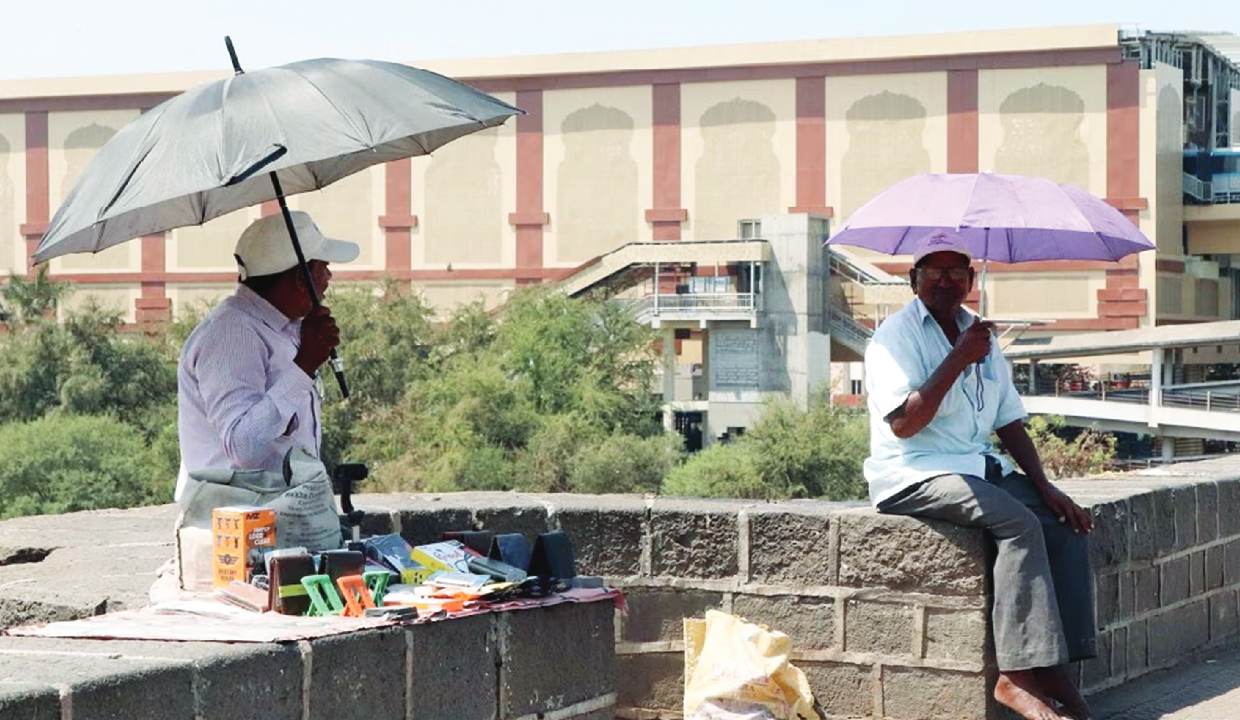
Two new initiatives to protect South Asians from extreme heat — a rapidly escalating threat to human health and economic stability in the subcontinent — were launched on Friday during Mumbai Climate Week, officials said.
The South Asia Climate-Health Desk, established as part of the WHO–WMO Climate and Health Joint Programme and implemented with the Indian Institute of Tropical Meteorology (IITM), India Meteorological Department (IMD), and other partners, will improve how climate and weather information is translated into action to protect people’s health.
Complementing this work, the South Asia Scientific Research Consortium, supported through a Rockefeller Foundation grant to the Indian Institute of Science Education and Research (IISER)-Pune, will deepen the region’s scientific understanding of how heat affects different populations.
“Few regions feel the impacts of extreme heat as sharply as South Asia, and I welcome the clear determination to respond. We all know that every death primarily due to excess heat can be prevented and heat health action plans are saving lives.
“By uniting science, Government leadership and support, and community action, countries here are proving that this challenge can be met,” WMO Secretary-General Celeste Saulo said.
According to WMO, Asia is warming nearly twice as fast as the global average, intensifying extreme weather and placing growing pressure on lives and livelihoods, health systems, economies, and ecosystems across the region, putting the most vulnerable and exposed communities at critical risk.
“Extreme heat is a growing risk for lives and livelihoods in South Asia,” said Mrutyunjay Mohapatra, IMD’s Director General of Meteorology and Permanent Representative of India to WMO.
“IMD welcomes this partnership with IITM under the South Asia Climate-Health Desk, which will strengthen the science-to-services pathway, improve early warning support for health, and help decision-makers act in time to protect communities during severe heat events,” he added.
Led by IITM in partnership with IMD, the desk will help meteorological institutions and health partners in South Asia work together to develop more robust decision support tools, such as early warning and risk assessments.
“After a decade of punishing and increasingly deadly heatwaves across India and the wider South Asia region, it is clear that business-as-usual public health approaches are no longer enough,” Naveen Rao, Senior Vice President of Health at The Rockefeller Foundation, said.
He added, “Protecting India’s most vulnerable communities requires rethinking how we deliver care and invest in the solutions frontline providers and patients urgently need today.”