Xi’s N701 rolls into Delhi under black cover
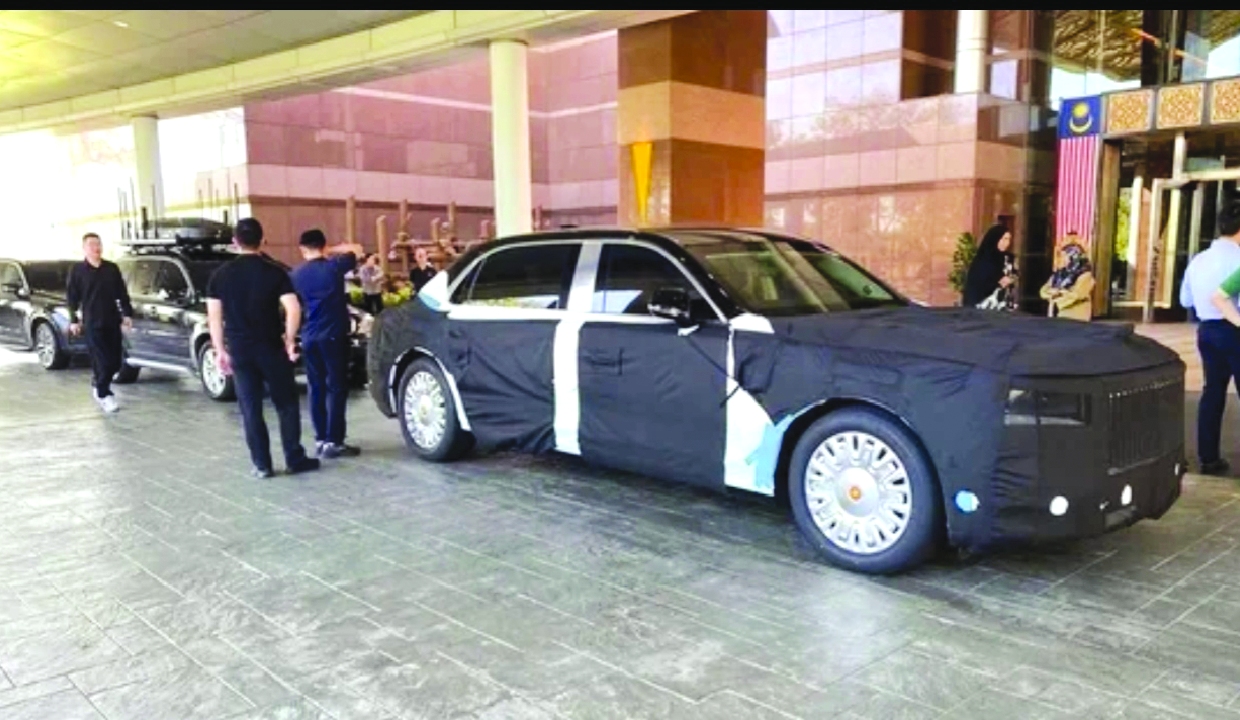
Delhi’s streets have seen their share of high-security convoys. Still, few sights sparked as much instant curiosity as the black-shrouded limousines rolling through the Capital ahead of Chinese President Xi Jinping’s arrival for the 18th BRICS Summit. Wrapped like oversized gifts no one was allowed to open, the vehicles moved under heavy tarpaulins before the leader himself landed. Once the covers came off, the machine at the centre of the speculation stood revealed: the Hongqi N701, China’s most secretive presidential limousine.
The covering was never a last-minute panic measure. Heads of state routinely fly their own armoured cars in cargo aircraft days or hours before they arrive. The tarpaulins protect the vehicles from dust, rain, sun and scratches during unloading and road transport. They also serve a quieter purpose: they keep the exact silhouette, window thickness, and antenna array and underbody details away from cameras until the car is officially in service.
Similar wrapped convoys have been spotted on Xi’s earlier trips. By the time he stepped onto Indian soil, the covers were gone, and the N701 was ready for duty. Hongqi means “Red Flag.” First Automotive Works created the brand in 1958 specifically to build cars for China’s top leadership.
The N701, introduced around 2022, is the current flagship of that tradition. It is not sold to the public. Production is tiny, reports suggest roughly five cars a year, or about fifty units over a decade, reserved strictly for the highest state duties.
The car stretches about 5.5 metres, weighs well over three tonnes, and carries Hongqi’s signature vertical-slat grille and red-flag emblem on the hood. It looks every bit the rolling statement of sovereignty it is meant to be.
What sits beneath the paint is more fortress than luxury sedan. The body uses composite armour and reinforced steel. Windows are multi-layer bullet-resistant glass. The 21-inch wheels carry run-flat tyres designed to keep moving even after a puncture. Reports credit the N701 with the ability to shrug off small explosive devices and an airtight cabin with an air-compression and filtration system intended to protect occupants from chemical or biological threats.
Inside, it functions as a mobile command post with encrypted communications linking the president to Beijing in real time. Power is believed to come from a 6.0-litre V12 producing around 408 horsepower, though some accounts mention a hybrid V6-electric setup; official figures remain unpublished, as they do for almost every presidential vehicle on Earth. The N701 has already accompanied Xi to Hong Kong, the United States, Russia, Egypt and now India.
Its presence on Delhi’s roads during the BRICS gathering sits alongside Russian President Vladimir Putin’s equally armoured Aurus Senat, two homemade limousines making the same point: great-power leaders no longer need to borrow Western marques for their most sensitive journeys. For China, the car is both shield and symbol. It projects industrial self-reliance at the highest level of statecraft while keeping the man inside as insulated from the outside world as modern engineering allows.
Once the black covers were peeled away, the N701 became just another (very large, very expensive, extremely well-protected) car in a long motorcade. Yet the brief mystery it created on Delhi’s roads reminded everyone how much ceremony, security, and national pride still travel with a head of state. In an age of open-source everything, a few secrets still ride under tarpaulin.