Witnesses to the unsaid
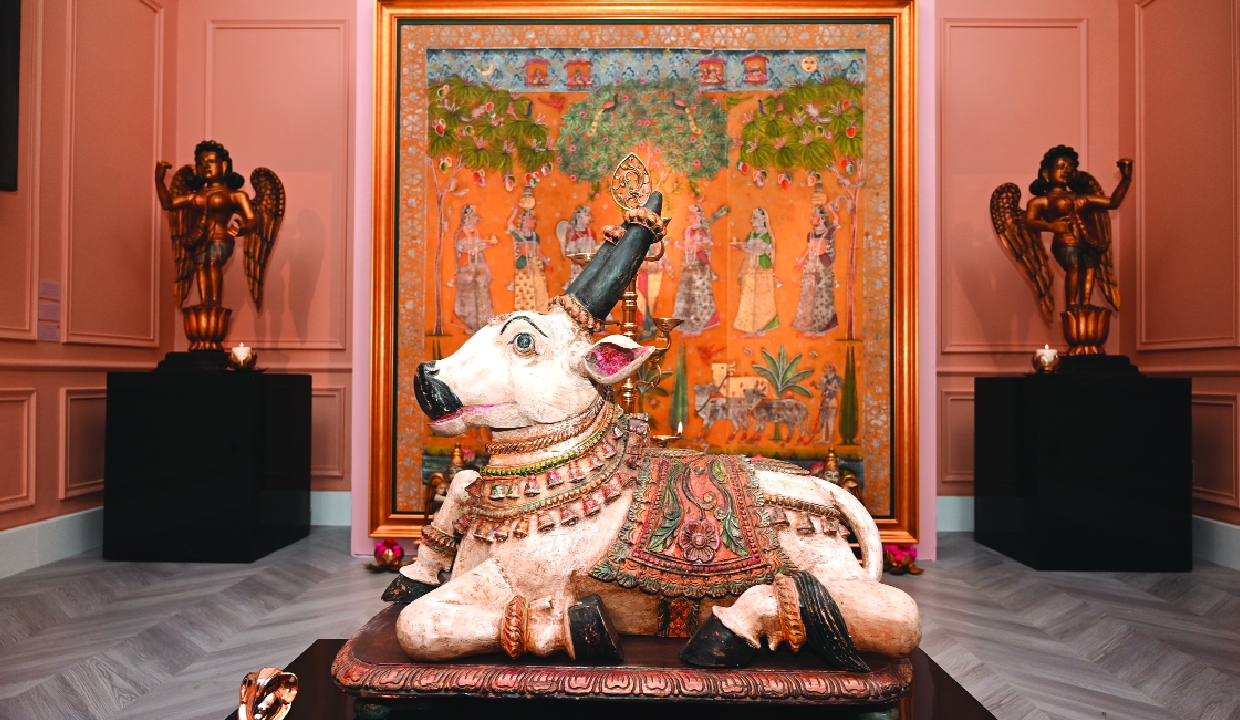
Dakhin | Dilli brings together devotional art and sacred artefacts from across North and South India, each piece steeped in tradition and meaning
At Bikaner House, Raseel Gujral Ansal mounts a collection that demands close observation. Hosted at Arzaani Atelier Privé, ‘Dakhin | Dilli: A Sacred Dialogue’ pulls regional artistic traditions into one room, forcing a strict visual confrontation between the Deccan and the North.
The artifacts carry the heavy, physical weight of belief. The Kamdhenu Tanjore sculpture, heavy with 24-carat gold leaf, owns the room the moment you walk in. Close by, the whole feeling changes. Mysore reverse glass paintings, such as Yashoha and Krishna, offer a fragile, precise clarity, while the Vintage Khejri Pichwai maps out sprawling pastoral scenes on cloth. Before arriving in this gallery, every object here, right down to the towering, polychrome wood of the Hanuman Vahanam, served a functional role in centuries-old rituals, holding the unspoken fears and quiet pains of the people who prayed to them.
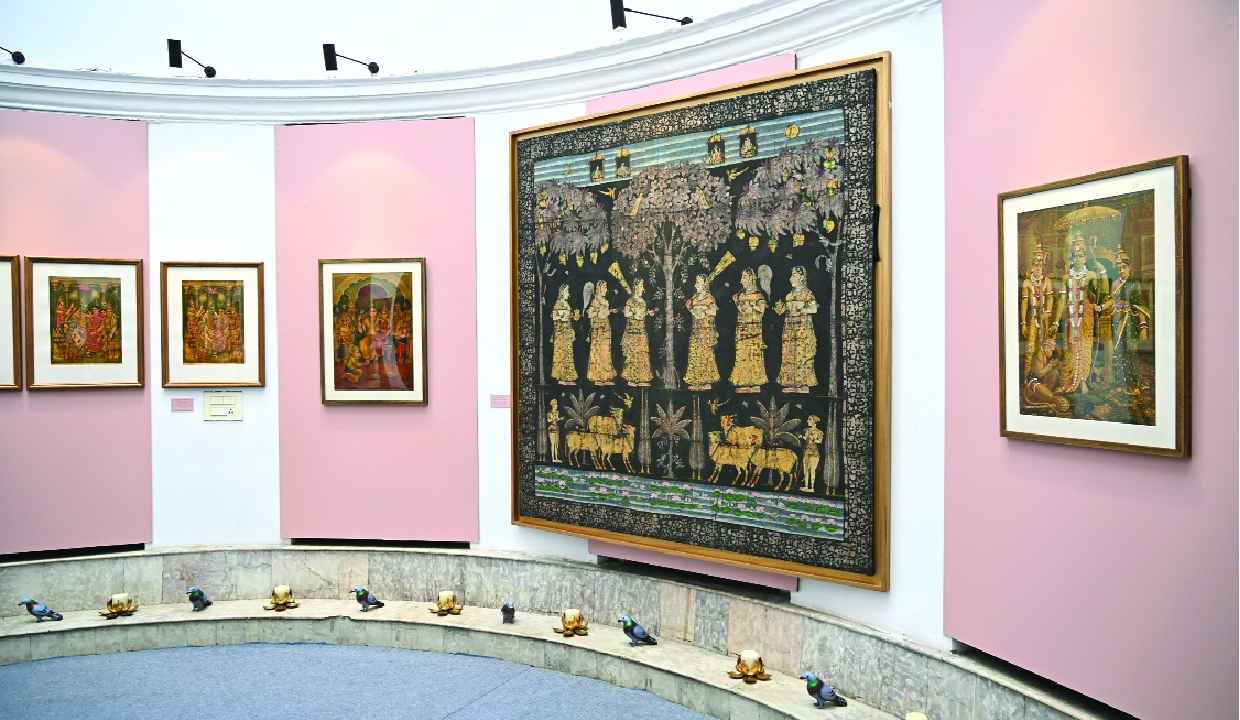
Raseel Gujral Ansal notes that this curation explores a visual language where Southern intricacies meet Northern lyrical detailing. She views the sacred as a living aesthetic that defines identity. By placing Raja Ravi Varma’s accessible oleographs next to contemporary pieces, she bridges the gap between ancient ritual and modern life. This shows that devotion remains a constant, breathing force today.
The exhibition entirely sidesteps standard gallery gloss. It presents these historical works as surviving witnesses to the unsaid, standing firm as raw records of complex faith.