Where unspoken pain finally blooms
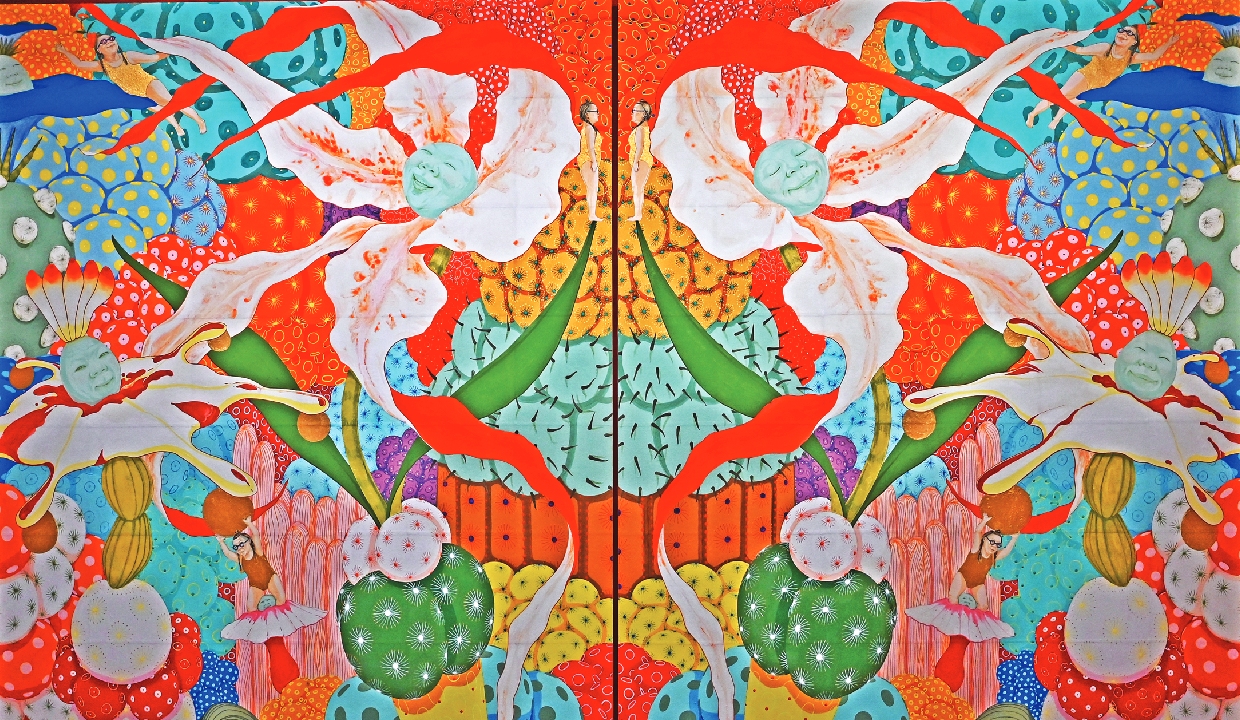
Inside Florecer contra la bomba, surreal blossoms aggressively swallow a red bomb upon the delicate Oguni washi
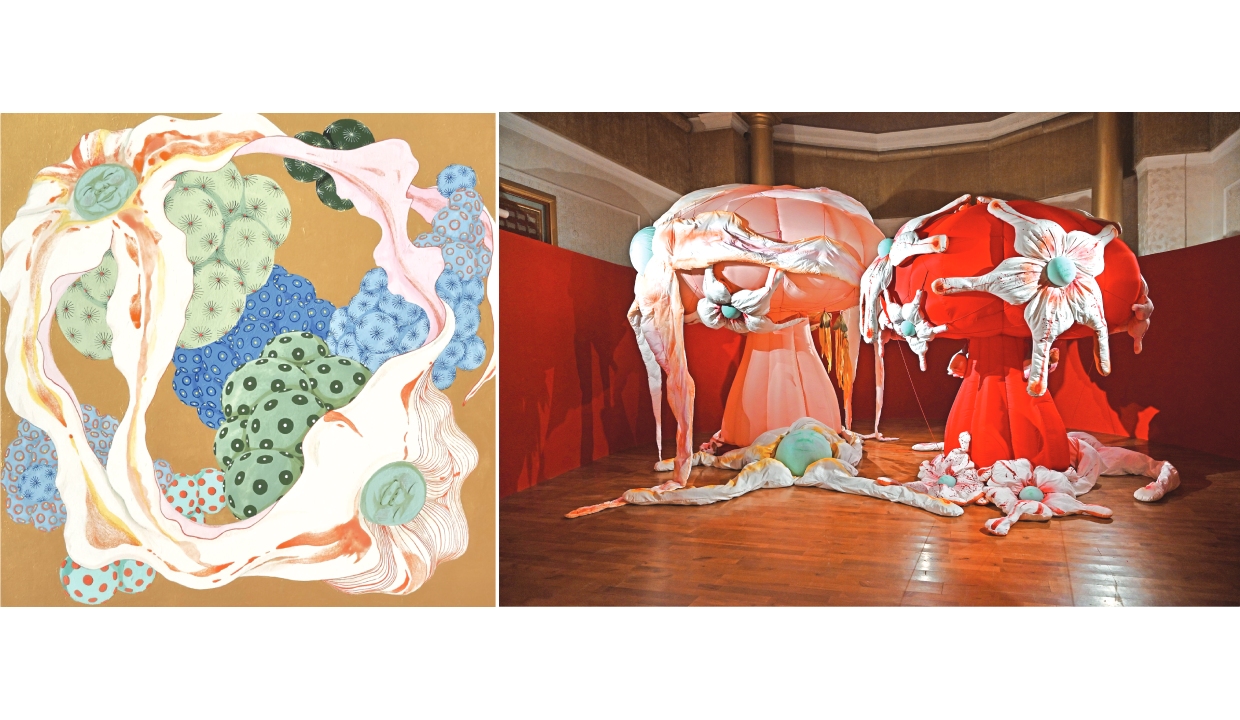
Freedom blooms fiercely in Mari Ito’s Origin of Desire, a mesmerising solo exhibition at Bikaner House that completely shatters the quiet obedience traditionally expected of botanical painting. Presented by GEEK/ART, the gallery transforms into a breathing nervous system where flora refuses to sit passively on the canvas. Instead, it stares right back at the viewer. Ito operates on a frequency of absolute biological extravagance, layering mineral pigments and sumi ink over delicate Oguniwashi paper. By anchoring ancient Japanese Nihonga craftsmanship within the sun-drenched, dimensional palette of her Barcelona studio, she creates a staggering visual collision. We are met with swelling seed pods, pulsating cellular rhythms, and lush, surreal petals embedded with human faces.
This body of work stands as a masterclass in biopolitical fabulism and a beautiful, unapologetic refusal of historical narratives that often-prescribed normative domesticity for women. Ito’s anatomy chooses to mutate sideways. Her hybrid creatures reclaim the floral and the decorative tropes long used to soften or minimise feminist art-and arm them with sharp, psychic teeth. Under her brush, the physical form becomes an act of rebellion.
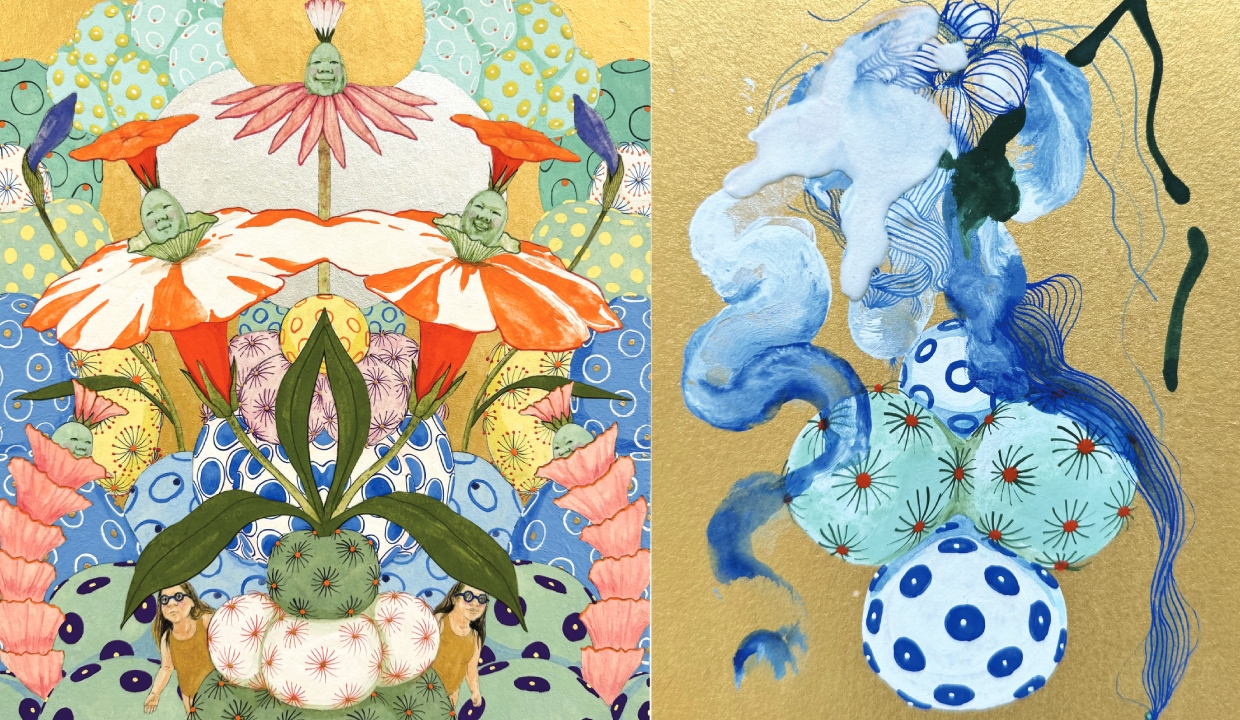
You see this defiance vividly in pieces where the destructive violence implied by a bomb is entirely swallowed and repurposed by explosive, unstoppable floral growth. The artist gives our mundane longings a chaotic, massive voice in Origin of desire — The “strawberry chocolate love” that I had been holding back for so long popped. (2024). She takes a passing craving and blows it up into a sweeping, biological event. The titles alone read as diary entries stripped bare. When standing before, how different would my future be if I wanted to go right and I wanted to go left? (2025), the artwork stops being a quiet question and transforms into a heavy, sprawling vine desperately hunting for room to breathe. Add the magnificent, overwhelming scale of Joy can last forever, depending on how you perceive it. (2025), pulling you into a surreal ecosystem where every single petal vibrates with life.
Look closely enough at the scatter of tiny dots and grains across her canvases and something shifts, you realise she has been mapping the weight of human emotion all along, the kind that lives below the surface and rarely gets named. She catches that exact microscopic shudder our cells experience during a flash of pure joy, deep anger, or silent yearning. She borrows from old myths and strange dreams to build a space where leaves, spirits, and human skin tangle up in one messy, beating rhythm. Ito pushes us to see longing for what it truly is — a fierce, stubborn force that bleeds out and takes root completely out of our hands.
The second you leave, the whole thing hits you. That heavy mix of fear and pain you kept locked down-the things you wanted to speak so badly, but your soul would never allow-finally gets a moment to exhale. This art genuinely understands. It catches that silence, the sharp, specific drop of it, the kind that falls the moment someone turns and walks away mid-sentence. By the time you step back outside, there is just one question sitting in the middle of your chest, what are you supposed to grow in ground that empty.