The Saree Story
For over five thousand years, a simple, unstitched length of fabric has managed to capture the imagination of an entire subcontinent. The saree is an extraordinary garment that completely ignores the fleeting trends of global fashion. Long before power looms dominated the textile industry, early Indian civilisations recognised the sheer practicality of draping. Tracing its roots back to the Indus Valley Civilisation, the saree finds its earliest linguistic connection in the ancient Sanskrit word ‘Sati,’ translating directly to a strip of cloth. Our ancestors believed that unstitched fabric possessed a specific spiritual purity, a sacred quality that tailored seams would pierce and ruin.
Over centuries, this strip kept changing shape. Every region grew its own weaving language, turning six yards into a record of monsoon rains, good harvests, and green river valleys. The handloom is where this lives. Thousands of threads lock by hand-moving in a rhythm weavers spend lifetimes learning.
Where do you even begin with all of this? Right now, Handloom Haat on Janpath has an answer. The Special Handloom Expo, “Vastra Sanskriti: The Timeless Weaves,” is open — organised by the Development Commissioner of Handlooms. How many weaving traditions can one country hold? Walk the aisles and start counting.
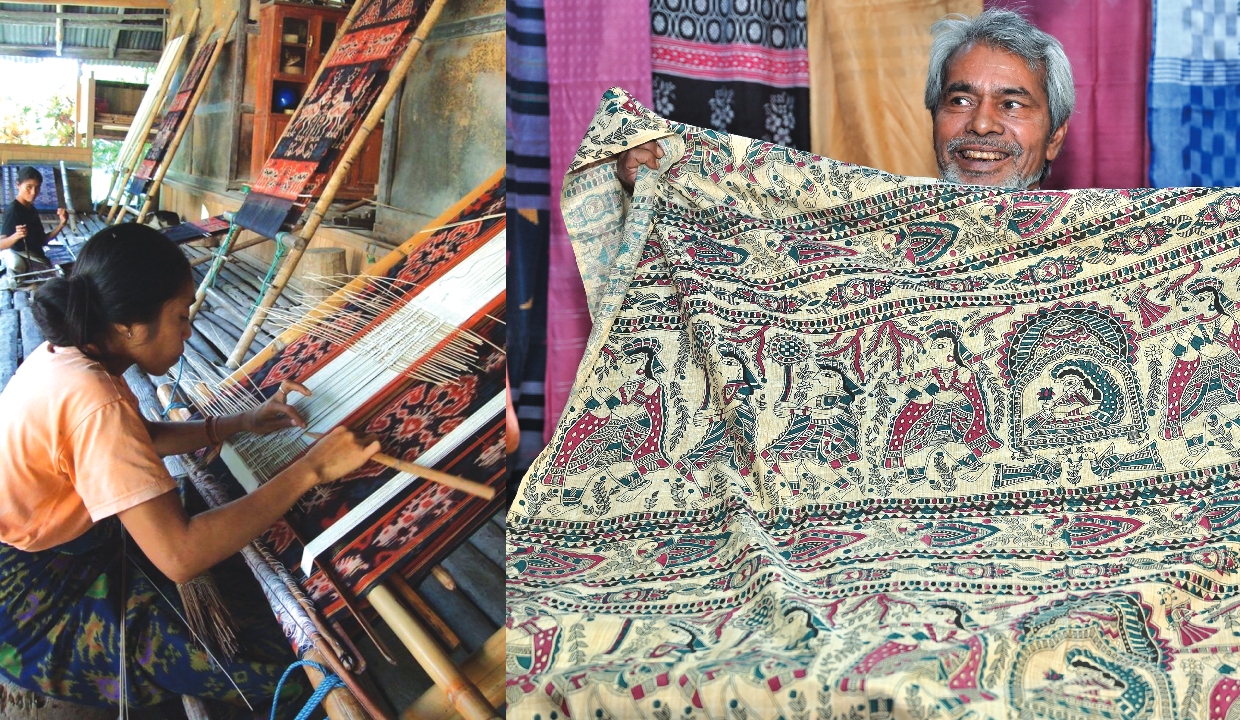
The saree has always been a conversation — between the weaver and the cloth, between tradition and whoever buys it next. At one stall, Siraj Hinzadi from Mumbai makes that conversation loud. His cotton sarees, priced between `3,289 and `4,000, carry cheetah prints on soft fabric - bold, city-facing, made for women who want their everyday wear to say something. A few steps away, the conversation gets quieter and older. A master weaver from Gujarat, stands beside his family’s Patola sarees. The Patola goes back over 900 years — once worn only by royalty, each saree a geometry problem solved in silk. He explains what that means in practice: every single thread tie-dyed with precision before it touches the loom. One mistake and the pattern breaks. There are no mistakes here.
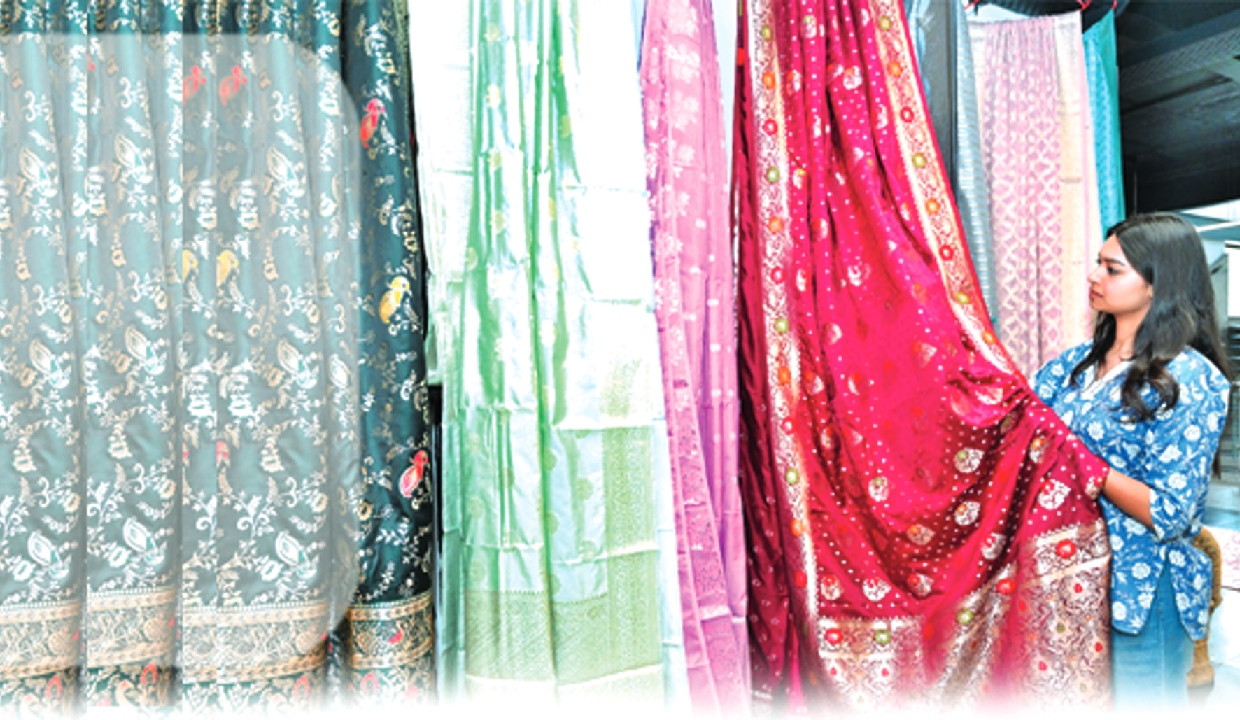
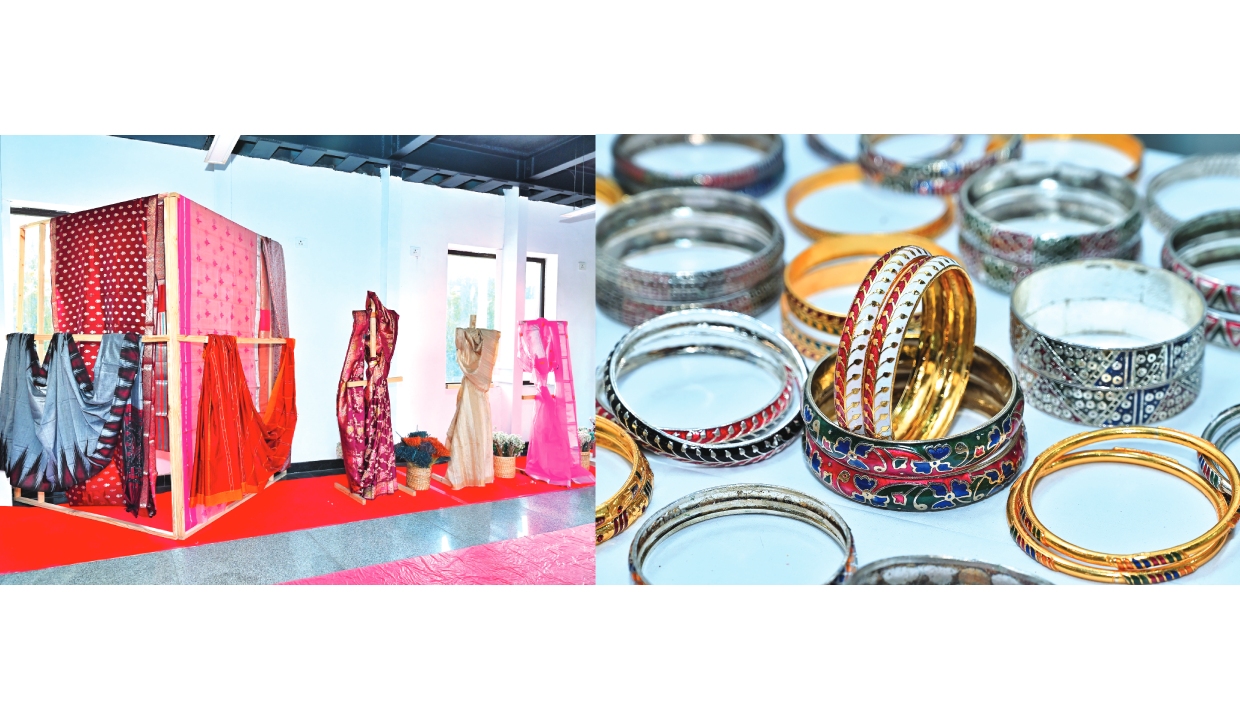
The exhibition reads like a physical map of India written in thread. The heavy gold borders of Kanchivaram silks demand attention from afar, sitting in sharp contrast to the earthy feel of Bhagalpur Tussar silks brought from Bihar. Madhya Pradesh offers a brilliant contrast of its own, hanging the sheer beauty of Chanderi weaves right beside bold hand-block painted sarees. West Bengal brings the Shanti Pura saree, proving why elegant simplicity endures. Moving further in, the northern states bring warmth and colour. Bright suit fabrics from Punjab catch the eye, leading toward the patterned stoles carried down from Jammu and Kashmir. Artisans from Uttarakhand have stacked heavy winter shawls and thick traditional Lohi blankets next to classic handloom kurta pajamas.
A drape feels unfinished without jewellery. Amidst a sea of fabric, one Kolkata stall breaks the pattern. Here, steady hands transform everyday copper into bright blue and red Meenakari pieces. The makers shape vivid enamels into sharp lines or fragile motifs like butterfly wings and tiny boats. Chunky peacock brooches sit quietly, catching the dusty afternoon sun.
This market keeps village looms running, putting cash directly into the makers’ hands. When you leave with a crisp silk and a copper pin, you walk away holding a surviving piece of history. Which six-yard story will you wear next?
An archive you can wear
For five thousand years, the handloom has been India’s quietest historian. The expo is where that history becomes something you can touch — six yards at a time. Mathematically perfect Patola silks. Bold, city-facing prints. Hand-painted copper Meenakari pins that take weeks to finish. Every artisan here came directly from their village, which means the money goes back the same way. You are not buying a garment. You are buying the continued existence of the craft.