When the distinction between performance and authenticity blurs
A recent WhatsApp communication on our society group, a few cryptic comments on my Facebook wall, and several recent premature deaths among people in their mid-fifties have made me pause and reflect. At first glance, the incidents appear unrelated.
A camp was organised by our newly elected governing body to facilitate certain services for residents. It was a good initiative with a few inevitable hiccups. Many appreciated the effort, while some expressed disappointment. One resident urged the President of the Residents’ Welfare Association to personally address such irritants in the future. What caught my attention, however, was the response of another well-meaning resident who rushed to defend the President while assigning blame to the committee member who organised the event. In corporate and public life, leadership is often defined by the willingness to absorb criticism while sharing credit. In our increasingly polarised environment, criticism and defence seem to attach themselves not to actions but to individuals.
A few days later, a neighbour chose to respond to one of my articles on social media with comments such as ‘writing for publicity’ and ‘pathetic’. Interestingly, in face-to-face interactions, he remains polite and courteous. I also found myself reflecting on the untimely deaths of several talented individuals in their fifties. People who still had much to contribute, both professionally and personally.
I do not suggest that these losses can be explained by technology or social media. They did, however, make me reflect on the various pressures that modern life places upon us, often in ways we scarcely recognise. For much of human history, there existed a degree of separation between our public and private selves. Most people encountered a limited version of us. Public life usually required us to present our better selves. Our frustrations, contradictions, and unguarded moments remained largely within private spaces shared with those closest to us.
Digital technology has altered that arrangement fundamentally. Public life now accompanies us throughout the day. Opinions are formed instantly, reactions are displayed immediately, and disagreements are preserved indefinitely. The audience is always present. Moments of genuine solitude have become increasingly rare. The distinction between public and private life has become increasingly blurred. What earlier generations experienced in private is now expressed, displayed, and debated in public spaces. Perhaps this is why civility appears more fragile. The pace of communication has accelerated, while reflection has not. We have acquired unprecedented tools for expression, but not necessarily the habits of restraint, patience, and perspective required to use them wisely. Technology has amplified our voices; it has not always deepened our understanding.
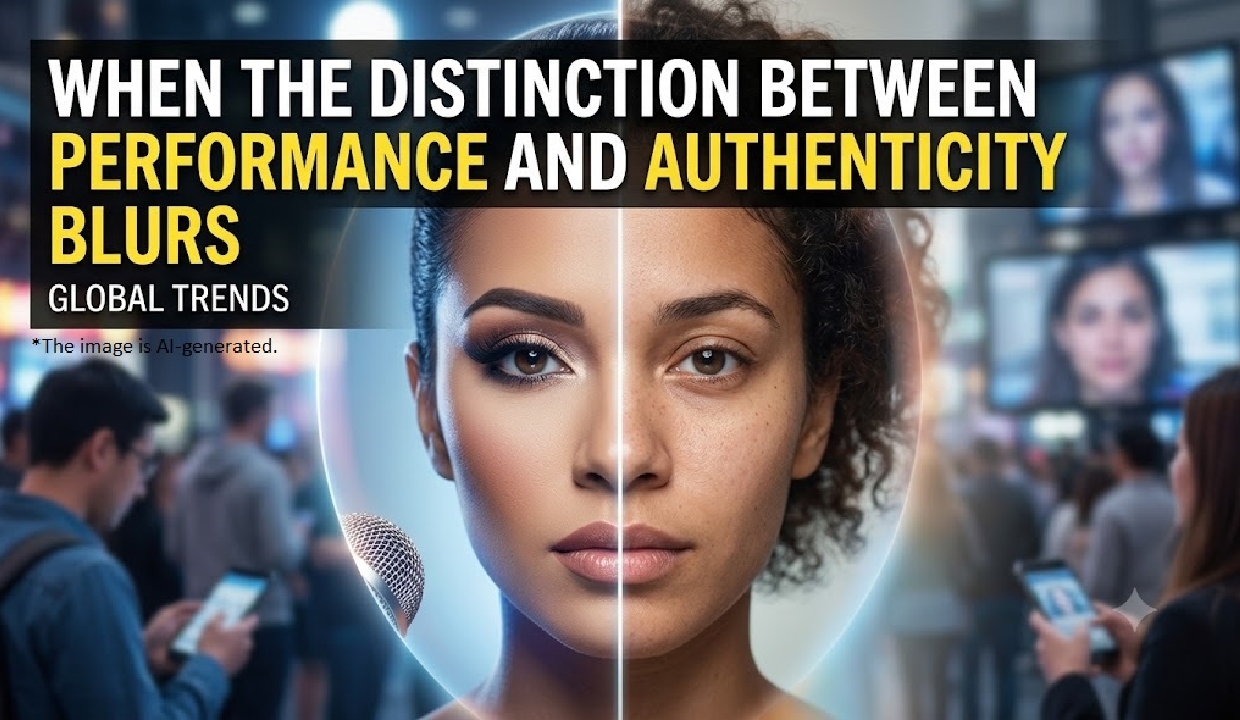
In such an environment, the distinction between performance and authenticity also begins to blur. The person we present to the world and the person we are in our unguarded moments are expected to coexist continuously. Social approval, criticism, validation, and comparison have become part of everyday life in ways previous generations never experienced. Perhaps this is one of the defining psychological challenges of our age. Technology has connected us more extensively than ever before, but it has also made performance a permanent condition of modern life. We are simultaneously participants, audiences, and subjects. There may be value in rediscovering something that earlier generations understood instinctively: the importance of spaces where one is not performing, responding, or being observed. Spaces where one can simply be. While technology has succeeded in bringing the world closer to us, it may also have made it harder for us to find distance from the world.
The writer is a founder of Kala - Krazy About Literature And Arts, is an author, speaker, coach, arbitrator, and strategy consultant; Views presented are personal.
Leave a Comment
Comments (1)
Much needed article. I agree. This has been like that here in India from 2015. Too much information but very less feelings. To be sure you need to pause and reflect. Or one can drown in this ocean of knowledge. That's why so many life coaches and others have emerged in recent years...