When Terror Lost Its Greatest Battle
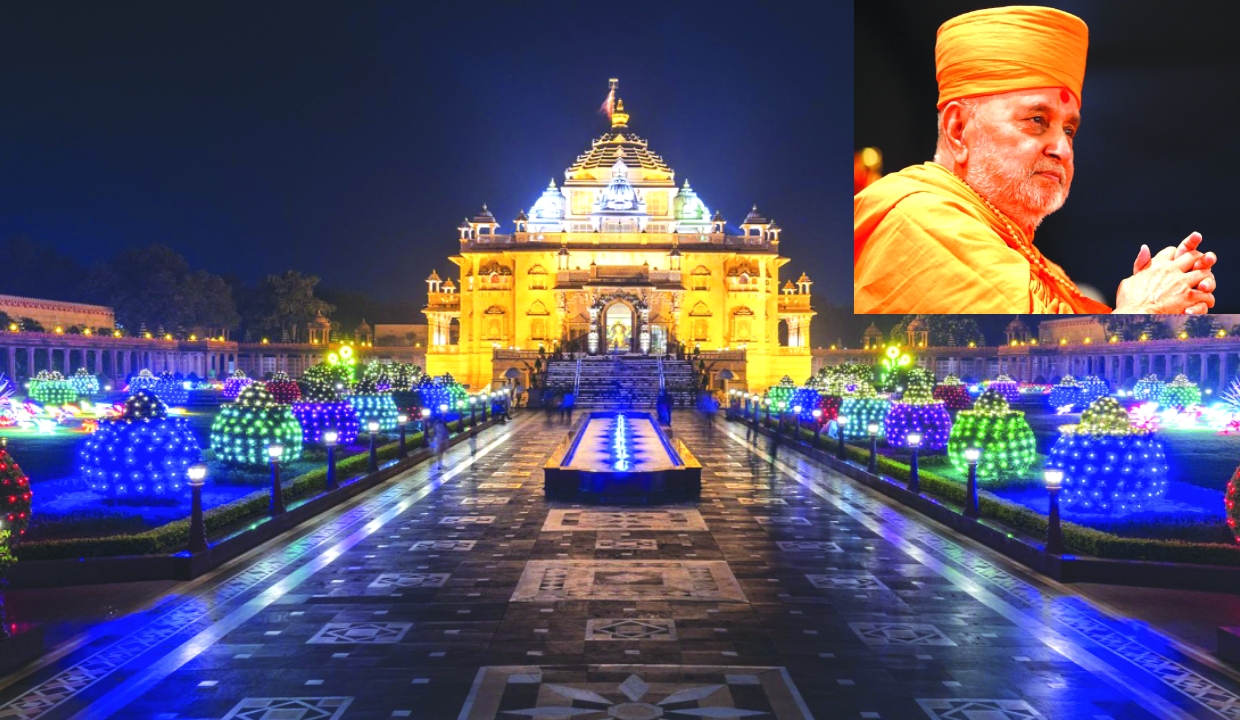
The terrorist attack on Akshardham (Gujarat) was meant to leave more than shattered lives; it was designed to shatter a nation's harmony. Yet the guru's extraordinary calm changed history. As Pramukh Swami Maharaj appealed for peace instead of revenge, terror lost its greatest battle, proving that humanity's strongest response to violence is unwavering compassion
The afternoon of 24 September 2002 appeared no different from countless others at the Akshardham Mandir Complex in Gandhinagar. Visitors from across India and abroad leisurely explored the magnificent sandstone monument, families admired its intricate carvings, children eagerly made their way towards the exhibitions, while devotees paused in silent prayer. Volunteers, as always, moved unobtrusively through the campus, guiding guests with warmth and devotion. It was an atmosphere defined by serenity; a place built to inspire peace, faith and harmony.
Then, at 4:45 p.m., tranquility gave way to terror. A white car halted outside Gate No. 3. Two men stepped out carrying what appeared to be ordinary luggage. Within moments, sleeping bags and jackets concealed an arsenal of automatic rifles and grenades. When volunteer security personnel attempted to carry out a routine security check, the men vaulted over the barricade and opened indiscriminate fire. The sound of bullets echoed across the peaceful complex, replacing laughter with screams and turning an ordinary afternoon into one of the darkest days in India's recent history.
The terrorists moved swiftly towards the sanctum of Akshardham. Their intention was unmistakable, not merely to kill, but to desecrate a sacred monument that symbolized peace and spirituality. Yet their plan encountered its first unexpected obstacle. Alert volunteers, having instantly grasped the gravity of the situation, rushed visitors into the main monument and secured its doors from within. By the time the attackers reached the entrance, they had missed their objective by only a few precious seconds.
Denied access, the terrorists redirected their fury towards the exhibition halls, where they unleashed a ruthless barrage of bullets upon innocent visitors. Within barely fifteen minutes, a sanctuary of devotion had been transformed into a scene of unimaginable horror.
Police, security personnel, volunteers and later the National Security Guard responded with remarkable courage. Throughout the long night, commandos searched every corner of the sprawling campus while doctors battled tirelessly to save the wounded. By sunrise, after nearly fourteen hours of intense operations, both terrorists had been eliminated.
The battle lasted through the night. But as history would later reveal, the most decisive battle was not fought with guns. It was fought in the hearts and minds of millions who watched the tragedy unfold.
History tells us that terrorism does not conclude when the firing stops. Often, its real success depends upon what society does next. The attackers had not selected Akshardham by accident. They had struck at one of Hinduism's most revered cultural landmarks in Gujarat, a state already emotionally fragile after months of communal tension. Their calculation was painfully simple: attack a sacred place, provoke outrage, ignite revenge, and allow society to destroy itself from within.
This was about to come true. Within a few minutes, the horrifying images from Akshardham travelled across India and around the world through the media. The entire Sanatan community was deeply shaken and was thinking of severe retaliation.
Amid this storm of grief and uncertainty stood one man whose response would profoundly influence the nation's next chapter- Pramukh Swami Maharaj, the creator of Akshardham! Yet his response defied every expectation. There were no words of hatred.No calls for revenge.No attempt to identify communities with criminals. Instead came an appeal that was astonishing in its simplicity: maintain peace, preserve harmony, pray for the victims, and allow no further bloodshed.
Pramukh Swami Maharaj understood something fundamental about terrorism; it feeds upon emotional reactions. Violence seeks another act of violence. Hatred longs to multiply itself. Every retaliatory riot would have become a delayed victory for the attackers. If anger had erupted into widespread retaliation, the terrorists would have achieved far more than they ever could with guns alone. Swamiji refused to grant them that victory.
His appeal spread rapidly across Gujarat and throughout India. Devotees listened. Citizens exercised restraint. The atmosphere remained tense, yet remarkably controlled. A tragedy that could have spiraled into prolonged communal unrest gradually gave way to a collective peace assembly instead of collective vengeance.
The significance of Pramukh Swami Maharaj's response did not end with the tragedy itself. It travelled far beyond India's borders. World-renowned security experts and counter-terrorism professionals began referring to it as the 'Akshardham Response', a model of how moral leadership can prevent terrorists from achieving their ultimate objective. Brigadier Raj Seetapathy, who led the NSG operation, later presented this case at military and police institutions, describing it as a benchmark in crisis management. The response was also discussed at international forums on terrorism in Europe, where scholars and security professionals highlighted it as a timeless example of defeating violence not merely through force, but through restraint, compassion and social responsibility.
The lesson was profound: while security forces neutralize terrorists, only wisdom can neutralize terrorism's intended consequences.
Dr Swami Gyanananddas is a dedicated follower of the Swaminarayan tradition and has earned a PhD from MS University; Views presented are personal.