What higher education must look like in the next decade
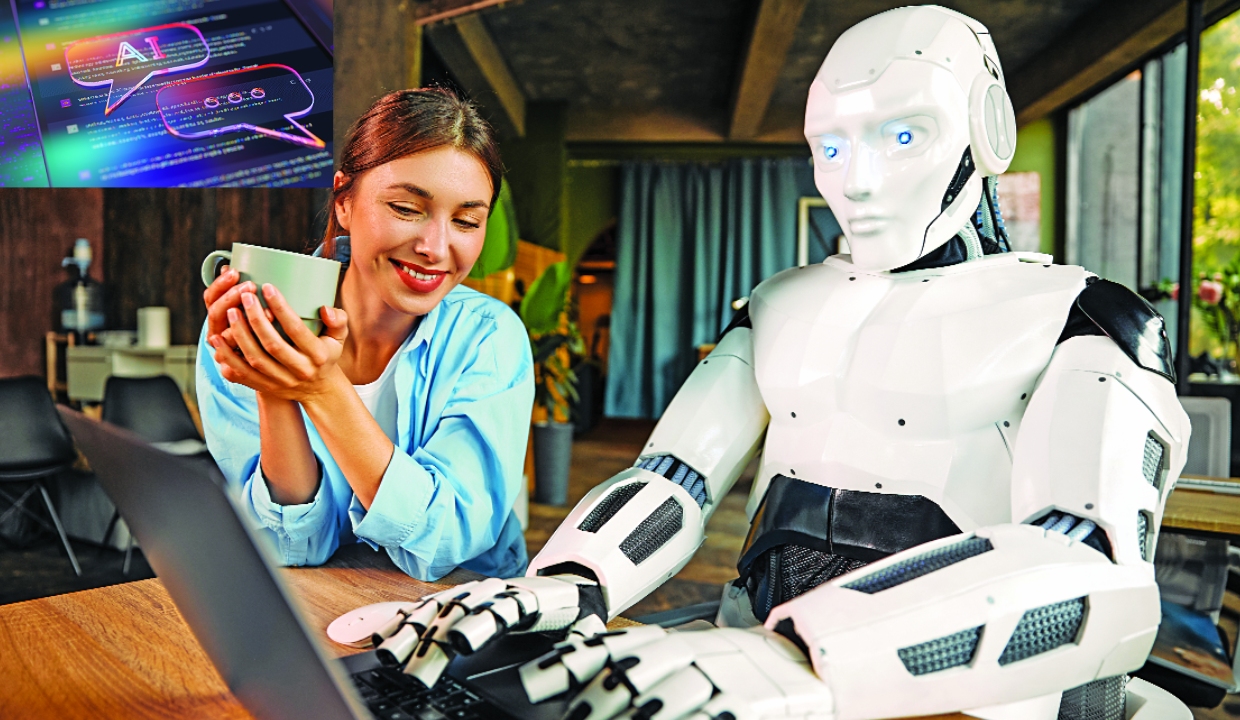
If AI can write reports, generate code, analyse data, and respond to complex queries within seconds, what will continue to distinguish a human professional?
Higher education has weathered disruption before. When the internet arrived, many predicted it would make universities obsolete. It did not — but it changed them in ways that took a generation to absorb fully. What we are living through now feels different. Not because the technology is louder or faster, though it is both, but because it strikes at something more fundamental: the question of what a university is actually for.
Artificial Intelligence is no longer a horizon we are moving towards — it is the ground we are already standing on. In classrooms, laboratories, and administrative offices across the world, intelligent systems are reshaping how universities function, how faculty teach, and how students learn. And yet, deploying AI tools is the easier part. The harder task is reimagining education itself — so that universities produce not graduates who can operate alongside AI, but graduates who can lead in a world shaped by it.
This raises a question every institution must answer honestly. If AI can write reports, generate code, analyse data, and respond to complex queries within seconds, what will continue to distinguish a human professional? The answer is not a longer list of technical competencies. It is something older and harder to teach — a set of enduring human capabilities that technology can support but will never authentically replace.
An AI-native university has not bolted AI onto its existing structures. It has rebuilt itself around it. Students benefit from learning journeys tailored to their individual strengths, gaps, and pace — not the standardised curriculum designed for an average student who, in truth, has never really existed. Too many talented students have struggled not because they lacked ability, but because the system moved at someone else’s pace. Intelligent systems can now identify knowledge gaps in real time, recommend targeted resources, and adjust evaluations based on individual progress. Learning shifts from memorisation towards mastery — and a university’s relationship with students need not end at graduation, but can extend through upskilling and personalised guidance across an entire professional life.
The evolution of the faculty role deserves to be understood as an elevation, not a threat. AI can generate assessments, summarise research, and answer the kinds of questions that once consumed office hours. As these capabilities mature, educators will increasingly become mentors and facilitators — people whose value lies not in how much they deliver in a lecture, but in how effectively they help students interpret knowledge, challenge assumptions, and apply learning in situations that resist easy answers. That is, if we are honest, what the best teachers have always done.
Assessment is where universities will face their most urgent reckoning. An institution that continues to evaluate students through essays and assignments that AI can complete in minutes is not assessing students at all — it is assessing the tools available to them. Future assessments must move towards simulations, case studies, live presentations, and oral examinations that reveal how a student actually thinks. The goal is not to prevent AI use, but to design evaluations where human capability is unmistakably what is being measured.
And that brings us to what universities must most deliberately protect: the capabilities that remain irreducibly human. Conflict resolution requires the emotional intelligence to transform disagreement into collaboration. Negotiation depends on reading people and building the kind of trust that comes only from authentic exchange. Empathy allows leaders to understand motivations and lived experiences in ways that no pattern-recognition system can. The ability to stand before a room and move people — to adapt a message in the moment, to earn credibility through presence — remains a fundamentally human strength. So does the resilience to guide others through uncertainty without a guaranteed map. These are not soft skills. They are the skills that determine whether a person can lead, and no algorithm will replicate them.
The universities that will matter in the decade ahead are those that hold both commitments together — building genuine AI literacy while investing with equal seriousness in human character and capability. These are not competing priorities. They are the two halves of the same task.
The graduates who will shape the world ahead are not those who can use AI most fluently. They are those who bring to it the judgement, empathy, and wisdom that no machine will ever be able to supply.
The writer is Vice Chancellor, Symbiosis International (Deemed University); Views presented are personal.
Leave a Comment
Comments (1)
Dear VC Sir, This article offers a refreshing, honest, and balanced perspective on AI's role in higher education. The future belongs to those who bring wisdom and humanity to technology and not just fluency in using it. Thanks.