Vijender Gupta lauds CRPF’s professionalism, service
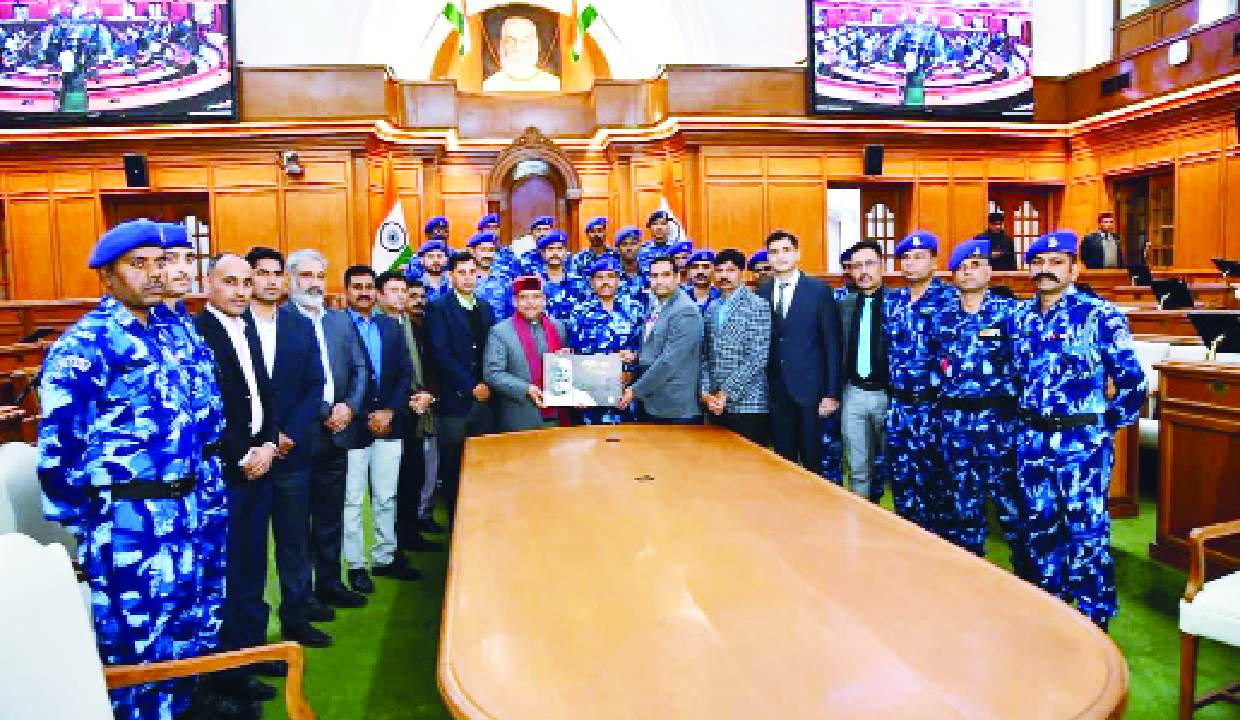
Lauding the professionalism of the Central Reserve Police Force (CRPF), Delhi Assembly Speaker Vijender Gupta on Tuesday commended the force for its historic and continuing role in maintaining internal security and public order across the country.
“Operating in some of the most challenging security environments in the country, the jawans of the Central Reserve Police Force exemplify discipline, courage and unwavering professionalism, forming the backbone of India’s internal security,” Gupta said during an interaction with jawans and officers of the 103rd Battalion of the Central Reserve Police Force (CRPF), held in the presence of their families and children, at the Delhi Vidhan Sabha.
During the interaction, the Deputy Commandant, Assistant Commandant and other officers of the 103rd Battalion of the Central Reserve Police Force were also present.
The Speaker also presented a Coffee Table Book titled “Delhi Legislative Assembly presents Shatabdi-Yatra: Veer Vithalbhai Patel” as a memento to them.
The Speaker commended the CRPF for its historic and continuing role in maintaining internal security and public order across the country. He highlighted the Force’s vital contributions in countering militancy and insurgency, addressing Left Wing Extremism, ensuring security during elections, protecting vital installations and dignitaries, and assisting civil authorities during emergencies and natural calamities.
Gupta specially acknowledged the service of CRPF personnel who have previously served in challenging regions such as Jammu and Kashmir, Dantewada, Sukma, Bijapur, and other sensitive areas, commending their dedication, courage and professionalism while operating under demanding conditions.
Addressing the jawans and officers, Gupta highlighted the historic significance of the Delhi Vidhan Sabha, noting that the institution dates back to 1911, when the third Delhi Durbar marked King George V’s announcement of the transfer of the Capital from Calcutta to Delhi.
He noted that the Assembly has evolved over 113 years, with early nationalist leaders such as Gopal Krishna Gokhale and Lala Lajpat Rai raising Indian concerns in legislative forums during the colonial period.
Recalling the impact of the Rowlatt Act, the Jallianwala Bagh massacre of 1919, and India’s substantial contribution during the First World War, the Speaker noted that the Central Hall of the Assembly has hosted several defining moments, including the first convocation of Delhi University in 1923 and the passage of significant legislation in 1925.
He further stated that although legislative proceedings shifted after the completion of the new Parliament building in 1927, the Delhi Vidhan Sabha remains a living symbol of India’s democratic heritage and constitutional journey.
As part of the programme, the jawans and officers were given a guided tour of the Assembly House, during which they were familiarised with its functioning, traditions, and parliamentary heritage. The families and children of the CRPF personnel also participated in the tour, where they were acquainted with the 113-year-old legislative heritage of the Delhi Vidhan Sabha and its role in India’s constitutional and democratic journey.
On the occasion, the Speaker also presented a Coffee Table Book titled “Delhi Legislative Assembly presents Shatabdi-Yatra: Veer Vithalbhai Patel” as a memento.