Vaishnaw flags off Vande Bharat service in Jammu
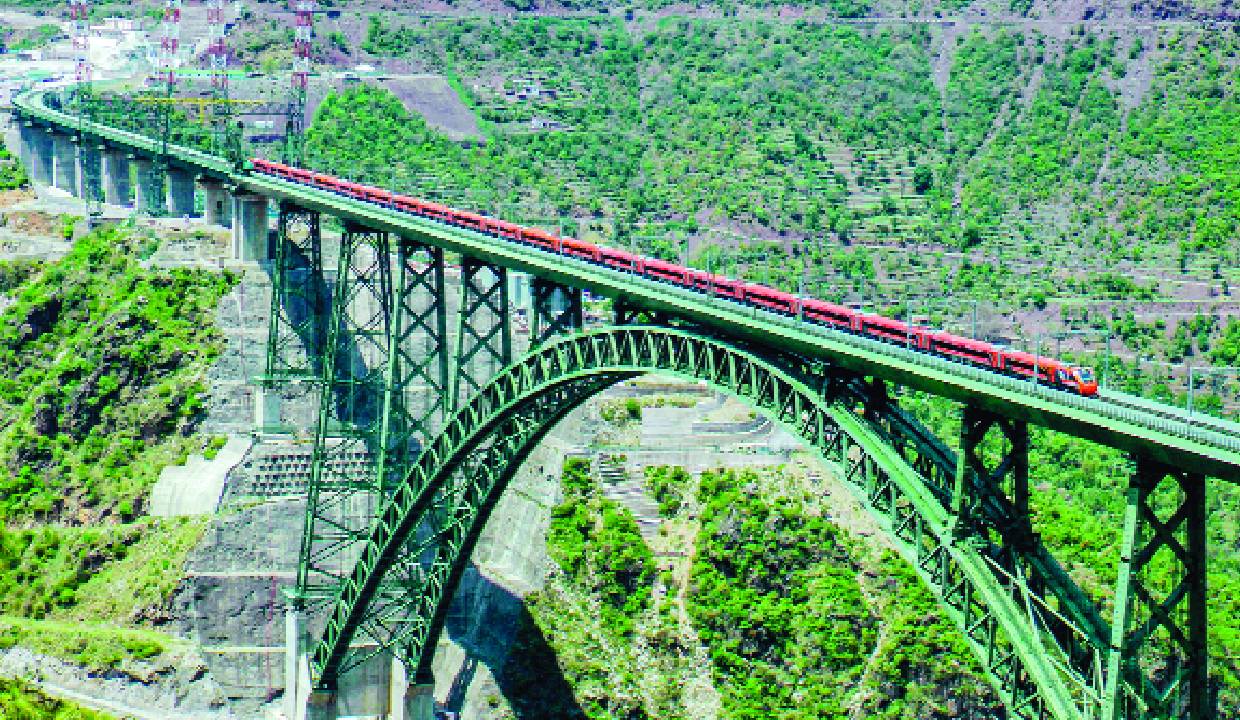
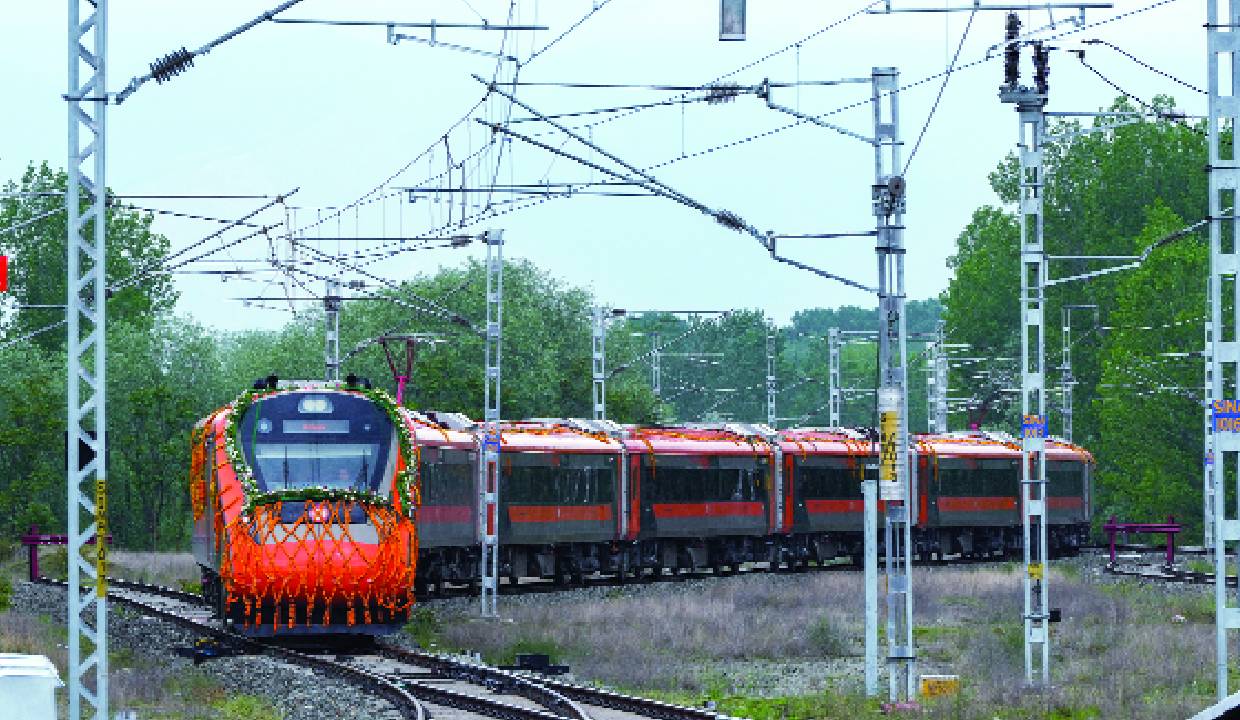
The extended Srinagar-Katra Vande Bharat Express service, flagged off by Union Railways Minister Ashwini Vaishnaw from the refurbished Jammu railway station on Thursday, is set to emerge as a new ‘lifeline’ for commuters travelling between the twin capital cities of Jammu and Srinagar.
With the launch of the direct train services, the Indian Railways has now completely fulfilled the dream project conceived by the Dogra rulers in 1892.
While the inaugural run took place on Thursday, regular service between Jammu and Srinagar is scheduled to commence on May 2.
The direct Jammu-Srinagar train service will enhance travel convenience for both tourists and local travellers, boost logistics efficiency, and promote ease of doing business across the region.
Speaking at the flagging off ceremony in the presence of Union Science and Technology Minister, Jitendra Singh, J&K Chief Minister Omar Abdullah, Members of Parliament Ghulam Ali Khatana and Sat Paul Sharma at Jammu Railway Station, Railways Minister Vaishnaw described it as a landmark achievement in the history of Indian Railways.
The Minister noted that the Vande Bharat service in Jammu and Kashmir has witnessed 100% occupancy from the very first day of operations, reflecting strong public acceptance. He further informed that over 5.5 lakh passengers have already travelled on these trains. The Minister said that regional cuisines, including Dogri and Kashmiri dishes, have been introduced onboard, offering a culturally enriching journey, particularly for pilgrims and tourists.
Highlighting the technological advancements, Vaishnaw stated that Vande Bharat trains for Jammu and Kashmir are specially designed to operate in extreme weather conditions, including temperatures as low as minus 10 degrees Celsius. He said the trains are equipped with advanced operating systems and electronics suited for high-altitude conditions.
The Minister stated that improved rail connectivity in J&K has boosted freight operations, lowered the cost of essentials like cement (below `50 per bag), enabled supply of goods such as Amul products, and transported over 2 crore kg of Kashmir apples to Delhi. He added that perishable produce like cherries will now move more easily, benefiting farmers and traders.
He further stated that work is underway for the doubling of the railway line between Qazigund and Baramulla to enhance capacity. He informed that projects such as the Poonch–Rajouri rail link and the Uri–Baramulla extension are under planning and DPR stages.
Speaking on the occasion, Chief Minister Omar Abdullah said, “I congratulate the railway ministry. We have connected Jammu today with Srinagar. Today, an 8-bogie train has been converted to 20 bogies, and now 1,400 people can travel from Jammu to Srinagar.
This train has given us a lot of benefits now, cement, and even Cars are being sent through the train to Srinagar, and fruit is also being sent to other states from Kashmir. We need a dry port in J&K, and we want custom clearance to be done in J&K for goods to be exported. We were waiting for this day.”
The railways minister further highlighted that the Government is undertaking key infrastructure initiatives, including the redevelopment of Jammu Railway Station with additional platforms and improvements in the Jalandhar–Jammu rail link.
He also noted that the Union Cabinet approval for the Delhi–Ambala four-laning project will further enhance connectivity and provide benefits to the residents of Jammu & Kashmir.
Later, speaking to media persons onboard the Jammu-Srinagar Vande Bharat Express, Vaishnaw stated it will benefit passengers from all over the country by providing access to the hilly region of Jammu and Kashmir by a single exchange at Jammu round the year with services being provided twice a day.
The Minister said that the Railways is now focusing on increasing the carrying capacity of trains operating between Jammu and Srinagar. He informed that key infrastructure initiatives, including installation of automatic signalling systems and construction of additional crossing stations, are being undertaken to enhance operational efficiency and ensure seamless train movement. Other technological and operational innovations are also being introduced.
The Minister said that Jammu Tawi Railway Station is being redeveloped at a rapid pace with a modern design. He informed that a total of four railway stations is currently being constructed or upgraded across Jammu and Kashmir to provide improved passenger amenities and infrastructure.
On upcoming Amarnath Yatra, the Minister assured that special arrangements will be made by the Railways to facilitate pilgrims, with a focus on safety and convenience. Speaking on the occasion, Union Minister Dr Jitendra Singh said that commencement of the augmented 20-coach Jammu–Srinagar Vande Bharat Express marks a landmark achievement in the ongoing efforts to transform rail connectivity in the Union Territory of Jammu & Kashmir.
The Minister emphasised that improved rail connectivity is expected to lead to a substantial rise in pilgrim inflow to important destinations in the region, while also facilitating seamless and efficient movement of security personnel. He highlighted that enhanced connectivity would reduce travel time, improve access to remote areas, and integrate local economies more closely with national markets.
After reaching Shri Mata Vaishno Devi Katra Station, the railway minister inspected the Anji Bridge and the Chenab Bridge on the Udhampur-Srinagar-Baramulla Rail Link (USBRL). He was accompanied by Dr Jitendra Singh and senior railway officials.