US Open 26: Scheffler trying to make history, Shinnecock tries to avoid recent history
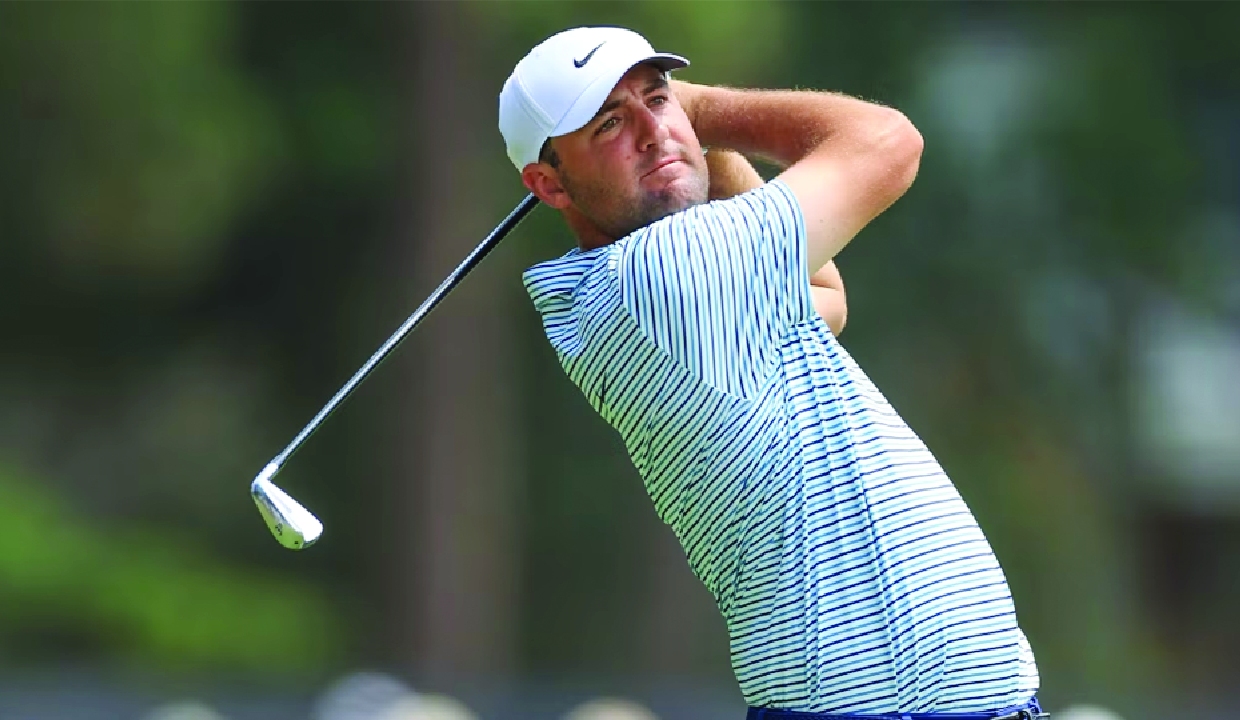
So much history is involved when the US Open returns to Shinnecock Hills, the only golf club to host this major championship in three centuries. Scottie Scheffler will try to take his place in history when the Number 1 player goes after the final leg of the career Grand Slam. Should he win, he would be the seventh player to win all four majors and join Tiger Woods as the only players since 1960 — the modern era of the slam — to get it done on his first try.
That ordinarily would be the sole focus of the 126th US Open, to be played June 18-21, except for the recent history at Shinnecock Hills.
It has not been smooth sailing off the Great Peconic Bay on Long Island.
“It’s hard when you run one tournament a year — and you run it on a different golf course every year — to get it just right,” Scheffler said. “And you’re trying to make it hard. I think in the US Open, they push the boundaries. If they’re going to continue to push the boundaries, eventually they’ll screw up, and then they’ll dial it back.”
The 2004 US Open was already brutally tough when the USGA failed to account for the strength of the warm wind. The par-3 seventh, with its Redan green, became so impossible to hold that officials had to douse it with water between groups on the final day. No one broke par, and the average score was 78.73.
Among the blistering comments came this from Jerry Kelly: “I think they’re ruining the game. They’re ruining the tournament. This isn’t golf.” When the US Open returned to this New York gem in 2018, the greens were so glassy from sun and wind that the last 45 players on the tee sheet Saturday failed to break par. Phil Mickelson staged a bizarre protest by swatting a moving ball on the 13th green.
Brooks Koepka saved the week by becoming the first repeat champion in 29 years. So a return to the fabled course evokes one thought: What will go wrong this time? “Hopefully, they get the balance right of all the different challenges, and it’s not contrived,” Adam Scott said.
“These great tracks, they’ve gotten into trouble when they’ve been manipulated.”
Wider fairways planned for this year John Bodenhamer, the USGA’s chief competitions officer, was asked to take a hard look after 2018 to see what went wrong and why. The short answer was greens were not properly hydrated.
The real answer comes over four days at Shinnecock Hills, the sixth time for it to host the U.S. Open, never under this much scrutiny. The early scouting report from Scheffler and Rory McIlroy was wider fairways than they are used to seeing at a U.S. Open.
That wasn’t a mirage. Bodenhamer said the USGA wanted to present a course the way William Flynn designed it in 1931, when he was brought in to reshape a course that first opened in 1891, the oldest golf club in America still in the same location. That means an average fairway width of 48 yards, compared with 42 yards in 2018 and 32 yards wide last year at Oakmont. He anticipates slower green speeds to account for so many putting surfaces perched on a hill and exposed to the wind.
“The way we’re thinking about this year is to let Shinnecock be Shinnecock,” Bodenhamer said.
That should be enough. In the five U.S. Opens at Shinnecock Hills, three players have finished the tournament under par - Raymond Floyd in 1986, Retief Goosen and runner-up Mickelson in 2004.
McIlroy said the green speed was just over 11 on the Stimpmeter - slightly under the target speed the USGA has in mind - and the Masters champions don’t think they need to be much faster.
“If they can keep them at that green speed, they can get them firm, and they can use the hole locations that they want to use without having some of the struggles that they have had the last couple of U.S. Opens,” McIlroy said. “If it’s set up the right way, I think it’s one of the best championship tests in the country. It’s an amazing golf course.”
McIlroy became the most recent player with the career Grand Slam by winning the Masters in 2025. At the time, Scheffler had two green jackets but only one leg of the career slam. And then he steamrolled the competition at the PGA Championship and British Open.
“Fixed that,” Scheffler said with a laugh at the start of the year. Now he’s on the cusp of the most elite club in golf. McIlroy had to wait 11 years to get the final leg. Jack Nicklaus (1966 British Open) and Gary Player (1965 U.S. Open) each waited three years for their final pieces. Scheffler is the betting favourite, even though he hasn’t won in five months.
He was runner-up in 2022 at The Country Club, his best chance. He was in the mix at Los Angeles in 2023 and on the fringe of contention at Torrey Pines. “I like the challenge of playing a really hard golf course against a really good field,” he said.
Adam Scott is among three players - potentially four depending on alternates - who are playing a third time at Shinnecock Hills, though he has yet to make the cut there.
He still has a cause for celebration. Scott is playing in his 100th consecutive major, dating to the 2001 British Open, the second-longest streak behind Nicklaus and his incomparable run of 146 in a row.