UP will reach one trillion dollar economy before 2035: Assocham Secy-Gen
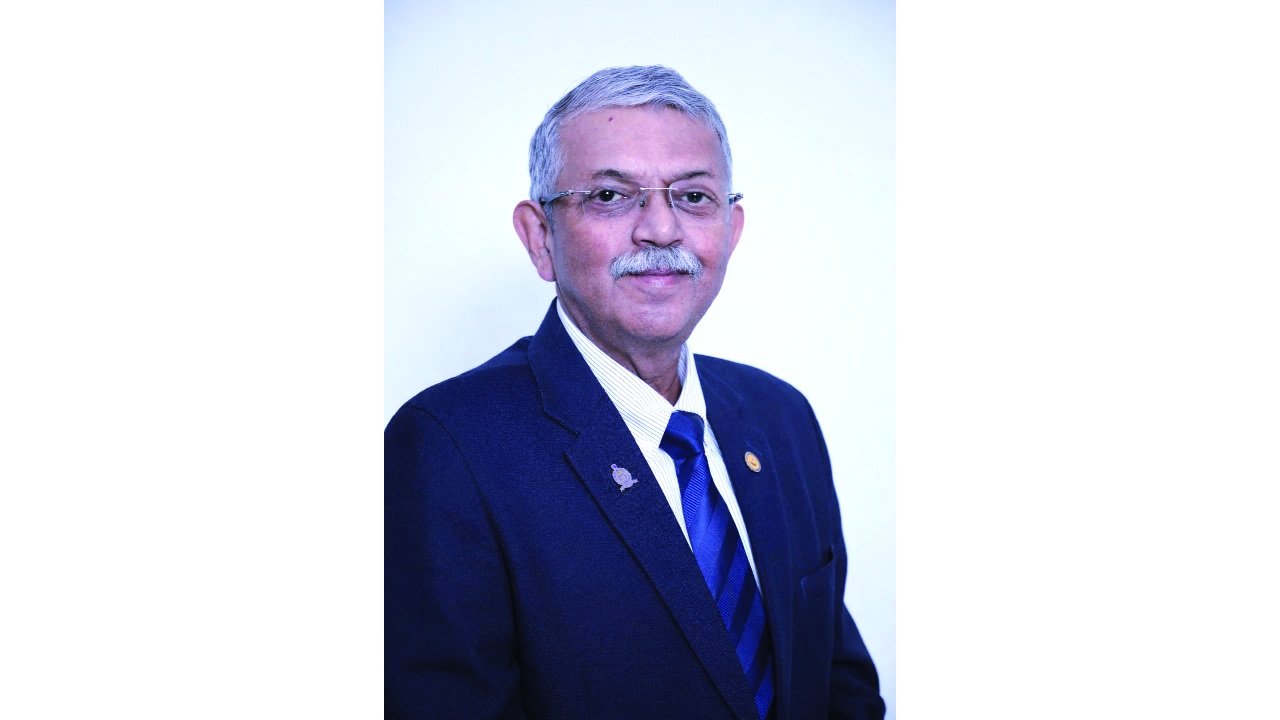
Assocham Secretary-General Saurabh Sanyal said here on Thursday that Uttar Pradesh will reach the one trillion-dollar economy before 2035, looking into the way it was progressing as far as investment was concerned.
Sanyal was in the city to participate in the Uttar Pradesh Manufacturing Conclave organised by Assocham at a city hotel.
Talking about the investment climate currently prevailing in the state, he said that Uttar Pradesh has accelerated as far as the GSDP is concerned. “From 13.3 lakh crores in the financial year 2017, it has grown to 36 lakh crores, which is a phenomenal jump in 2026. I am sure that Uttar Pradesh will reach its target of a one trillion-dollar economy, which is the aspiration of CM Yogi, before 2035, the way they are progressing, that will be much before the Viksit Bharat target,” he said.
He noted that the key reforms that have made the biggest impact in recent years in the State have been the sectoral strength — the services have grown to 46 per cent, the tourism, real estate, financial services, hospitality, and agriculture have grown to 27 per cent, there has been improved productivity and irrigation facilities. Also, there has been diversification of the industries and the setting up of semiconductor manufacturing facilities, which are emerging technologies.
“By the next decade or so, UP will be the manufacturing hub of India. It is also leading in electronics manufacturing. UP is also launching ODOP 2.0, which will also be a massive success story,” he added.
He stressed that the most important reform in the state has been the ease of doing excellent business. “UP is already amongst the top five States where the ease of doing business is absolutely remarkable. If an industry is set up in UP within 1000 days, hundred per cent licenses will be cleared, which is a great achievement. This reform has not happened in any other state except Gujarat,” he said.
He emphasised that UP is the preferred destination for investment. “There are fifty lakh crores of investments which are in the pipeline that are coming not only from the domestic side but also from the FDIs,” he stated.
Talking about Assocham’s focus as far as UP is concerned, he noted that Assocham has always been with the UP industries and that they have been promoting industries right from the word go.
“We have been connecting the industries to the Government of Uttar Pradesh, and we have sorted out their pain points. Assocham is acting as the intermediary between the Nivesh Mitra and the industry. Out of the 96 lakh MSMEs in UP, fifty per cent are members of Assocham.” He further stated that they were here for policy advocacy, policy intervention and for social and economic development.
“We are also exposing all the schemes of the Government to the industries. Assocham is planning a mega 12th Conclave on MSMEs in May this year in UP”, he said.
Commenting on the key challenges faced by the MSMEs in the state, he said it is their fiscal management and the problems related to the payments made to the MSMEs, even though the Government has stipulated a time frame of forty-five days.
“Another challenge is the adaptation to technology. MSMEs are not well-versed in the emergent technologies. If they implement AI, automation, and machine learning, they will be a huge fillip to their progress, and they will be at par with the MSMEs of the world. This can be addressed by skill development,” he added.
Asked if any bottlenecks were affecting the growth of industries in the State, he said that there were no stumbling blocks, and one of the major achievements of the state was the single window clearance.
On the top priorities they would recommend to the Government in the next two to three years, he said that they would stress on automation and training of the industry in artificial intelligence, because these were the tools that would give a tremendous boost to manufacturing.
“Secondly, we will request the industry to go to the farms so that the produce can be bought, processed and exported immediately right from the farms. There is enough space in the farmlands where factories can come up,” he added.
He admitted that though these were the best of times, they were also the worst of times with the West Asian crisis going on. “We hope that this war gets over as it has certainly impacted the industries since the Industrial gas is not reaching, and the industries are getting shut temporarily pan India.”