Ukraine’s Army reforms under fire, breaks Soviet legacy
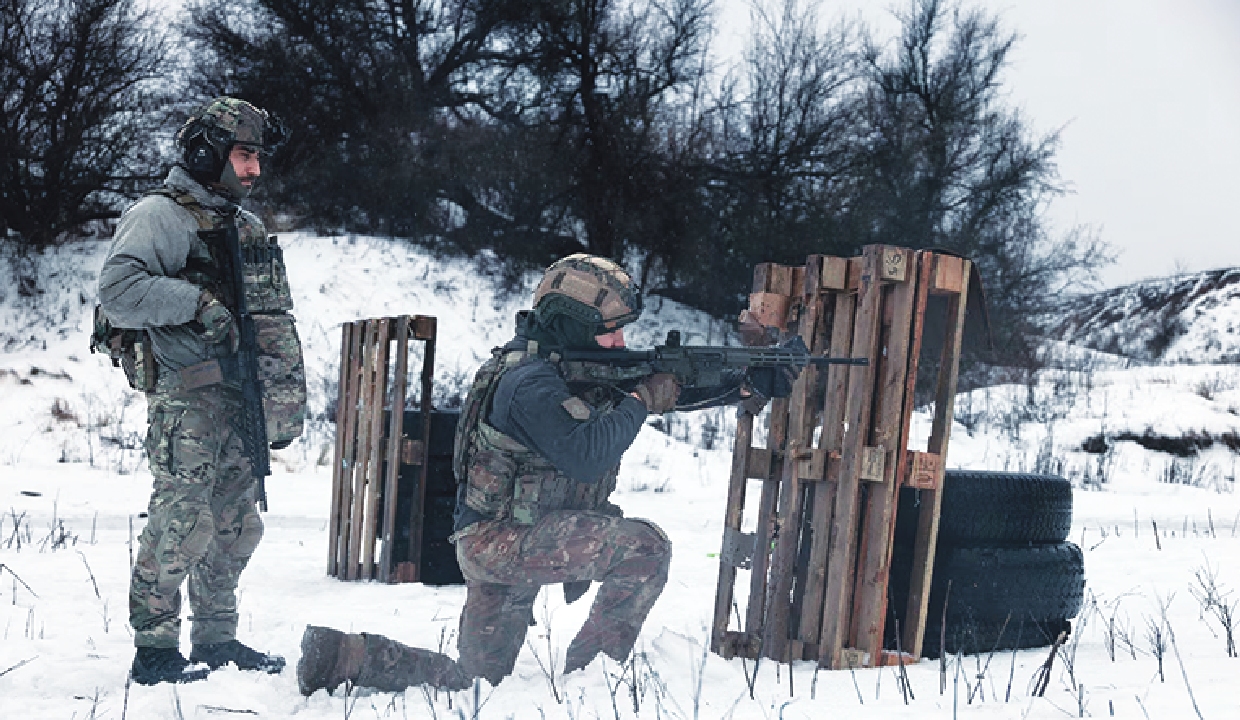
When a Ukrainian agricultural tycoon founded a volunteer unit of 30 people in the early days of Russia’s invasion, he had no certainty he would live to see what came next — but he did, and so did the force he created.
The group is now a 40,000-strong corps widely seen as one of Ukraine’s most effective fighting formations within official defence forces.
“Ukraine needs to have an effective modern army. And this is our number one guarantee of the country’s security,” said Vsevolod Kozhemyako, owner of a large agricultural conglomerate and now an adviser to the Commander of the Khartiia Corps.
Its rapid expansion reflects a broader transformation of Ukraine’s military, part of a new wave of formations, alongside the Third Army and Azov Corps, breaking with Soviet-era practices long criticised by soldiers. As talks on a potential peace settlement stall and global attention shifts to the Middle East, Ukraine continues to seek firm security guarantees from its allies, particularly the United States. But for many in Ukraine, the war has reinforced a different conclusion: the country’s strongest guarantee may ultimately be its own army.
“We have kids, we have grandkids, and we will stay on this territory,” Kozhemyako said. “The future of this country depends on us.”
After the Soviet Union collapsed, Ukraine inherited a large military and arsenal. But by 2014, Russia’s annexation of Crimea and armed conflict in eastern Ukraine exposed weaknesses from underinvestment, corruption and a lack of clear strategy, prompting an influx of volunteers and long-overdue military reforms.
Those changes helped Ukraine withstand the 2022 invasion, but as the war dragged on, some of its deepest problems — rigid top-down leadership, excessive bureaucracy and a culture where bad news is often hidden out of fear of punishment — began to reassert themselves, with consequences on the battlefield. From the outset, Kozhemyako said his unit would have to take a different path. He said he understood the shortcomings of the regular army as an active military member since 2014, who was surrounded by veterans. “They didn’t want to join the post-Soviet army, but they wanted to fight,” Kozhemyako recalled.
Many of them were civilians with a background in business, he said. TLP allow lower-level units to plan operations faster, which is critical for exploiting narrow windows of opportunity on the battlefield. AAR push soldiers to identify what happened, why and how to improve, a process the corps has applied with particular rigour to its fast-evolving use of technology.