Trade unions observe Black Day against Labour Codes

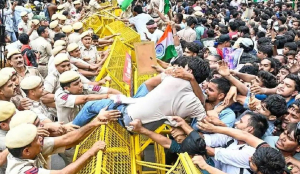
Following a call by a joint platform of ten central trade unions, workers across the country observed a ‘Black Day’ on Wednesday to protest against the Union Government’s four controversial Labour Codes. Workers donned black badges and headbands, asserting that the new legislation would push the country’s “wealth producers” back into a colonial-era state of exploitation.
The demonstrations, which included dharnas, black-flag marches, and motorcycle jathas, were spearheaded by a united front of major unions, including the Indian National Trade Union Congress (INTUC), All India Trade Union Congress (AITUC), Hind Mazdoor Sabha (HMS), and Centre of Indian Trade Unions (CITU).
Other participating organisations included the All India United Trade Union Centre (AIUTUC), Trade Union Coordination Centre (TUCC), Self-Employed Women’s Association (SEWA), All India Central Council of Trade Unions (AICCTU), Labour Progressive Federation (LPF), and United Trade Union Congress (UTUC), alongside several independent sectoral federations.
In a joint statement, the unions alleged that the Government is prioritising “Ease of Doing Business” over the fundamental rights of the proletariat. They argued that the new codes threaten nearly a century of hard-won legal protections, including those enshrined in the Trade Unions Act of 1926.
“These labour codes are designed to push the workforce into conditions akin to slavery. They contravene the spirit of the Indian Constitution, International Labour Standards, and basic human rights,” the platform stated.
The agitators are demanding the immediate scrapping of the “pro-employer” codes and have called for an urgent Indian Labour Conference to facilitate genuine tripartite consultations. The unions reminded the Centre that the current legal framework — comprising 44 central laws and approximately 150 state legislations — was achieved through decades of post-Independence struggle.
Following the momentum of the general strike held earlier this February, the unions congratulated workers for their resolve and warned of “bigger struggles” ahead if the Government continues to ignore the demands of the labour and farming communities.