Trade & economic growth; bilateral ties on agenda
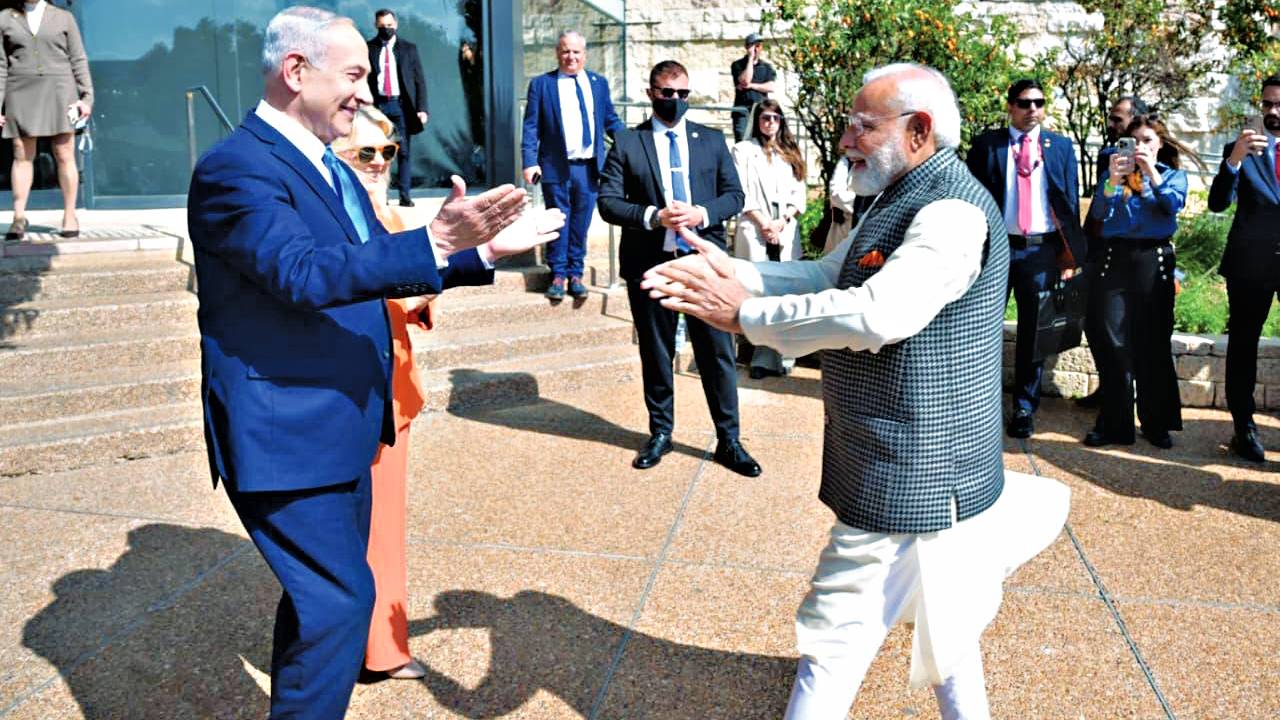
Prime Minister Narendra Modi is set to hold wide-ranging talks with Israeli Prime Minister Benjamin Netanyahu, with defence cooperation expected to dominate the agenda. The visit underscores the growing strategic depth between India and Israel, as both sides prepare to sign multiple agreements across key sectors.
Defence collaboration will be the central focus of discussions, reflecting a security partnership that dates back to the Kargil War, when Israel extended critical support to India. Since then, defence ties have evolved into a cornerstone of bilateral relations, encompassing advanced weapon systems, joint research, and technology transfers.
Talks will also cover counter-terrorism cooperation, cyber security coordination, and broader national security challenges. Both nations face complex regional threats and are expected to deepen intelligence-sharing mechanisms and operational collaboration. Prime Minister Modi was among the first world leaders to stand firmly with Israel following the October 7 attacks, a gesture Israeli officials say “will never be forgotten,” reinforcing mutual trust during times of crisis.
Technology, AI and Quantum cooperation
Beyond defence, emerging technologies such as artificial intelligence and quantum computing will feature prominently. The two countries aim to build joint innovation platforms, encourage research partnerships, and facilitate industry-to-industry collaboration in high-tech sectors.
Trade and Economic Expansion
Economic ties are also poised for expansion, with negotiations around a Free Trade Agreement (FTA) expected to gain momentum. Officials indicate that several bilateral agreements will be signed during the visit, strengthening trade, investment, and technological collaboration.
Strategic Frameworks: I2U2 and IMEC
The leaders are also expected to review progress under multilateral strategic initiatives such as I2U2 Group and the India-Middle East-Europe Economic Corridor, both seen as transformative platforms for regional connectivity, economic integration, and strategic cooperation.
Strong people-to-people ties
Beyond geopolitics, officials highlighted the “great people-to-people relationship” between the two nations. India has historically seen no antisemitism, a fact frequently acknowledged by Israeli leaders as a foundation of goodwill.
Israelis, particularly after completing mandatory military service, continue to view India as a peaceful, safe, and welcoming destination. Cultural exchanges, tourism, and educational partnerships have further strengthened societal bonds.
Agricultural cooperation remains another flagship success story. There are currently 34 Centres of Excellence across India established with Israeli collaboration, with plans underway to open 16 more — advancing innovation in water management, horticulture, and sustainable farming.
Diplomatic engagement between the two governments has intensified, with seven high-level visits recorded in 2025 alone — a clear indication of the importance both sides attach to the partnership. Officials note that the two prime ministers share a close working relationship, helping accelerate decision-making across sectors.