TMC MP Kakoli accuses party colleague Kalyan Banerjee of abuse, misogyny amid fresh party rift
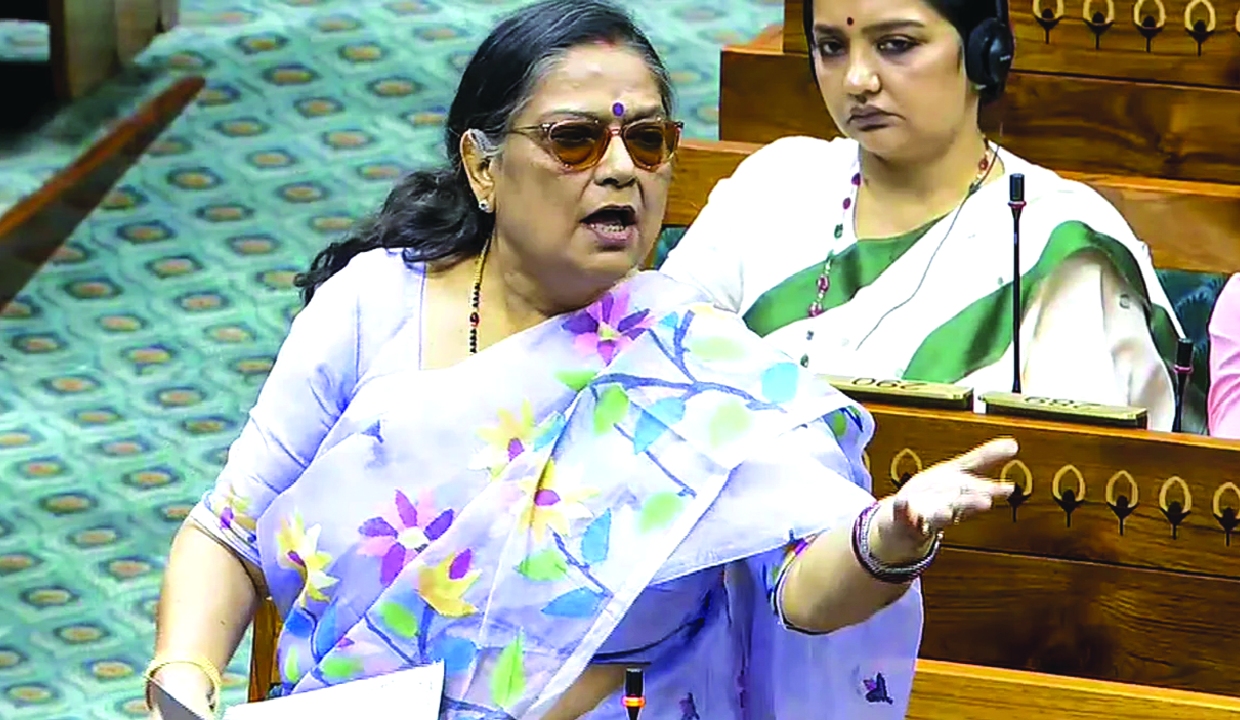
Internal faultlines within the TMC widened further on Thursday as senior MP Kakoli Ghosh Dastidar complained to Lok Sabha Speaker Om Birla against party colleague Kalyan Banerjee, accusing him of repeated verbal abuse inside Parliament and misogynistic behaviour towards women Parliamentarians.
The public escalation of hostilities between two senior TMC Lok Sabha MPs came barely 24 hours after Ghosh Dastidar quit all organisational posts in the party, citing growing disillusionment with its functioning and indirectly targeting sections of the leadership.
In her letter to the Speaker, the four-term Barasat MP sought permission to formally lodge a complaint against Banerjee and demanded punitive action.
“I seek your permission to lodge a formal complaint to you for redressal against Lok Sabha Member of AITC Kalyan Banerjee, who has repeatedly verbally abused me inside the Lok Sabha. This misogyny has been against many lady members and needs to be punished,” Ghosh Dastidar wrote.
Though she did not specify any particular incident in the letter, the complaint has added another volatile layer to the increasingly public factional tensions within the ruling party after its electoral reversal earlier this month.
Banerjee, one of the TMC’s most combative parliamentarians and a trusted troubleshooter of the leadership, hit back sharply and questioned both the timing and intent behind the allegations.
“If any incident had actually occurred inside the House, it should have been brought to the Speaker’s notice immediately in keeping with parliamentary procedure. Raising such allegations much later naturally raises questions about the intent and timing behind them,” Banerjee, the Sreerampur MP, told reporters.
He also questioned how the complaint letter, dated May 28, was submitted on a parliamentary holiday.
“Such claims are completely baseless. This appears more like a calculated political move than a genuine grievance,” the four-term MP said. The confrontation between the two MPs carries political significance within the TMC because it comes days after a key reshuffle in the party’s parliamentary hierarchy.
On May 14, TMC chairperson Mamata Banerjee re-appointed Kalyan Banerjee as the party’s chief whip in the Lok Sabha, replacing Ghosh Dastidar during a meeting of party MPs — a move widely interpreted in political circles as a reaffirmation of the Sreerampur MP’s standing within the leadership despite repeated controversies around him.
Banerjee had replaced Ghosh Dastidar six months ago.
The latest flare-up also appears rooted in tensions that had been brewing for several days.
On Wednesday, Ghosh Dastidar resigned from all organisational posts, including as chairperson of the All India Trinamool Mahila Congress, though she retained her position as Lok Sabha MP from Barasat.
In her resignation letter to TMC state president Subrata Bakshi, she launched a blistering attack on sections of the party establishment, invoking issues ranging from alleged corruption and the RG Kar rape-murder controversy to what she described as the growing grip of political consultancy firm I-PAC over the party machinery.
In a particularly pointed line, she wrote that there was little meaning in holding positions in a party where “obscene behaviour” by an “uncultured and uncivilised” party MP towards women parliamentarians could not be stopped.
Though she did not name Banerjee in that letter, political observers had little doubt about whom she was referring to.
The resignation had come a day after Ghosh Dastidar attended Chief Minister Suvendu Adhikari’s administrative review meeting in Kalyani, despite what party insiders described as a clear instruction from the TMC leadership to stay away.
That appearance itself had triggered intense speculation about defiance and shifting loyalties within the party’s Bengal unit, already struggling to cope with the aftershocks of its electoral defeat.
Over the last few weeks, the TMC has witnessed a string of public disagreements, resignations and cryptic social media outbursts by leaders, exposing strains within an organisation long known for its centralised command structure.
Banerjee himself has often been at the centre of controversies because of his sharp remarks and public run-ins -- not only with opposition leaders but occasionally with party colleagues too.
The latest row also revives memories of earlier public spats involving senior TMC leaders such as Mahua Moitra, Kirti Azad and Banerjee, episodes that had embarrassed the party leadership and exposed competing power centres within its parliamentary ranks.
For the BJP, which swept to power in Bengal earlier this month, the developments have provided fresh ammunition to target the TMC as a party grappling with internal rebellion and organisational drift after losing power.
The TMC leadership, however, has publicly maintained that the party remains united despite sporadic differences among leaders and has so far refrained from commenting directly on the latest confrontation between the two MPs.