Tiger kills woman in Madhya Pradesh
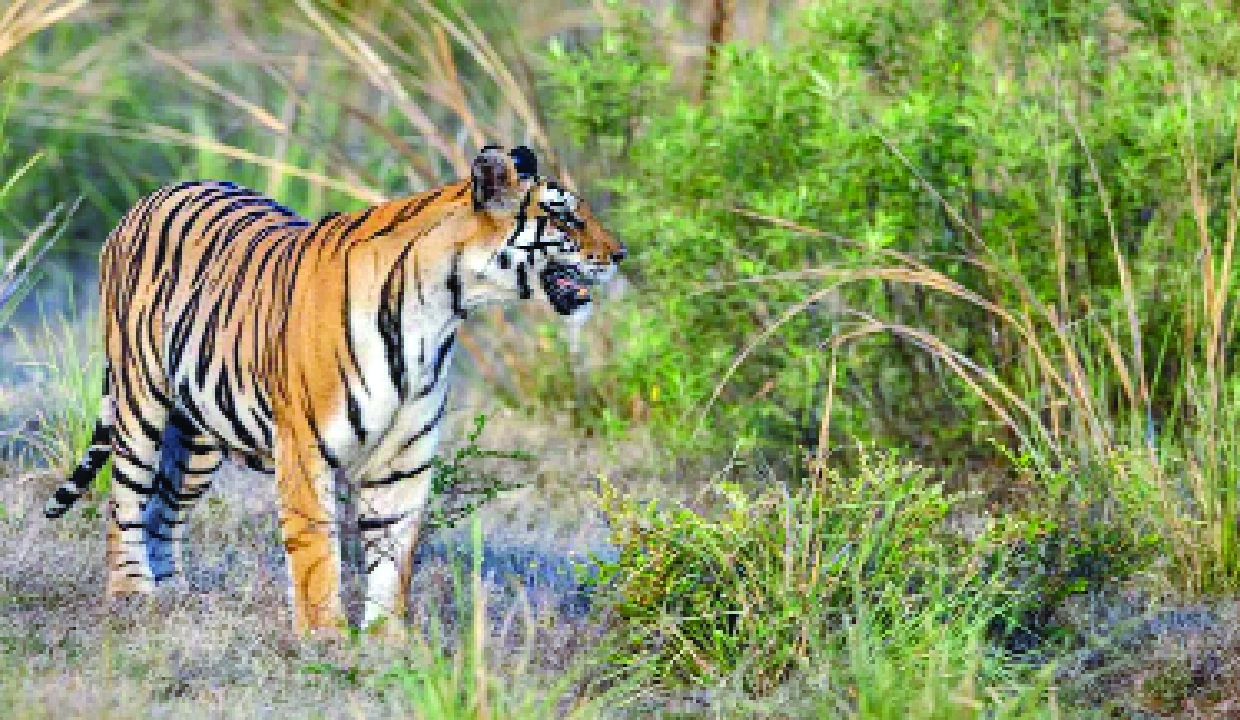
A woman in her 30s was killed after a tiger entered a village on the fringes of Kanha National Park and attacked her while she was asleep in the early hours of Sunday in Madhya Pradesh’s Balaghat district.
The incident took place at Parrapur Baigatola village under the Khapa forest range, around 80 km from the district headquarters. According to local residents, Sugni Bai Dhurve was sleeping inside her hut when the tiger entered the settlement at around 1.30 am. The animal reportedly grabbed her by the head and dragged her out of the house.
The woman’s family raised an alarm, prompting villagers to rush to the spot with torches in an attempt to rescue her. The tiger is said to have dragged the victim for nearly 300 metres before abandoning her and retreating into the adjoining forest.
Sugni Bai sustained critical head injuries in the attack and was immediately taken to Baihar Hospital, where doctors declared her dead during treatment.
Assistant Director of the Sijhora Buffer Zone Ashish Pandey confirmed the incident and said the Forest Department has initiated an inquiry to ascertain the circumstances leading to the attack. Police have registered a case of accidental death and are conducting further investigation.
Forest officials said incidents of tigers and leopards straying into human habitations have increased in villages located along the buffer zone of Kanha National Park over the past few months. As a precautionary measure, the department has decided to install a cage in the affected area and intensify night patrolling to monitor the movement of the big cat.
Officials have also appealed to residents of nearby villages to keep their doors securely closed after sunset, avoid venturing into forest areas at night and ensure that children and elderly family members are not left unattended.
The victim’s family will receive financial assistance in accordance with Government norms, forest officials said.
Meanwhile, local representatives alleged that Sugni Bai’s family had been living in a hut without a door and had not benefited from a Central Government welfare scheme meant for the socio-economic development of particularly vulnerable tribal communities.
They claimed better housing facilities could have reduced the family’s vulnerability to such incidents.