There will be jihad if oppression happens: Jamiat chief Madani
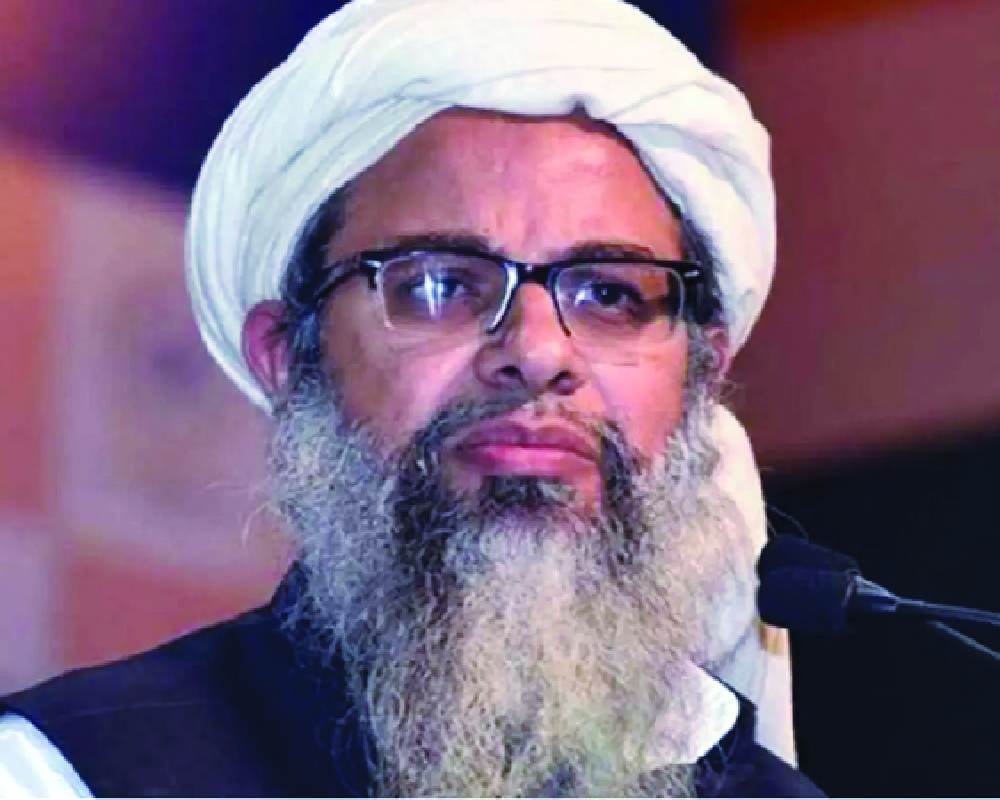
Accusing the judiciary and the government of undermining minority rights, Jamiat Ulema-e-Hind President Mahmood Madani on Saturday sparked a controversy with his sharp declaration that “if there is oppression, there will be jihad.”
Objecting to the way jihad is portrayed in public discourse, Madani accused the media and government of distorting a sacred concept. He criticised the usage of labels like “love jihad,” “spit jihad,” and “land jihad,” saying they misrepresented the true meaning.
“Jihad was and will always remain holy,” he stressed, adding that religious texts mention jihad only “for the good and betterment of others.” Reiterating his contentious statement, he said, “If there is oppression, then there will be jihad.”
Madani alleged that recent court verdicts, including those on the Babri Masjid and triple talaq cases, suggested that the judiciary was functioning “under government pressure.” He claimed that “many such decisions” had emerged in recent years, which “openly violated the rights of minorities guaranteed in the Constitution.”
Referring to cases proceeding despite the Places of Worship Act, 1991, Madani said such developments highlighted constitutional deviations. “The Supreme Court is entitled to be called ‘Supreme’ only as long as the Constitution is protected there,” he said. “If this does not happen, then it does not deserve to be called supreme even in a non-remnant.”
Madani also assessed public sentiment regarding Muslims in India, stating that 10 percent of people are supportive, 30 percent are against them, while 60 percent remain silent. He urged Muslims to actively engage with this silent majority. “Explain your issues to them. If these 60 percent of people turn against Muslims, then there will be a big danger in the country,” he warned.
“However, that India’s secular democratic framework does not allow any violent interpretation. Here, Muslims show loyalty to the Constitution,” he said further. He added that it is the government’s responsibility to safeguard citizens’ rights and that “if the government doesn’t do this, then the government is responsible.”
Madani also sparked debate with his remarks on Vande Mataram. “A dead community surrenders,” he said. “If they say ‘say Vande Mataram,’ they will start reading it. This will be the identity of a dead community. If we are a living community, we will have to face the situation.”
If they say ‘say Vande Mataram,’ they will start reading it. This will be the identity of a dead community. If we are a living community, we will have to face the situation
—Mahmood Madani, Jamiat Ulema-e-Hind President