The Self That Watches Itself
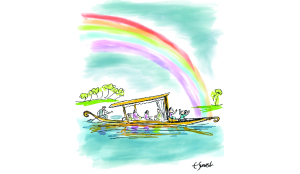
We live so entangled with our thoughts, our worries, our achievements, and our failures, that we often forget there is a difference between the mind and the one observing it. The Mundaka Upanishad captures this through a striking image of two birds seated on the very same tree.
One bird hops from branch to branch, eating the fruits of the tree, tasting both their sweetness and their bitterness. When the fruit is sweet, it is thrilled; when bitter, it recoils in distress. It is restless, constantly reaching for the next fruit, convinced that satisfaction lies just one branch away. The other bird does something entirely different. It does not eat. It simply watches, calm and luminous, untouched by whether the fruit its companion tastes is sweet or sour. It is not indifferent to life, only unshaken by it.
The eating bird represents the individual self, the ego, the part of us swept along by every gain and loss, every praise and criticism, every joy and sorrow. The watching bird represents the true Self, the silent witness that observes the mind's endless activity without being disturbed by it.
The Upanishad tells us that true freedom comes when the eating bird finally turns and sees the still bird beside it, and realizes they were never two separate beings at all. Most of us live entirely as the first bird, hopping restlessly from one experience to the next, mistaking every reaction for who we are. Today, when a strong emotion arises, pause for a moment and try to observe it from a slight distance, as the watching bird would, rather than being fully consumed by it.