The missing man who shaped the Red Corridor
For 47 years, Muppala Laxman Rao has existed only as a rumour, his name being the only thing known about him. The former schoolteacher from Beerpur in the Jagtial district of Telangana, more commonly known as Ganpati or Ganapathy, created the most powerful Maoist insurgency independent India has seen, before disappearing in the very way he had taught others to. The State’s only remaining record of him is a blurry photograph from the 2000s.
The rest of the account consists of false names, dead ends, and memories kept by men who had previously carried out his orders. Rao was born on 16 June 1949 in a farming family of the Velama community. He earned a BSc and a BEd, then taught science in Karimnagar; in Warangal, he was transformed.
There, he met Kondapalli Seetharamaiah and joined the early People’s War movement. He was arrested during violent protests in the 1970s, but after escaping on bail in September 1979, he never went back to an ordinary life. He led the Peddapalli squad and rose through the ranks of both the Andhra Pradesh and Telangana parties. In 1992, he became general secretary of the People’s War Group.
After the 2004 merger with the Communist Party of India (Maoist), he became the first general secretary of the new group. He was more of a strategist than a battlefield commander. He spread the conflict across State borders, trained villagers as guerrilla fighters, and set up the People’s Liberation Guerrilla Army. He also taught his followers the tactics that shaped the Red Corridor: ambushes, IEDs, disappearances, and running a secret administration in remote villages.
The movement grew to cover more than a hundred districts. Even now, security forces still hold him responsible for the violence during those years, including the 2010 Dantewada ambush and the 2013 Jhiram Valley massacre of Congress leaders in Chhattisgarh. In November 2018, he stepped down, saying he was getting older and had illnesses such as asthma and diabetes. He handed over leadership to Nambala Keshava Rao, also known as Basavaraju. After that, he disappeared from public view. Officials thought he might return when Basavaraju was killed in Abujhmad in May 2025, but he did not. Former commanders who surrendered say they last saw him at a jungle meeting in 2023. Since then, even those who spent years underground with him say they do not know where he is. One said that only Basavaraju knew his new identity and location, but that link is now gone.
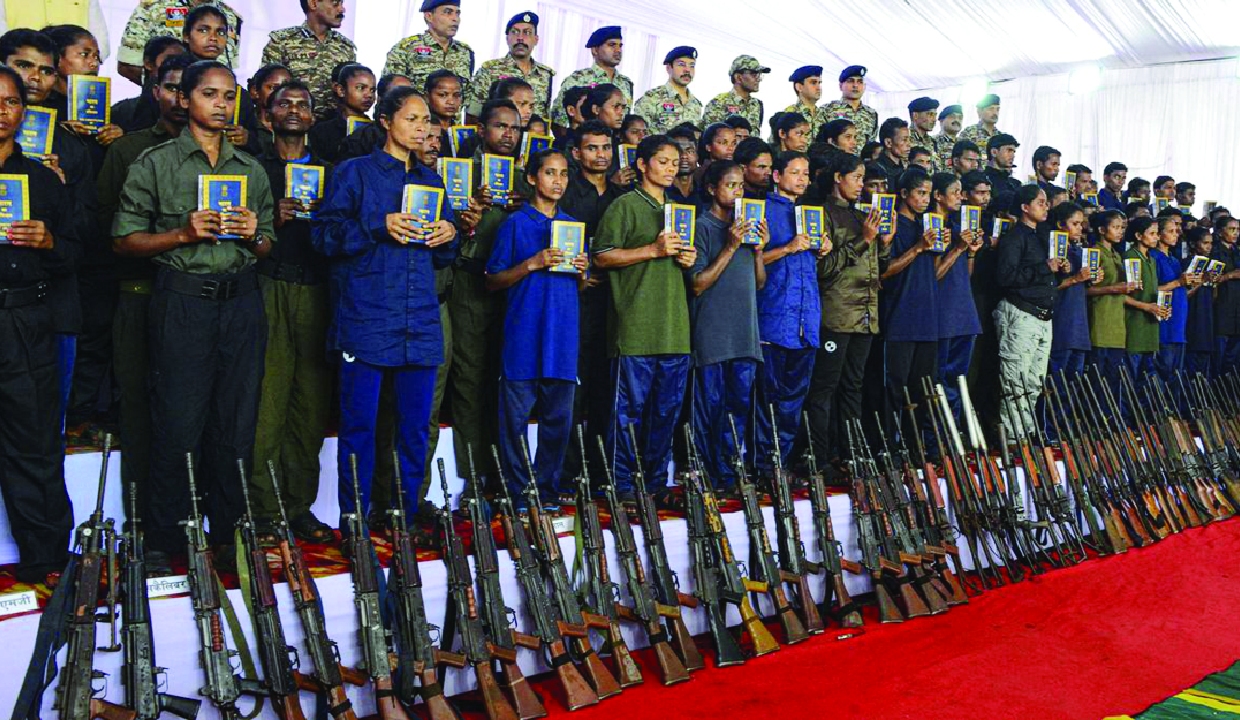
The movement he started has collapsed, and many operations have cleared the forests. Most of the top leaders have either surrendered or been killed. The courts are closing old cases, and a court in Raipur recently gave the death sentence to ten Maoists for the Jhiram Valley attack.
Authorities now say the Naxal insurgency is quiet again in its old strongholds, something that has not happened in sixty years.
The details of Ganpati’s case are still unclear. Police have stopped searching for him in the Dandakaranya forests, saying they have already checked the area.
A reward is still offered for information leading to his arrest. Family members in Jagtial, who say they have not seen him for over forty years, have asked him to surrender.
He has not responded. Those who looked for him recall near misses that now sound like legends: a crowded railway platform, a tip from Bijapur that proved useless, and a town in Telangana that had emptied before the teams got there.
Almost everyone who worked in those areas has a story about Ganpati. Ironically, he taught others how to disappear, and now, with the party gone and the forests under control, he seems to be doing the same. Even though India says the insurgency is over, the man who led it for so long is still officially missing. Only one photograph, many names, and a silence that has lasted longer than the conflict remain.