Suffering speaks every language
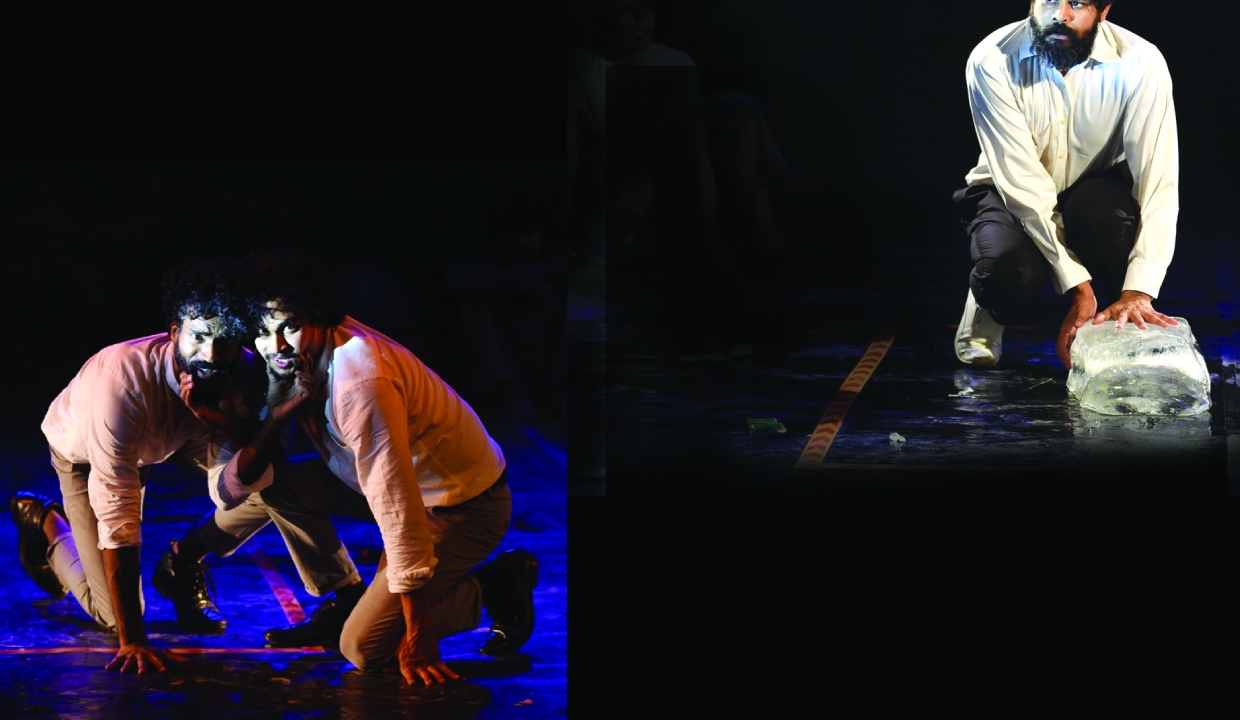
Opening the National School of Drama’s new collaborative theatre season, Storm brought a powerful Indo-Russian artistic exchange alive on stage
By the time Ostrovsky finally wrapped up The Thunderstorm back in 1859, he had birthed something notoriously tough to pull off-a hard look at the Russian merchant class and the quiet cruelties that kept it running. It has never been a comfortable watch. You might expect a text this old to feel a bit dusty by now, but this bold new adaptation, The Storm, strips away the period baggage to give a historic script a startling, urgent voice.
Keeping an audience captivated for nearly four hours requires rare mastery, and this recent staging achieves exactly that. Born from a unique artistic dialogue between the National School of Drama (NSD) and Moscow’s Russian Institute of Theatre Arts (GITIS), this Hindi adaptation proves both visually arresting and emotionally draining in the best possible way. Under the precise scenography and direction of Russian theatre veteran Alexander Khukhlin, alongside associate director Shekhar Kanwat, the fictional riverside town of Kalinov materialises on stage with a heavy, oppressive authenticity.
The story follows Katerina, a gentle, highly spiritual woman choking under the harsh rules of a traditional household and her terrifying mother-in-law, Kabanikha. Amitabh Srivastava’s sharp Hindi translation, the deep sorrow of the Russian original feels entirely at home in its new language.
Because Khukhlin built the play through heavy improvisation during rehearsals, the young cast brings a raw, unsettled energy to the floor. Mamta Jaiswar plays Katerina with a quiet, breaking grace, perfectly pinning down the deep ache of a woman desperate for freedom and love. Across the stage, Mahak Bhargava dominates the room as the terrifying matriarch. The sprawling ensemble adds massive weight to the claustrophobia. Pankaj Kumar Sharma captures the helpless tension of Tikhon, while Saurabh Kumar Pandey and Dashrath Das tackle the complexity of Boris. Strong supporting turns by Piyush Verma (Dikoy) and Aditian Kalta (Varvara), backed seamlessly by Ishan Jindal, Srikanth Kamlekar, Sunil Bhadu, and Shruti Sharma, carry that relentless tension straight through to the end.
Behind the scenes, the technical execution is just as sharp. Deep, shadow-drenched lighting guided by Vishala R. Mahale works beautifully alongside Riya Panwar’s costumes and Shubham Singh’s immersive sound design to reflect Katerina’s chaotic state of mind. Sitting through a production of this magnitude requires patience, yet the evocative staging and sheer physical effort of the young cast keep the viewer completely locked into the tragedy. This project succeeds brilliantly as a cultural bridge, proving that the brutal human search for personal liberation translates across any border.