Social Media: Gen Z’s vehicle of protest
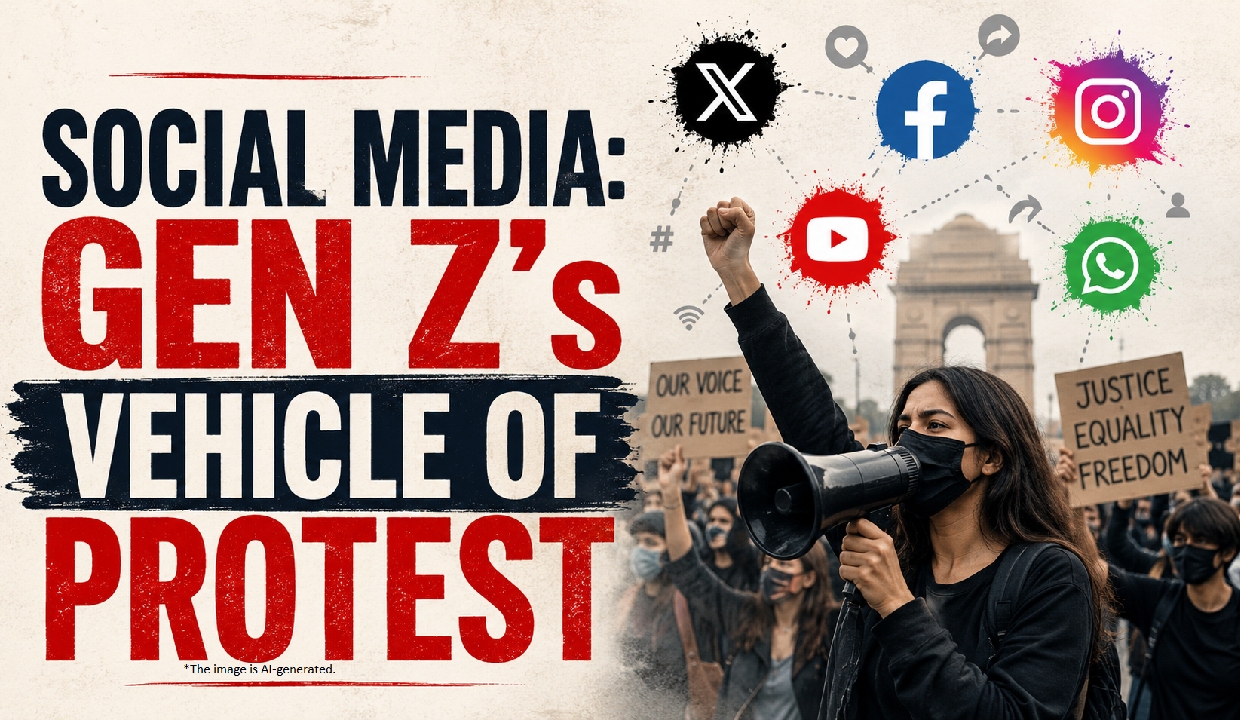
The protests at Delhi’s Jantar Mantar once again demonstrated how social media has become an indispensable tool for democratic mobilisation. Platforms such as X, Facebook, Instagram and YouTube enable citizens to organise peacefully, share information instantly, amplify voices that may otherwise go unheard, and hold authorities accountable. In a democracy, these functions are closely linked to the constitutional guarantee of freedom of speech and expression.
At the same time, the immense reach of social media also carries risks. False information, hate speech, abusive content, incitement to violence and targeted harassment can undermine public order and erode civil discourse. This makes reasonable restrictions both necessary and legitimate, provided they are narrowly tailored, transparent and consistent with constitutional principles.
The challenge, therefore, is not whether social media should be allowed as an instrument of protest, but how it should be regulated. Excessive restrictions can stifle dissent and weaken democratic participation, while an unregulated digital space can become a breeding ground for abuse and misinformation. Striking a careful balance between protecting free expression and preventing misuse is essential to preserving both individual liberty and social harmony in a vibrant democracy.
The demonstrations at Delhi’s Jantar Mantar underscore the transformative role social media now plays in democratic life. What was once confined to physical gatherings has evolved into a digital public square where citizens organise protests, exchange ideas, document events in real time and mobilise support across geographical boundaries. In many ways, social media has become an extension of the constitutional guarantee of freedom of speech and expression under Article 19(1)(a).
Yet, like every right in a constitutional democracy, freedom of expression is not absolute. The same platforms that empower citizens can also be misused to spread misinformation, incite violence, promote hatred, malign individuals and disrupt public order. The Constitution itself recognises this reality by permitting reasonable restrictions in the interests of sovereignty, security, public order, decency and morality.
The answer, therefore, does not lie in curbing social media or treating it with suspicion, but in regulating it with constitutional restraint. Restrictions must be proportionate, transparent and subject to judicial scrutiny so that they target unlawful conduct rather than legitimate dissent. Democracies flourish when criticism is protected, not silenced, and when governments distinguish between disagreement and disorder.
The debate is ultimately about balance. Social media must remain a powerful instrument for peaceful protest and civic participation, while robust safeguards ensure it does not degenerate into a vehicle for abuse, defamation or incitement. Preserving that equilibrium is essential not only for protecting free speech but also for strengthening the democratic values that underpin the Republic.