
When art makes the invisible visible
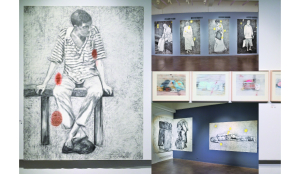
Chandra Bhattacharjee’s towering charcoal portraits quietly restore dignity to marginalised lives we often choose to ignore
Some exhibitions ask to be admired while others make us confront uncomfortable realities. Shots in the Dark, by artist Chandra Bhattacharjee, which is currently on view at Triveni Kala Sangam at Mandi House, New Delhi, belongs to the latter. Walking into the gallery, you are immediately confronted by towering charcoal figures of men and women whose canvas scale compels your attention.
These paintings stand taller than you. An intentional inversion of the reality outside the gallery, where such lives are routinely overlooked. But inside the gallery, the artist makes you confront them. Artist Chandra Bhattacharjee also strips away any unnecessary detail. There are no recognisable streets or landscapes to anchor the figures. Their feet often seem suspended, denying them the comfort of a fixed location. The artist leaves that to the interpretation of the viewers.
The monochromatic colours of the painting heighten the emotional weight of the drawings. But a few are painted with subtle specks of pale yellow on them, resembling city lights or, for the artist, hope. Besides a few paintings, you will see modest bundles which the artist explains are meant to symbolise the silent reminders of how often people who are invisible can summarise their lives within these small bundles.
The exhibition does not romanticise poverty, nor does it plead for sympathy. Instead, it quietly restores visibility and dignity to those who are otherwise rendered invisible by everyday life.
Through towering charcoal figures and stark monochromatic imagery, Chandra Bhattacharjee’s Shots in the Dark confronts society’s overlooked lives, restoring visibility and dignity while finding subtle glimmers of hope