
The school library: From a room full of books to a centre of learning
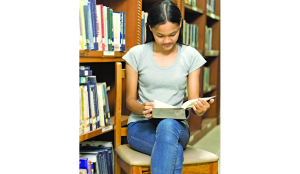
For generations, the school library has been regarded as a quiet room lined with bookshelves, where students go to borrow a book, complete an assignment or spend a free period. But education and society have changed dramatically. Children today have access to an enormous amount of information through smartphones, computers and digital platforms. This raises an important question: what should be the role of a school library in this rapidly changing environment?
The answer lies in recognising the library not simply as a place where books are stored, but as an important part of a child’s educational and intellectual development.
A school library provides students with something that a textbook often cannot: the freedom to explore. The classroom generally follows a prescribed curriculum, while the library allows a child to follow curiosity. A student interested in space may discover astronomy; another fascinated by a historical personality may begin exploring history; someone who enjoys stories may develop an interest in literature. Such discoveries can become the foundation of lifelong interests and even future careers.
This freedom is particularly important during childhood and adolescence, when students are developing their personalities, interests and ways of understanding the world. Books expose them to experiences, cultures and ideas beyond their immediate surroundings.
Reading also develops abilities that are difficult to acquire through short-form digital content. A book demands attention and patience. It encourages a child to follow a story, understand an argument, remember details and connect ideas. Regular reading improves vocabulary, comprehension and communication skills, but its benefits go much further. It can strengthen imagination, concentration and empathy.
When children read stories about people living in different circumstances, they learn to see the world from perspectives other than their own. Biographies, historical books, literature and science books encourage perseverance, curiosity and reflection. In this way, reading contributes to education and character formation.
One of the biggest challenges today is the declining attention span of children. Social media and short videos capture attention quickly, making sustained concentration more difficult. The school library can provide a quiet environment where children slow down, concentrate and engage deeply with an idea. At the same time, libraries should not treat technology as a competitor. Digital resources such as e-books, audiobooks, online journals and educational databases have opened new possibilities for learning.
However, access to information is not the same as knowledge. Students must learn to question information, verify facts and recognise limitations. School libraries can teach responsible research, source verification, fact-checking, copyright, plagiarism and digital safety. In the age of artificial intelligence, distinguishing reliable knowledge from misleading information is increasingly important.
The role of the librarian is equally significant. A librarian should not be seen merely as the person responsible for maintaining shelves and issuing books. A good librarian can become a mentor and learning facilitator who helps students discover suitable reading material, guides them towards credible sources and encourages them to develop independent research habits.
A student may enter a library looking for one particular book and leave with an entirely new area of interest. Such moments are difficult to measure, but they are among the most valuable outcomes of education.
Libraries can also encourage a culture of discussion and creativity. Reading clubs, storytelling sessions, book reviews, debates, quizzes, author interactions, creative-writing activities and exhibitions can make students active participants rather than passive readers. Such programmes improve communication skills and give young people the confidence to express their ideas.
The library can also support project-based and interdisciplinary learning. A history project can involve books, maps and archival material. A science assignment can encourage students to consult reference books and scientific publications. A literature project can combine reading with creative writing or theatre. Collaboration between teachers and librarians can therefore strengthen classroom learning.
Another important aspect is equality of opportunity. Not every child has access to a personal library at home, expensive educational subscriptions or unlimited digital resources. A well-equipped school library can provide a common intellectual space where students, irrespective of their background, have access to books and learning material.
Investment in school libraries should therefore be treated as an investment in educational quality. Schools need updated collections, age-appropriate books, trained librarians, digital resources and comfortable reading spaces.
Parents, too, can contribute to building a reading culture. Children are more likely to develop an interest in books when reading is seen as a source of pleasure. Parents can discuss books with their children, visit libraries with them and allow them to choose age-appropriate subjects that interest them. Ultimately, the value of a school library cannot be measured only by the number of books it contains or the number of books issued every month. Its deeper impact can be seen in the questions students begin to ask, the ideas they explore, the confidence they develop and the curiosity they carry beyond the school gates.
A successful library creates readers, but its influence does not end there. Readers become better learners; better learners become independent thinkers; and independent thinkers become more responsible citizens.
In a world overflowing with information, children need more than the ability to find answers. They need the patience to read, the wisdom to evaluate, the courage to question and the imagination to think differently. The school library can help provide all four.
It is therefore time to recognise the library as an essential part of the educational ecosystem - a place where books, technology, teachers, librarians and students come together in the pursuit of knowledge.
A room full of books stores knowledge. A vibrant school library helps young minds understand, question and use that knowledge. And ultimately, that is what education is meant to achieve.