
The bed that could not be moved
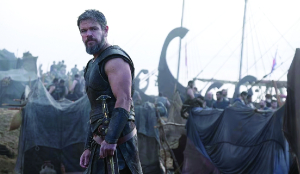
There is a moment near the end of Christopher Nolan’s The Odyssey that the film refuses to hurry. Odysseus is home after twenty years. Penelope will not have him, so she sets a trap. She orders the marital bed carried out of the chamber. And the man who outlasted Troy, the Cyclops and ten years at sea finally breaks, because that bed cannot be carried anywhere. He built it around the trunk of a living olive tree, still rooted in the ground, and raised the room around it.
That is how she knows him. Not by the face, which 20 years have changed, and not by the plunder or the fame. He is recognised because one thing of his could not be moved. I watched that scene in a Noida multiplex on a Sunday afternoon, and found I could not swallow.
We file the Odyssey under adventure. It is nothing of the kind. It is a migration story, and it happens to be ours. According to the 2011 Census, Uttar Pradesh and Bihar emerged as India’s largest sources of inter-state migrants, together accounting for 20.9 million people, or 37 per cent of the country’s total inter-state migrant population. Delhi and Mumbai stood out as major migrant destinations.
Through the 1980s and 1990s and into the 2000s, middle and lower middle class families across the Hindi belt reached the same conclusion at roughly the same time: that land was finite, that a government job was a lottery, and that the only asset which could not be partitioned among brothers was a degree. Plots were sold, jewellery pledged, sons put on trains to Bangalore and to the coaching lanes of Mukherjee Nagar.
They were right. Education was the finest investment available to them and it paid, in salaries their fathers could not have imagined and in a confidence their districts had never been allowed. Distance became degrees, degrees became salary, salary became square feet. Nobody was wrong to board that train.
I was one of them. I left Hajipur, a small town in Bihar, for Delhi, chasing something I have still not caught. None of it troubled me while my father was alive. As long as he was, the town stayed mine, because I was somebody’s son in a place that knew what that meant. He died in January. It did not only take a father. It cut a cord.
The psychologist Pauline Boss calls this ambiguous loss: grief that never closes, because what you have lost is neither fully gone nor recoverable. The town is exactly where it always was. The lanes, the school, the tea shop at the turning. I can go back any week I choose. I cannot return. There is no ritual for this, and no leave application that covers it.
What I notice now is what the town had that no city sells. My parents, in their last years, were attended by four people. Eye drops on schedule, tea at the right hour, whatever food they asked for, arriving. In Noida, my domestic help fails to turn up one morning and by evening the house is a battlefield.
This is not an argument about servants. It is an argument about density of proximity, affection, care and bonding. The small town runs on thick, unpriced obligation: neighbours, cousins, retainers of thirty years, people who owed you nothing enforceable and turned up anyway. The metropolitan life runs on thin, purchasable service. We did not upgrade. We swapped a web for a transaction, and a transaction will not sit with you at two in the morning.
My father never owned a car. I am on my third, and there will be others. Yet he was the richer man. Because he never had to struggle with the anxiety of what defines his identity, unlike us in the metropolitan where my square footage, length of my car, make of my shoes, fragrance of my deodorant, brand of my pen, club membership or lack of it became synonymous with my identity. Without ever realising, one got sucked into the nothingness of materialism, while losing the sense of belonging to somewhere. Simone Weil wrote in 1949 that to be rooted is the most important and least recognised need of the human soul. Her more uncomfortable observation is the one worth sitting with. Uprootedness, she said, is contagious. The uprooted go on to uproot others. Which brings me to the part I find hardest to write.
My children will leave too and they will go where the work is, exactly as I did, and I have no standing to object, because I am the one who taught them that mobility and ambition are the same word. I do not know how many years I will live near them, or whether the arithmetic of care my parents took for granted will exist by the time it is my turn. Two generations have been built on the assumption that families can rearrange themselves at will and the bonds will hold anyway. Nobody has done the accounting on what that costs at the far end.
Education is a ladder. It must not become a blinker. Those of us no longer hostage to an employer’s geography, still free to steer our wings in any direction, might ask what we are using that freedom for. Freedom exercised only to accumulate is not freedom. It is a longer leash.
On Calypso’s Island, Odysseus is offered immortality and eternal youth if he will only stay. He turns it down for a mortal wife and a rocky, unimportant island. Most of us have made the opposite trade, in instalments, without ever being asked to sign.
And in the first book of the poem, long before Odysseus himself appears, his son Telemachus leaves home to go looking for a father he cannot remember. We have raised a generation of Telemachuses. The question is whether we have left them anything to sail towards. Anything that, when the time comes, cannot be moved.
The writer is a commentator and strategic communications expert; Views presented are personal.