
Bihar’s jobs politics: From promises to reality
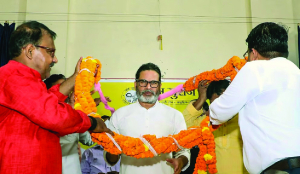
Prashant Kishor has taken the oath as MLA from Bankipur, and the first real scorecard for his politics will likely be written in employment numbers, not vote counts. Jobs and self-employment, more than any other portfolio, will decide whether his new role is seen as substance or spectacle.
He has pledged to help 10,000 young people from his constituency find work. Barely has the promise settled when Purnea MP Pappu Yadav, who has long positioned himself as a benefactor of Bihar’s job seekers, raised the stakes further — announcing that 30-40 companies will visit Purnea, reportedly with Rahul Gandhi in attendance, to offer jobs to roughly the same number of youths. Two politicians, two nearly identical figures, one obvious question: whose number is bigger matters far less than how many of these jobs actually show up on the ground. Kishor’s plan leans on personal capital rather than public office. He has said he intends to draw on his corporate contacts to link unemployed youth with hiring companies, and has reportedly travelled outside Bihar recently to meet business associates toward that end.
Manoj Bharti, Jan Suraaj’s state president, has been blunt about what this means in practice: these will be private-sector jobs, not government ones, and most will be located outside Bihar altogether, since — in his own assessment — the state lacks companies capable of absorbing that scale of hiring. That distinction between government and private employment is not incidental; it is central to Kishor’s own argument. During the 2025 Bihar assembly campaign, he pointed out that only about 23 lakh people have entered government service across all 75 years of Bihar’s history — from peon to chief secretary — a mere 1.97 percent of the state’s population. Even raising reservation to 100 percent on the ten lakh government jobs politicians love to cite, he noted, would still leave 98 percent of Biharis outside the government payroll.
That reality is what pushed him toward a private-sector, network-driven route instead — and it’s a route with a structural limit built in: an MLA has no authority to hand out private jobs. At best, Kishor can be a matchmaker between companies and candidates, which makes his promise unusually easy to measure and unusually easy to expose if it falls short.
The metrics that will actually matter go well beyond how many young people submit applications. What counts is how many get interviews, how many receive offer letters, and — critically — how many are still employed six months or a year later. A job that evaporates after a few weeks, or one that pays too little to change a family’s fortunes, cannot honestly be called employment generation. Pappu Yadav’s Purnea initiative invites the same scrutiny. Company visits and Rahul Gandhi’s high-profile presence generate headlines, but neither tells us how many actual vacancies exist or how many candidates will walk out with a job.
Bihar has seen enough job fairs in its metros to know the pattern well: large turnouts, stacks of resumes collected, interviews conducted, photographs taken for the record — and often very little hiring that actually follows once the cameras leave. An offer letter followed by an actual joining date is the only meaningful marker of success; everything before that is process, not outcome. This scrutiny matters more in Bihar than almost anywhere else, because employment has become one of the state’s most potent — and most abused — political currencies. Generations of young Biharis have spent years preparing for government exams, only to be undone by leaked papers and recruitment scandals, while the private sector has never grown fast enough to absorb the numbers entering the job market each year.
Given that history, when Yadav says he has created jobs “for decades,” the fair follow-up is: how many, doing what, for which companies, at what pay, and for how long? Bharti has essentially issued the same challenge — asking Yadav to place his employment record, government or private, in the public domain for Purnea and Bihar at large. The same standard should bind Kishor. If Bankipur’s 10,000-job target is real, the honest move is to publish the whole funnel: applications received, shortlists made, participating companies, interviews held, offers extended, and — the number that matters most — how many actually joined. Yadav’s Purnea event deserves identical transparency: the companies involved, vacancy counts, roles, salaries, appointment letters issued, and joining figures.
That level of disclosure is what would finally move Bihar’s employment politics past sloganeering — beyond vague talk of recruitment drives, skill missions and industrial investment — toward what young people actually need: appointment letters, dependable pay, and a career rather than a string of temporary gigs. Bihar’s population skews remarkably young, and government jobs alone were never going to absorb it; the state needs private capital, manufacturing, services, entrepreneurship and skilling investment working together, including opportunities beyond its own borders.
Both leaders’ plans have genuine potential if pursued seriously — Kishor’s network-driven bridge-building and Yadav’s company-outreach model are different routes to the same destination. For Kishor, delivering on Bankipur could become a defining achievement; falling short would turn it into a cautionary headline. For Yadav, a successful Purnea rollout would finally give substance to years of claims about employment generation. In the end, Bihar’s youth are unlikely to be swayed by another round of grand announcements. They will measure both men by the appointment letters that land in their hands. The question worth asking, then, isn’t who promised 10,000 jobs — it’s who actually delivered them.
The writer is a veteran journalist and social activist; Views presented are personal.