
Commercialisation is killing middle-class dreams
The institutions once created to democratise opportunity are increasingly beginning to resemble marketplaces. The question India must now confront is uncomfortable: when education becomes a privilege that only the affluent can comfortably afford, what happens to the promise of merit, mobility and equal opportunity?
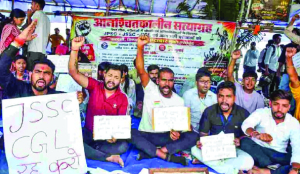
The recent agitation at Jantar Mantar, Jharkhand, and in many other states over paper leaks has shaken the conscience of the nation. The spark ignited by the unwarranted UGC guidelines dividing students and the country along caste lines was overtaken by the paper leak controversy and put the country into utter turmoil, which was exploited by anti-national forces, as in previous two agitations. The recent police actions and exposures on paper leaks have proved that senior professors and a chain of people responsible for conducting the exams were found deeply involved in this racket, which clearly proves the cesspool of the Indian education system. Let me discuss how the changes have occurred since people like me from the middle class got admitted and completed a Master’s degree and my son got admitted in 2001 in B Tech at IIT Delhi and completed B Tech with a very nominal yearly fee of less than eighteen thousand. Today, it is not possible for a Group A officer to admit his children to private medical colleges as the fees are exorbitantly high.
Let us examine this issue as, across the length and breadth of India, an unspoken tragedy is unfolding inside middle-class homes. The desperate parents are looking at their life savings, calculating property values, and wondering if they can afford to keep their child’s dreams alive. The outrage exploding among Indian youth today is not merely about leaked question papers or compromised examinations. Those are just the visible sparks landing on a massive economic despair. Beneath the headlines lies a far deeper, more insidious crisis: the outright commercialisation of higher education. A seat in a classroom — once viewed as a gateway out of poverty — has been transformed into a high-yield investment asset class. Today, education, instead of realising the dreams of parents, is being choked by the heavy ash of commercial greed.
How did a nation that built its identity on accessible public education allow its finest institutions to become playgrounds for financial privilege? Publicly funded institutions were originally established to democratise excellence using taxpayers’ money. Today, their fee structures reflect a sharp corporate turn, functioning under the banner of financial self-sustainability.
At premier management institutes like IIM Ahmedabad, Bangalore, and Calcutta, the flagship two-year Post Graduate Programme in Management fee stands at approximately Rs 24.5 lakh to Rs 27.5 lakh. When personal expenses, books, and living costs are added, the total bill easily pushes towards Rs 30 lakh to Rs 35 lakh. For a standard four-year B Tech degree across Indian Institutes of Technology (IITs), tuition fees sit at Rs 1,00,000 per semester. Once institutional fees, mess overheads, and hostel charges are factored in, a student spends Rs 9.5 lakh to Rs 13.9 lakh across four years. For families locked out of the hyper-competitive government medical seats, private medical colleges demand anywhere from Rs 50 lakh to well over Rs 1.5 crore for an undergraduate degree.
Now look at the inequality chasm: costs versus average Indian income. The paradox of India’s higher education pricing becomes stark when evaluated against the economic reality of an ordinary citizen. India’s average net annual per capita income is approximately Rs 2,08,000. The tuition and programme fees of an IIM MBA (Rs 27.5 lakh) equal more than 13 years of an average Indian’s total annual gross income. A four-year B.Tech at an IIT Rs 11 lakh) consumes over five years of average annual earnings. A private medical seat costing Rs 1 crore requires the equivalent of nearly 48 years of an average citizen’s net income. To bridge this massive gap, families are forced into commercial banks where student loans carry interest rates ranging between 8.5 per cent and 13 per cent annually.
A student enters the workforce carrying a crushing debt burden before earning their first salary. Young graduates are forced to abandon careers in basic science, public service, or entrepreneurship simply to chase high-paying corporate roles needed to service monthly EMIs. I am reminded of the then Education Minister, Murli Manohar Joshi, who, in the government led by Atal Behari Vajpayee, questioned the fee hikes by the IIMs and IITs, but in the name of autonomy, he was criticised by these institutions. The question is, when government IIMs and IITs are becoming commercial and profiteering, then why not the private ones? Another big fraud is the so-called Non-Resident Indian (NRI) quota. This mechanism of quota in medical and technical institutions functions as a legalised fast track, while meritorious poor students suffer. This system allows rich candidates with significantly lower entrance ranks to purchase seats simply because they can pay three to five times the regular fee.
When money buys entry while merit sits on a waiting list, the social contract between the state and its youth shatters.
Though the Supreme Court of India recently slammed expanded definitions of the NRI quota as a “money-spinning tactic” and a “fraud” on merit, institutional loopholes continue to monetise education. Other countries offer a stark contrast; many developed nations treat higher education as vital public infrastructure rather than a commercial enterprise. For example, in Germany, public universities charge zero tuition fees for undergraduate programmes, and in France, higher education is heavily state-subsidised, with public university tuition set at nominal rates (often under 250 euros per year for standard degrees). In Norway, Finland, and Denmark, public universities operate under state-funded models, ensuring higher education remains a public right free from commercial exploitation. These countries understand a basic principle: an educated youth yields higher tax bases, stronger innovation, and better civic governance over a lifetime.
Learning in India is becoming a profit-driven marketplace, leading to fundamental distortions. First, it results in the denial of access to higher education at an affordable cost. Secondly, meritocracy is subverted, and wealth replaces talent and hard work as the primary gateway to elite professions. Third, families are plunged into multi-generational debt, turning higher education into a debt trap. When medical graduates pay over a crore for an MBBS, the market pressure to recover that capital inflates healthcare costs for the entire country.
I would like to earnestly request the Prime Minister and all political parties to forge a consensus on drastically reforming the education sector. A National Education Fee Task Force should be set up to assess the cost of education first in government and private institutions by taking all parameters into account. A massive scheme should be launched by an Act of Parliament to make higher education accessible and affordable.
The Central and State Governments, operating alongside judicial oversight, must act immediately.
This task force must be legally empowered to audit and cap fees, establish strict, transparent fee ceilings for all professional degrees, i.e., Medical, Engineering, Management, and Law, across both public and private sectors, strictly according to actual operational costs rather than profit margins or aggressive capital expansion.
The task force must abolish monetised quotas and eliminate commercial seats such as the NRI quota in private and state institutions, ensuring seat allocation remains strictly merit-based. Further, it must ensure subsidised student loan interest rates for lower — and middle-income families. We must realise that a nation that sells its classrooms to the highest bidder sells its own future. It is time to stop treating higher education as a windfall commercial enterprise and restore it as a sacred public trust.
A student enters the workforce carrying a crushing debt burden before earning their first salary. Young graduates are forced to abandon careers in basic science, public service, or entrepreneurship simply to chase high-paying corporate roles needed to service monthly EMIs.
The writer is Former Director General of the ‘Indian Council of Forestry Research and Education’ He is presently Chairman of the ‘Centre for Resource Management and Environment; Views presented are personal.