
Metro curbs leave thousands of commuters walking to work
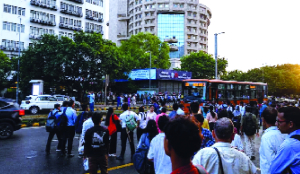
Amit Kumar switched to walking shoes on Tuesday. Not because he wanted to. Because the Metro was shut, the bylanes of central Delhi were the only route left between him and his office near Connaught Place.
He has worn those shoes every morning since. “I build in an extra 45 minutes now,” he said. “There is no other option.” Amit Kumar did not come to Jantar Mantar to protest. He was simply trying to get to work. For three days now, thousands of people like him have been absorbing the cost of a standoff they have no stake in.
Repeated closures of metro stations and transport disruptions imposed by authorities in response to the Jantar Mantar protest have triggered backlash from commuters, who took to social media to question why thousands of daily travellers were being inconvenienced. For thousands of office-goers who once relied on the Delhi Metro and cab services to reach work in the Lutyens’ zone, walking has become the only option, as barricading around Jantar Mantar in response to the ongoing protest continues.
This comes amid the Delhi Metro Rail Corporation (DMRC) announcing on Friday the closure of the New Delhi metro station till further orders, adding to the disruption caused by the shutdown of 17 metro stations in central Delhi for the third consecutive day. The DMRC said in a post on X that the New Delhi metro station had been closed till further instructions and that no interchange facility would be available at the station.
The latest closure comes even as 17 metro stations in central Delhi remained shut from 7.30 am on Friday due to security reasons. The closure of the New Delhi metro station, a key interchange connecting the Yellow Line and the Airport Express Line and providing direct access to the New Delhi Railway Station, is expected to inconvenience thousands of daily commuters and rail passengers.
Soon after the announcement, several users took to X to question the decision, with many expressing concern over the impact on office-goers, students and travellers, while others apprehended a spike in app-based cab fares. Reacting to the DMRC’s late Thursday night announcement that 16 stations would remain closed on Friday, one user wrote, “The easiest way to handle a protest is to make ordinary citizens suffer.” Several users questioned why daily commuters travelling to offices, schools and hospitals were being inconvenienced, arguing that the restrictions would not deter protesters from reaching Jantar Mantar. Later in the evening, entry gates at Mandi House and Central Secretariat metro stations were reopened.
With the metro shut and cab drivers reluctant to enter the cordoned-off stretch, commuters said they are trudging kilometres through bylanes every morning and evening just to get to work or back home.
“Since the metro is shut and police personnel are present in the area, even ride-hailing services are reluctant to accept rides here,” a working professional said.
Thousands of protesters have gathered at Jantar Mantar over the past few days, prompting police to seal off Parliament Street, Tolstoy Road and Jai Singh Marg. A Google Maps check of the stretch on Friday showed a ‘heavy traffic’ alert across all three major roads.
Officials posted in the area said the closures are for security reasons, given the scale of the demonstration and its proximity to Parliament.
The disruption is not limited to civilians. Commuters said even police personnel posted for duty are having to walk long stretches through bylanes to reach their postings, as the area remains under what many described as a complete traffic lockdown.
Adding to the difficulty, internet services in the area have remained suspended since clashes broke out between protesters and police on July 20, commuters said, leaving many unable to check real-time traffic updates or book cabs while already on foot. Workers in the area said they are inculcating extra walking time into their daily routine and switching to shoes better suited for walking kilometres on the pavement than a desk job — an unplanned consequence of a protest still playing out barely metres from their offices.