
India to rule the skies with stealth bomber
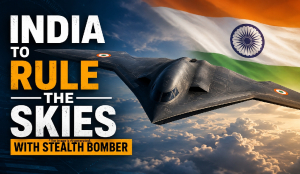
India is aspiring to make a stealth bomber — its most audacious defence project to date — a move that signals a technological coming-of-age
If all goes as per the plan, by 2032 India would join the select club of three countries - the USA, China and Russia - that have fifth-generation stealth multirole fighters. The Ministry of Defence has issued a Request for Proposal (RFP) to three shortlisted private-sector consortia for the development and production of five prototypes of India's fifth-generation stealth fighter, the Advanced Medium Combat Aircraft (AMCA), under a Rs 15,000-crore project. For a nation long dependent on foreign suppliers for frontline combat aircraft, this is a watershed moment. But the country will have to wait for at least six years to have this stealth bomber made in India.
The AMCA is a fifth-generation, medium-weight, multi-role, twin-engine stealth fighter being designed and developed indigenously. Such platforms typically include stealth, low-probability-of-intercept radar, advanced avionics, and highly integrated computer systems capable of networking across the battlespace. The prototypes are expected to fly by 2032, with the IAF eventually receiving a homegrown fifth-generation fighter. Three private-sector-led consortia are in the race: Larsen & Toubro-Bharat Electronics Limited, Tata Advanced Systems Limited, and Bharat Forge-BEML. Notably, HAL, a public sector company has been excluded from the prototype race. Tata Advanced Systems, with its established aerospace manufacturing credentials, is widely considered the frontrunner.
The AMCA programme is not for the faint-hearted. The engineering demands of fifth-generation aviation are among the most complex in modern technology. Stealth coatings, internal weapons bays, advanced AESA radar, and supercruise engines represent the cutting edge — and India is attempting all of it simultaneously. The engine question is particularly fraught: the first two squadrons are expected to fly with GE-F414 engines, while an indigenous engine is being developed on a parallel track. History warns us to be skeptical: India’s gas turbine development has faced decades of delays. But one must strive to develop cutting-edge technology as no one would share such a technology anyway.
Then there is the institutional challenge. India’s defence procurement has a troubled track record with timelines. The AMCA itself has been in various stages of conception and delay since the 2000s, with first-flight targets that have repeatedly shifted. Bluntly assessed, the project is audacious and ambitious, but achievable — on a longer timeline than officially stated. The involvement of India’s most capable private defence firms injects a new urgency and efficiency that the purely public-sector model lacked. Still, a 2032 first flight and service entry around 2035 would require everything to go right.
The AMCA does not exist in a vacuum. China’s J-20 is already operational, and Pakistan has reportedly shown interest in China’s J-35. It may trigger a new phase of arms race in the sub-continent. Yet dependence on imported fighter jets is strategically untenable. The AMCA is not just a fighter jet, but India’s declaration that it intends to rule the skies.