
Falling infant mortality, rising gender bias: Why India’s baby girls still don’t survive
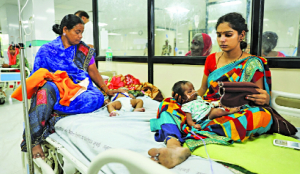
First, the good news - infant mortality rate (IMR) in India has gone down from 30 to 24 deaths per 1,000 live births between 2019 and 2024. According to the recently released Sample Registration System (SRS) 2024, this decline, by an average of one point annually, has been the fastest so far. However, the not-so-good news is that many states like Chhattisgarh, Madhya Pradesh, Uttar Pradesh, Assam, Odisha and Rajasthan are still lagging behind and have a higher IMR than the national average of 24.
But the more worrying news is that gender disparities continue to persist. More girls die before they reach the age of one than boys, and this is seen even in states like Odisha, which has brought down its IMR by a significant 21 points.
In fact, most of them do not survive beyond four weeks. The SRS report reveals that the number of newborn deaths during the first 28 days of life per 1,000 live births, or neonatal mortality rate (NMR), now accounts for nearly 73 per cent of all infant deaths. So, in states with high IMR gender gaps, it is unsurprising that baby girls have less chance of surviving beyond 28 days after birth than boys.
The first 24 to 48 hours are crucial for the survival of the mother and child, say doctors. In Bihar, which has the highest gender gap (IMR was 25 for female infants compared to 21 for males), many women, especially in rural areas, tend to leave the hospital within six to eight hours of giving birth, increasing the vulnerability of both the newborn and the mother. This could be one of the reasons why one in every 37 infants in rural areas still dies before completing one year of life, compared to one in 59 in urban regions.
If the child is lucky enough to survive, her gender is, more often than not, the reason for the lack of proper breastfeeding needed to nourish and keep her healthy and alive. It has been seen that gender discrimination is highest for the second or third daughter, who faces nutritional neglect, leading to dietary deficiencies.
The survival of baby girls is not solely dependent on household wealth. Girls in states like West Bengal often have a better chance of celebrating their first birthday than those in richer states like Punjab or Haryana. This is because West Bengal has maintained a high sex ratio at birth (the number of females per 1,000 males), reflecting gender equity at birth. It was 973 girls per 1,000 boys according to the latest National Family Health Survey-5. Punjab and Haryana continue to be plagued by a strong preference for sons, leading to female foeticide carried out surreptitiously through illegal sex-selective abortions. In Haryana, the first four months of 2026 saw a sharp fall in the sex ratio at birth (SRB) to 898 girls per 1,000 boys, down from 909 recorded in the first four months of 2025 and 923 recorded for the entire year.
Another reason for daughters not being wanted is the fear of dowry. Unfortunately, dowry remains an accepted social custom, as many parents feel it will make their daughter's new life easier. Many mortgage everything they have or take loans beyond their means to meet the demands made by the groom and his family.
But this has not always saved their daughters from harassment, abuse and even death. In 2024, an average of 16 women died every day due to dowry-related violence, according to the latest National Crime Records Bureau (NCRB) data released on May 6, 2026. The country recorded 5,737 dowry deaths, or an overall national dowry death rate of 0.8 cases per lakh women population. High-population states like Uttar Pradesh (2,038) and Bihar (1,078) led in total cases and also recorded the highest dowry death rates, at 1.8 and 1.7 per lakh women population, respectively.
So, when the chief minister of a state officially offers financial incentives for the birth of the third and fourth child to combat the drop in population and total fertility rate, it is equally transactional. He fears the state will lose out on its share in political representation and central finances because its population is falling relative to most parts of the country. Also, Andhra Pradesh lifted the ban on people with more than two children contesting local body elections not because of the problems faced by women through abandonment, or the trauma of giving up their third or fourth child, but for political gains. Both these steps undercut women's basic reproductive right of choosing when and whether to give birth. Unless women collectively push back, their bodily autonomy and their right to be born, survive and thrive, will continue to be disregarded and overlooked.
The writer is journalist writing on development and gender; Views presented are personal.