
Fire Safety: A growing crisis amid climate change and urban expansion
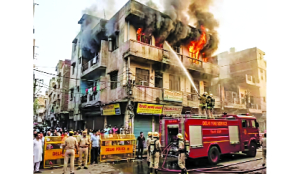
Disaster risks in Indian cities are advancing much faster than disaster management strategies currently in place. There is a dire need for the modernisation of firefighting facilities through adoption of advanced rescue equipment, smart fire detectors, AI monitoring systems, and command-and-control centres
India’s cities are growing at an unprecedented pace. New highways, industrial corridors, commercial complexes and towering residential buildings have become symbols of a rapidly modernising nation. Yet beneath this narrative of progress lies a danger that receives attention only when tragedy strikes. Whether in hospitals, schools, coaching centres, factories, shopping malls or high-rise apartments, fire accidents have become disturbingly frequent across the country. The growing number of such incidents suggests that India is facing not merely a series of isolated accidents but a larger crisis shaped by climate change, rapid urbanisation, inadequate planning and poor enforcement of safety regulations.
Recent fire incidents across Delhi-NCR, Kolkata, Hyderabad, Gujarat, Maharashtra, Tamil Nadu and several other states have highlighted the scale of the problem. These disasters have caused loss of life, property destruction, environmental damage, and high economic costs. More importantly, they reveal that fire disasters are no longer isolated incidents. They are the result of multiple interconnected factors, including climate change, rising temperatures, unplanned urbanisation, ageing infrastructure, weak regulatory enforcement, and human negligence.
India has witnessed unusually high temperatures, prolonged heat waves, erratic rainfall patterns and extended dry spells in recent years. Scientists have linked many of these trends to global warming and recurring El Niño events, which contribute to hotter and drier conditions. Higher temperatures dry out vegetation, reduce moisture levels and create conditions in which fires can spread rapidly. At the same time, increased dependence on air conditioners, coolers and other electrical appliances during extreme heat places enormous pressure on power infrastructure. Overloaded systems, overheating transformers and short circuits frequently become the trigger for urban fires.
The Urban Heat Island Effect has further intensified these risks in metropolitan areas. Dense clusters of concrete buildings, asphalt roads, vehicular emissions and shrinking green spaces trap heat and significantly raise temperatures in cities. As urban centres become hotter, the likelihood of heat-related fire incidents increases. This demonstrates how environmental stress and urban development are increasingly intersecting in ways that place cities at greater risk.
The effects of climate change are equally visible in India’s forests. States such as Uttarakhand, Himachal Pradesh, Odisha, Madhya Pradesh, Chhattisgarh, and several north eastern states regularly experience forest fires during dry seasons. Rising temperatures, declining soil moisture and changing rainfall patterns have made many ecosystems more vulnerable. Human activities such as unattended campfires, agricultural burning, discarded cigarette ends and deliberate forest fires further worsen the situation. The consequences extend far beyond the loss of vegetation. Forest fires destroy biodiversity, damage wildlife habitats, release large quantities of carbon emissions, worsen air pollution and threaten the livelihoods of forest-dependent communities.
At the same time, India’s rapidly expanding cities are creating new and complex fire safety challenges. Metropolitan centres are witnessing unprecedented growth in high-rise residential and commercial buildings. While vertical development also raises serious questions about emergency preparedness. Many firefighting systems are not adequately equipped to deal with fires in ultra-high-rise structures.
The challenges do not end here. Narrow roads, traffic congestion, illegal parking, encroachments, low water pressure and blocked emergency routes frequently delay firefighting operations. In many residential and commercial complexes, fire alarms, sprinklers, smoke extraction systems and emergency exits are poorly maintained or non-functional.
Unplanned urbanisation compounds these risks. Illegal constructions, overcrowded neighbourhoods, inadequate spacing between buildings and the operation of hazardous industries within residential areas create conditions in which even a small fire can escalate rapidly. In older parts of many cities, narrow lanes make it difficult for fire engines to reach affected locations. Such constraints often turn manageable incidents into major disasters, highlighting the need for safety-centred urban planning. A significant proportion of fire disasters in India are preventable. Investigations into major incidents repeatedly reveal familiar causes: faulty wiring, overloaded electrical systems, blocked exits, unauthorised construction, poor maintenance and improper storage of flammable materials. Although India has building regulations and fire safety norms, implementation often remains weak. Fire safety audits are frequently treated as procedural formalities rather than rigorous inspections. Administrative negligence, inadequate monitoring and lack of accountability allow violations to persist until disaster strikes.
Human negligence remains another major contributor. Emergency exits are commonly locked or used for storage, firefighting equipment is neglected and electrical systems are poorly maintained. Public awareness regarding basic fire safety measures remains limited. In an increasingly urbanised society, such complacency can have devastating consequences. The risks become even more severe in institutions that cater to vulnerable populations. Fires in hospitals can be particularly deadly because patients in intensive care units, oxygen-supported wards and critical care facilities cannot be evacuated quickly.
Similarly, schools, coaching centres and hostels often function from buildings that were never designed for educational use. Overcrowding, narrow staircases, poor ventilation, locked exits and inadequate emergency planning can transform a minor incident into a catastrophe within minutes. The safety of children, patients and other vulnerable groups cannot be compromised due to commercial interests or administrative oversight. Industrial and chemical fires present another growing concern. The expansion of chemical plants, petroleum facilities, warehouses, plastic recycling units, paint industries, gas storage centres and fireworks manufacturing units has increased the scale of potential hazards. Many such facilities handle highly combustible materials daily. Several accidents in recent years have exposed serious shortcomings in industrial safety standards.
An often-overlooked aspect of fire disasters is the danger posed by smoke inhalation. In many cases, smoke causes more fatalities than flames. Modern buildings contain plastics, synthetic materials, chemicals and electrical components that release highly toxic fumes when burned. Smoke spreads rapidly through stairwells, corridors and ventilation systems, reducing visibility and oxygen levels within minutes.
Public awareness about smoke-related hazards remains inadequate. Simple measures such as staying close to the ground, avoiding lifts, covering the nose and mouth and following evacuation procedures can save lives, yet such information is not widely understood.
Despite growing risks, many fire departments continue to face shortages of trained personnel, modern equipment and specialised rescue technology. Several cities still lack aerial firefighting platforms capable of reaching the upper floors of skyscrapers. The modernisation of fire services has therefore become essential. Investments in smart fire detectors, AI-powered monitoring systems, drones, GIS-based mapping, emergency communication networks and integrated command and control centres can significantly improve response capabilities. Equally important is specialised training for firefighters in handling high-rise emergencies, hazardous materials and industrial accidents.
Addressing fire safety requires a broader governance approach. Responsibility cannot rest solely with fire departments. Municipal authorities, urban planners, builders, industries, electricity providers, educational institutions, resident welfare associations and citizens all have a role to play. Wider roads, stricter zoning regulations, improved building standards, underground cabling, removal of encroachments and rigorous safety audits must become integral to urban development. Fire resilience should also be incorporated into Smart City initiatives and future infrastructure planning.
Community preparedness is equally important. Fire safety education should become part of schools, workplaces and public awareness programmes. Mock drills must be conducted seriously rather than as procedural exercises. Citizens must adopt safer practices, including proper maintenance of electrical systems, keeping escape routes clear and ensuring that firefighting equipment remains functional. The media, too, has an important role in promoting awareness and fostering a culture of preparedness.
India stands at a critical juncture. The country can continue reacting to disasters after they occur or embrace a proactive approach centered on prevention, preparedness and resilience. Most fire disasters are preventable, but prevention requires political commitment, administrative accountability, technological innovation and public participation.
As India advances towards greater urbanisation, industrialisation and economic growth, safety must become a central pillar of development. Fire safety is no longer merely a technical concern; it is an essential component of sustainable development, public welfare and national security. The growing frequency and scale of fire-related disasters serve as a warning that cannot be ignored. The cost of inaction will continue to be measured in lives lost, communities disrupted and opportunities diminished. The time to act is now.
The writer is the Former Executive Director, National Institute of Disaster Management, Govt of India; Views presented are personal.