
How Historic Urban Districts Are Revitalising Public Spaces for Walkability
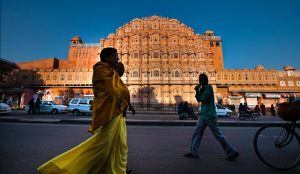
India’s urban transformation has long been measured in kilometres of roads, flyovers, expressways and parking spaces. It is again a rational sense has started dominating to revitalising public spaces for walkability. Understanding mobility is the key and the pedestrian has begun to reclaim the street. Without compromising urban aesthetics, a transformation is underway.
The Apex Court had intervened in June this year and recognised the right to walk on a safe, demarcated footpath as a fundamental right. The Supreme Court rightly observed that pedestrian movement must take priority over motorised vehicles. Urban authorities were given directives to provide, maintain and safeguard footpaths. The Supreme Court’s judgment obviously made the Indian cities to rethink what constitutes public infrastructure. Instead of a faster road, a city is successful if its streets allow people to walk safely, meet, trade, rest, and participate in public life.
Historic urban districts provide deep insights for the way forward. These cities, many of them, came before the motorised traffic. Homes, markets, religious places, squares, and public complexes were well connected to their streets. It is realised the revitalising these district does not rally call for importing an entirely new urban model. Authorities only have to recover the logic that already existed.
Historic city of Rajasthan- Jaipur is perhaps one of the clearest examples. The Pink City or Walled city was founded in 1727 and well-planned on a grid, with broad streets, continuous colonnaded commercial fronts and large public squares or chaupars at key intersections. Its aesthetic and public-friendly approach made UNESCO to describe Jaipur as an outstanding example of planned urban development and points out that its original hierarchy of roads, public spaces, and open spaces remains substantially intact.
However, now there are some challenges. Jaipur and other heritage districts cannot remain frozen in time while vehicle ownership, tourism, and commercial pressures multiply. Urban planners should aim to make the historic city functional for public without destroying the spatial character that made it valuable in the first place.
Delhi is another case in point. The Delhi government came up with a redevelopment plan for Chandni Chowk – the historic 17thcentury central boulevard of Shahjahanabad. The plan sought to decongest mixed traffic, create a pedestrian-friendly environment and integrate heritage character with improved urban services. Similarly, historic cities like Varanasi and Amritsar underwent revitalising public spaces for walkability. In these cities, pedestrianisation is increasingly being considered not merely as traffic management but as a means of restoring cultural and economic life to historic places.
Messages are loud and clear. There is no competition between heritage conservation and walkability. It is being realised that if properly conceived, they can reinforce each other. Panjim the capital of the smallest state of India- Goa offers yet another example of the revitalisation. Goa's capital possesses precisely the characteristics that make historic districts suitable for pedestrian-oriented regeneration: a compact urban core, historic neighbourhoods, public spaces, waterfronts and streets with strong cultural identity.
The Panjim Smart City includes the development of universal walkways, a pedestrian spine, and revitalisation of Patto, the Mandovi promenade, pedestrianisation of Café Bhonsle Square, internal-lane rejuvenation in Mala, the Dyan Setu pedestrian bridge, creek-side walkways and improvements incorporating footpaths and cycle tracks.
Goa's own policy direction increasingly recognises this broader approach. Under the leadership of Chief Minister Dr Pramod Sawant, authorities have made smart roads, universal walkways, pedestrian projects and EV charging infrastructure. These initiatives are reinforcing low-carbon mobility and walkability in Panjim. According to Dr Sawant, modern infrastructure should not come at the cost of Goa's identity. He emphasizes that Goa’s architectural heritage is a living legacy.
It would wrong to consider the heritage districts as museums. They are clearly living urban ecosystems. The success can only be mapped on walkability and public-friendly measures. Authorities need to focus on footpaths, shade, drainage seating, street lighting, crossings, universal accessibility, Parking policy, and properly managed vending.
Above all, people’s participation is the key to success in revitalisation schemes. Cohesive partnership between residents, traders, street vendors, transport agencies, heritage experts and local governments will provide better plan on how streets function should.
India's historic urban districts therefore offer something more valuable than nostalgia: they offer a template for the future. Jaipur's chaupars, Delhi's historic bazaars and Panjim's emerging pedestrian network all demonstrate that the street can once again become a civic space rather than simply a corridor for vehicles. It is high time to make a smarter choice, that making heritage human-centric and mobility inclusive.
The author, Vikant Sahay has 30+ years of experience in journalism, diplomacy, and public policy. He served as Sr Political Advisor to the US Consulate General in Kolkata & Sr Advisor to Lieutenant Governor of Delhi.