
India calls for UN security council reform, Gaza ceasefire at BRICS Foreign Ministers’ meet
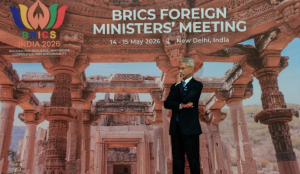
External Affairs Minister S. Jaishankar has called for sweeping reforms in global governance, including an overhaul of the United Nations Security Council, while also urging an immediate ceasefire in Gaza during the BRICS Foreign Ministers’ Meeting in New Delhi.
Speaking at the Bharat Mandapam, Jaishankar said the world is facing a convergence of crises driven by conflicts, climate shocks, and economic disruptions, which are placing severe stress on developing countries.
He stressed that the international system is under strain due to rising energy, food, fertiliser insecurity, supply chain disruptions, inflation, and slowing growth. “What we are witnessing is not a series of isolated events, but a convergence of challenges testing the resilience of multilateral systems,” he said.
Jaishankar underlined the need for stronger BRICS cooperation to respond to global instability, calling for coordinated action to promote stability, sustainability, and prosperity among emerging economies.
On the Middle East situation, the minister expressed deep concern over the humanitarian crisis in Gaza and called for a sustained ceasefire, unhindered humanitarian access, and a credible path towards a two-state solution.
He also flagged wider regional instability, including tensions in key maritime routes such as the Strait of Hormuz and the Red Sea, stressing the importance of ensuring safe and uninterrupted global shipping.
Reiterating India’s long-standing position, Jaishankar said the United Nations, particularly the Security Council, must be reformed to better reflect current global realities. He also criticised unilateral sanctions, saying they are inconsistent with international law and disproportionately impact developing nations.
On terrorism, the External Affairs Minister called for “zero tolerance,” stating that there can be no justification for cross-border terrorism in any form.
Jaishankar said BRICS must play a constructive role in addressing global challenges and strengthening multilateral cooperation at a time of growing geopolitical fragmentation.