
From fear to fightback: MDR-TB Survivor’s handbook lights the path to recovery
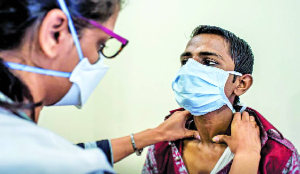
“Hello! I’m Deepti Chavan and I am an MDR-TB survivor. I know how it feels to hear the words ‘drug-resistant tuberculosis (DR-TB)’. When I heard them, my whole world changed. It can be scary and overwhelming. But let me assure you, you can recover. Like I did!” By pegging itself on the journey of Chavan, a well-known multi-drug-resistant (MDR) TB survivor, a recently launched handbook for DR-TB-affected individuals manages to stand out among the many resource materials on TB.
It simplifies how to navigate the complexities of TB diagnosis and treatment through the lens of a survivor, thus resonating with scores of people, both affected and those afraid they may be affected. Incidentally, about 64 per cent of people with TB symptoms do not seek care due to stigma, ignorance, or affordability issues, leading to delayed diagnosis and continued transmission.
This is probably one of the reasons why TB continues to be India’s biggest infectious disease challenge. India contributes about 25 per cent of the global TB burden, with five countries together accounting for over half of all cases worldwide, according to the government’s 2026 Tuberculosis Fact Sheet.
While TB services have expanded in the country, there is a lack of awareness that, despite being an infectious disease caused by a bacterium called Mycobacterium tuberculosis, TB can be completely cured with proper diagnosis and timely treatment. In this scenario, knowledge and information are key. This is where the 16-page guide, developed by Survivors Against TB (SATB), a survivor-led network, can bridge the information gaps.
Besides drawing on tools and insights from the Stop TB Partnership, including resources such as the OneImpact DR-TB module and the TB Champions Toolkit, it has been enriched by the inputs of survivors like Chavan, advocates, healthcare providers, and medical professionals.
This makes it both factual and relatable, since it is a collaborative effort by those who have gone through the emotional roller coaster of fear, misgivings, and self-pity and have also managed to overcome these hurdles. Though 55,000 cases of DR-TB were reported in 2024, requiring longer and more complex treatment, the bigger positive picture underlined by the booklet is that there is no giving up, no matter how hard or long the journey may be, because there is always light at the end of the tunnel.
The handbook not only lays out the TB roadmap, outlining how TB is transmitted and explaining treatment options, it also provides practical tips for TB-affected people and their caregivers. While addressing the most often asked question — “Why did it happen to me?” — the handbook makes it clear that it is nobody’s fault and that it can happen to anybody. Chavan, being an MDR-TB survivor, explains in simple language the main types of drug resistance.
Multidrug-resistant TB (MDR-TB) means the TB bacteria are resistant to rifampicin and isoniazid, the two most important anti-TB drugs used in treating TB.
If a person is diagnosed with rifampicin-resistant TB (RR-TB), this means their TB is resistant to rifampicin, with or without resistance to other drugs. In practice, RR-TB is treated in a similar way to MDR-TB. The third type is extensively drug-resistant TB (XDR-TB). This is a more serious form of drug-resistant TB, in which the bacteria are resistant to several key TB medicines, including those used to treat MDR-TB.
Chavan reiterates that while dealing with drug-resistant TB can be overwhelming, and it takes more effort to treat than drug-sensitive TB, with the right medicines, consistent check-ins, and strong support, it is possible to recover, just as she did.
But for this, patients must access services. While scrolling to the “Health Facilities” section in the TB Aarogya Saathi app will aid in locating the nearest health centre, calling the RNTCP toll-free number (1800-11-6666) will help in finding testing and treatment locations and information on the nearest microscopy centre or DOTS centre. One of the most important facts underscored is the need for proper nutrition during the treatment journey.
A balanced, nutritious diet rich in protein, vitamins, and minerals is crucial to fight the infection. The handbook points out that the government’s Nikshay Poshan Yojana offers `1000 a month to help with nutrition costs during treatment.