
Datia loss exposes deep faultlines in MP BJP
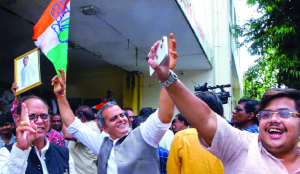
The Congress’s victory in the Datia Assembly by-election is being seen as much more than the loss of a single seat for the Bharatiya Janata Party (BJP). The result has exposed deep organisational fault lines within the BJP in one of its traditional strongholds while demonstrating that a well-planned, locally focused campaign can overcome the ruling party’s organisational strength.
The BJP entered the by-election after denying a ticket to former Home Minister Narottam Mishra, the party’s most influential leader in Datia for nearly two decades. The decision was intended to usher in a leadership transition by fielding RSS veteran Ashutosh Tiwari. However, instead of projecting unity, the move triggered resentment among Mishra’s supporters. Protests, road blockades, clashes with police and resignations from party posts even before the campaign gathered momentum created an impression of a divided organisation. Although Mishra later campaigned extensively for the BJP candidate, the controversy over his exclusion continued to dominate the election narrative.
Political observers believe the BJP found itself in a difficult position. While the party wanted to move beyond Mishra’s leadership, its campaign remained heavily dependent on his organisational network. This created mixed signals for voters. Those seeking a fresh beginning viewed Tiwari as operating under Mishra’s shadow, while Mishra’s loyal supporters were dissatisfied with the denial of a ticket to their leader. The result was visible in polling booths that had long been regarded as Mishra’s strongholds, where the BJP failed to retain its traditional advantage.
The Congress, on the other hand, avoided turning the by-election into a contest over State-level politics. Instead, it focused on local issues such as unemployment, migration, fertiliser shortages, erratic rainfall and public dissatisfaction with local governance. This strategy appeared to resonate, particularly in rural areas where voter turnout was significantly higher than in urban Datia.
The selection of Ghanshyam Singh also proved crucial. A veteran politician and member of the erstwhile Datia royal family, Singh brought decades of political experience, personal credibility and a strong grassroots network that extended beyond the Congress organisation. His personal goodwill enabled the party to minimise the impact of internal factionalism and attract support from sections beyond its traditional vote base.
Another significant factor was the Congress’s booth-level strategy. The campaign was coordinated by Satna MLA Sidhartha Kushwaha, who remained in Datia throughout the election and focused on strengthening booth management and consolidating Other Backward Classes votes. The meticulous planning ensured that local support translated into votes on polling day.
The Datia verdict suggests that even in politically significant constituencies, organisational unity and candidate selection remain critical. For the BJP, the defeat underlines the challenges of managing leadership transitions without alienating established support bases. For the Congress, the victory provides evidence that strong local leadership, effective grassroots mobilisation and a campaign centred on constituency-specific issues can successfully challenge the BJP’s electoral dominance in Madhya Pradesh.