
Crop loss survey begins in Maharashtra, says CM
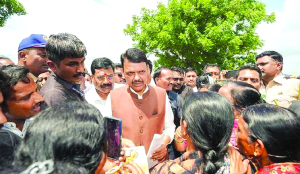
The Maharashtra Government has begun work on preparing crop inspection reports after declaring 265 talukas drought-affected, and it will provide appropriate assistance to affected farmers, Chief Minister Devendra Fadnavis said on Sunday.
He said that considering the possibility of El Nino peaking in next February, “we should be ready to face troubles if it intensifies”.
The State Government on Saturday declared drought in 265 of its 358 talukas, or 74 per cent of the State, amid rainfall deficit and announced various relief measures, including crop loan restructuring, land revenue concessions, and power bill subsidies.
Fadnavis said complaints about the exclusion of certain talukas from the drought criterion are very few and that losses in those areas will be assessed.
“The assistance will be provided to the affected talukas. Twelve emergency measures have been approved, and at the first trigger we already issued orders for their implementation,” Fadnavis told reporters.
He said the Government has started preparing (crop) inspection reports to an extent, and will provide appropriate assistance after these reports are prepared.
“We are rapidly completing whatever processes are needed (preceding the announcement of financial assistance to farmers),” Fadnavis added.
He said the state Government has received complaints about the exclusion of some talukas from the drought criterion; however, the numbers are very few.
“Even in those locations from where we are receiving complaints, we will assess losses incurred by farmers,” he said, adding that cultivators affected by crop loss will be included under Trigger Three, reiterating that no farmer will be left out.
Responding to a query on water wastage at certain facilities, Fadnavis said every district should prepare a water plan.
“If you reserve water from the available stocks, it will last until July and August 2027, and if somewhere there is excess water, then that water can be used for other purposes,” he added.
He said many large reservoirs currently have abundant water and they are full.
“If you reserve the water needed through July-August, then the remaining water may need to be allocated for Rabi crops somewhere or given to industry, and we can consider that appropriately. Therefore, instead of taking a blanket position for all, decisions should be made based on the water availability in each district and each taluka,” the Chief Minister added.
On global reports on the possibility of rising heat intensity and the need for expansive mitigation measures in the upcoming summer, Fadnavis said the El Nino weather pattern is expected to peak next February before declining.
“The El Nino effect will weaken once the Pacific Ocean starts cooling down. Considering these possibilities, we should prepare in every way and be ready to face issues if the El Nino effect intensifies,” he added.