
CM flags poor facilities, Delhi to audit all Government schools
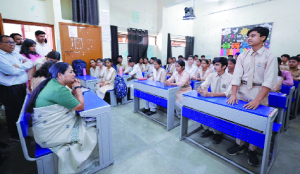
The Delhi Government has decided to conduct structural audits of all Government schools after Chief Minister Rekha Gupta’s surprise inspection in North Delhi’s Rupnagar, and noticed a lack of facilities there. During her visit, she interacted with students regarding drinking water facilities, fire safety, sanitation, heat-related relief measures and educational arrangements.
Chief Minister Rekha Gupta has announced a comprehensive structural audit of all Government schools in the capital to assess the actual condition of infrastructure and essential facilities. According to her, the audit will examine the structural strength and safety of school buildings, along with basic amenities such as drinking water, toilets, cleanliness and fire safety systems.
The Chief Minister visited Government Sarvodaya Vidyalaya in Roop Nagar No 4 early in the morning and carried out a detailed inspection of the campus. She interacted directly with students in classrooms and sought feedback on drinking water facilities, fire safety measures, the condition of toilets, cleanliness, and arrangements to tackle the heat, availability of teachers and the overall academic environment.
During the visit, she also aimed at the previous Government, saying that while its education model was heavily promoted, essential ground-level issues remained unaddressed. There are over 1,200 Government and Government-aided schools managed directly by the Directorate of Education, GNCT of Delhi.
Students informed the Chief Minister that the school lacked proper access to clean drinking water, with water coolers and RO systems lying non-functional for a long time. As a result, many students were forced to drink tap water directly. They also complained about the poor condition of toilets, saying several doors were broken, regular cleaning was not carried out, and the water supply remained inconsistent.
During the inspection, the chief minister found that the school’s fire safety system was also non-functional. Expressing strong displeasure over the lapses, she reprimanded officials and said negligence related to children’s safety would not be tolerated under any circumstances. She directed the concerned departments to immediately fix all safety-related shortcomings in the school. Students also raised the issue of the shortage of teachers during the interaction.
Calling schools ‘temples of education, the Chief Minister said the Government was committed to ensuring sensitivity, accountability and fulfilment of students’ real needs within the education system. She said the structural audit would help assess the actual condition of infrastructure and essential facilities across all Government schools.
The chief minister said nearly 700 schools in Delhi require new buildings or large-scale redevelopment, as many structures are 40 to 50 years old and have become severely dilapidated. The audit will cover structural stability, drinking water arrangements, sanitation, hygiene and fire safety preparedness. Directions for the exercise are being issued to the concerned departments.
Questioning the education model of the previous Government, the Chief Minister said the condition of Government schools had exposed the gap between publicity and reality. “Had the previous Government genuinely strengthened the education system, students would not be struggling for basic facilities today,” she said, adding that advertisements and publicity alone cannot improve education. “What matters is ensuring real facilities, a safe environment and quality education for children.”
The Chief Minister added that over the past year, the Government had been consistently working to strengthen basic facilities and modernise infrastructure in Government schools. The aim, she said, is to provide clean drinking water, hygienic toilets, smart classrooms, digital facilities and safe infrastructure for every student.
Last year, the Delhi Government announced an audit to create detailed digital profiles of more than 1,000 schools and generate real-time insights to identify infrastructure gaps, safety risks and long-term upgrade needs.
According to official documents, the project will digitally map 1,086 Government schools functioning across 799 building premises. Each school will receive a comprehensive digital profile that captures information on infrastructure, available facilities, physical condition, and safety parameters.