
Cervical cancer prevention: Why linking HPV awareness matters
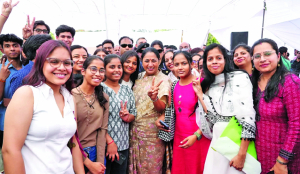
On the Menstrual Hygiene Day (May 28), Delhi CM Rekha Gupta raised a very powerful voice by promising No more silence on Menstruation. While many political leaders and public figures treat menstrual hygiene as a welfare issue and focus on just the distribution of sanitary pads, she is trying to institutionalise the apparatus and position menstrual health as a public health matter.
In her article, the Delhi CM also linked menstrual hygiene to cervical cancer awareness. “This (menstrual hygiene) will be directly linked to awareness of HPV and cervical cancer. Cervical cancer remains one of the most common cancers among Indian women, and it is also one of the most preventable. By connecting menstrual health to HPV awareness, we treat a girl’s reproductive health holistically,” she argued.
India needs to treat health as a continuous journey instead of just focusing on building cure infrastructure. While all the new hospitals, the increase in the number of medical seats, colleges, and Jan Aushadhi Kendras are essential to ensure that no one loses lifespan or healthspan due to unfortunate incidents, the focus should be on minimising the need for the same in the first place.
A good parallel would be the city transport infrastructure - the European cities initially focused on improving the road and metro infrastructure for city commute, but could never keep up with the growing population and its needs - later they realised that the solution lies in eliminating/minimising vehicle commute altogether and redesigned the city for pedestrian and cycle traffic. And the result of this is that European cities are cleaner, the population is healthier, and the quality of life is much better. Similarly, we need to minimise the need for healthcare infrastructure by focusing on preventive healthcare.
According to the WHO, cervical cancer is the 2nd most common cancer after breast cancer among women in India. Cervical Cancer is primarily driven by Human Papillomavirus (HPV), and our country accounts for roughly 20% of the global cervical cancer burden against 18% of the global population. Cervical cancer is preventable through vaccination administered between the ages of 9 and 14 before any exposure to the virus.
Adolescence represents a narrow, vital developmental window. Treating menstruation, reproductive education, and cancer prevention as completely separate may make sense from a curative point of view, but from a preventive lens, all of this could be dealt with a holistic strategy. When a young girl learns about her reproductive system in early teens, this is the right time to introduce her to the preventive vaccination framework, also.
Many authoritative studies have pointed out that schools are the basis for preventive healthcare interventions. Sensitisation about HPV and the vaccination to prevent the same will end the pandemic and will make our coming generations healthy and productive.
For too long, India has focused on curative healthcare despite being a low-per-capita-income country. While we see the ‘prevention is better than cure’ slogan in almost every other clinic and hospital, preventive healthcare has not been the focus of the community or the policymakers. India has one of the highest out-of-pocket healthcare expenditures (OOPHE) in the world at 43%. It was even higher, 64 per cent a decade ago, but thanks to the Modi government’s focus on healthcare infrastructure and improved spending, the ratio has decreased significantly. However, in a lower-middle-income country, people cannot afford to pay 43% OOPHE, which means the majority of India’s population is one medical bill away from being pushed below the poverty line.
The people of the United States, with a per capita income of around 90,000 dollars (30 times that of India), can afford to pay OOPHE, and most of Europe has fully public healthcare, but given India’s stage of development, both of these models are unsustainable for us. Thus, we have to focus on preventive healthcare in a big way if we want to have a healthy country that can reap the benefits of the demographic dividend by participating in the economy. Various studies have shown that health is directly linked to productivity, and as the cases of obesity, diabetes, breast and cervical cancer increase, the productivity of our young population will go down. If this demographic window is lost, India risks becoming old before becoming rich, and unless the country focuses on preventive healthcare to improve the healthspan and lifespan of the population, this risk will linger on. Therefore, our political leaders and public figures need to work on this on a war footing.
The writer is National Media Panelist, BJP; Views presented are personal.