
Ancient ties between India and Egypt shift gears to strategic partnership
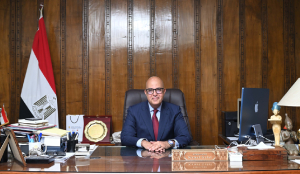
Together, we can play an important role in advancing peace, supporting sustainable development, strengthening food and energy security
How do you assess the current state of India-Egypt relations?
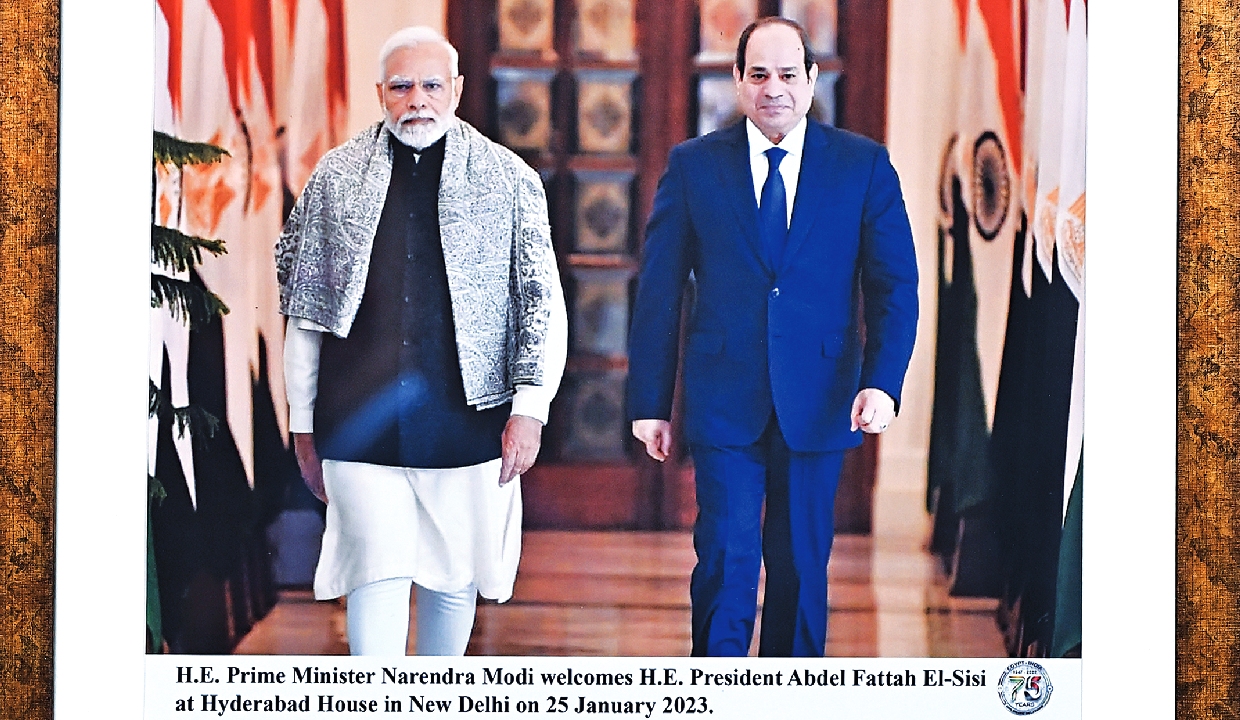
In order to be able to answer this question, we need to put in the context of a rich civilizational connections between Egypt and India, which started since millennia, and could be traced back to the 5th Dynasty of Ancient Egyptians. I would say that India-Egypt relations are today stronger than they have been in decades, due to the fact that we have visionary statesmen at the helm of the two countries, President Abdel Fattah Alsisi in Egypt and Prime Minister Narendra Modi in India. What makes the Strategic Partnership, signed in 2023, special is that it is built on both history and the future. Our countries have been characterized with a special sense of duality and friendship in our contemporary history, starting from Saad Zaghloul Pasha who was an inspiration to the great Mahatma Gandhi, in their joint struggle for independence, to President Gamal Abdel Nasser and Prime Minister Jawaharlal Nehru, in the 20th century, to today's duality of Alsisi- Modi joint vision to transform that historic goodwill into a modern Strategic Partnership. There is growing political trust, frequent high-level exchanges, expanding defence and security cooperation, increasing trade and investment, and close coordination in multilateral forums.
As leading voices of the Global South, both Egypt and India believe that international challenges require dialogue, inclusiveness, and respect for international law.
Our economic relationship is equally promising. India is among Egypt's most important economic partners, with Indian companies investing across manufacturing, chemicals, renewable energy, information technology, and agriculture, with a grosss investment reaching approximately $3.7 Billion. At the same time, Egypt offers India a strategic gateway to Africa, the Middle East, and Europe through its unique geographic location and world-class infrastructure.
But I believe the greatest potential still lies ahead. We are now looking beyond traditional cooperation towards joint manufacturing, digital technologies, green hydrogen, maritime connectivity, food security, pharmaceuticals, and innovation. These are areas where our strengths complement each other remarkably well. So, I see Egypt-India relations not simply as a bilateral partnership, but as a partnership with regional and global significance-one that contributes to stability, prosperity, and sustainable development across the Global South."
Therefore, India and Egypt are not merely renewing an old friendship; we are building a strategic partnership for the twenty-first century-connecting Asia, Africa, and Europe through shared interests, shared values, and shared ambition. The relationship has moved beyond diplomacy; it is now a comprehensive strategic partnership driven by political trust, economic complementarity, and a common vision for a more balanced and inclusive global order."
What are the top priorities for the Strategic Partnership?
Our Strategic Partnership is guided by a very practical vision: translating political goodwill into tangible deliverables and benefits for our peoples. I would highlight five key priorities.
- First, economic cooperation. Our objective is not simply to increase trade from its current $6 Billion to $12 Billion, but to build a resilient value chains capable of adapting to very turbulent and volatile geostrategic and geo-economic global landscape. We want to encourage greater investment, joint manufacturing, and industrial partnerships that create jobs and enhance competitiveness in both countries.
- Second, connectivity and logistics. Egypt's strategic location at the crossroads of Africa, Asia, and Europe, together with India's manufacturing strength, creates enormous opportunities. We see Egypt as a natural gateway for Indian companies seeking to reach European, African, and Middle Eastern markets more efficiently.
- Third, technology and innovation. India has emerged as a global leader in digital public infrastructure DPI, information technology, fintech, and start-ups. Egypt offers a young, skilled workforce and an expanding ICT ecosystem. Together, we can cooperate in artificial intelligence, cybersecurity, digital services, electronics, and innovation.
- Fourth, energy and sustainability. Clean energy, particularly green hydrogen and renewable energy, is becoming a major pillar of our cooperation. Both countries are committed to supporting the global energy transition while ensuring energy security.
- Fifth, people-to-people ties. Lasting partnerships are built not only by governments but also by businesses, universities, researchers, tourists, artists, and young people. Expanding educational exchanges, cultural cooperation, tourism, and academic collaboration will deepen the foundations of our relationship for generations to come.
Beyond these five priorities, we also work closely on maritime security, food security, healthcare, pharmaceuticals, and defense cooperation-areas that contribute to regional stability and mutual prosperity. Ultimately, our Strategic Partnership is about combining India's scale and innovation with Egypt's strategic location and regional connectivity. Together, we can create opportunities that neither country could achieve alone."
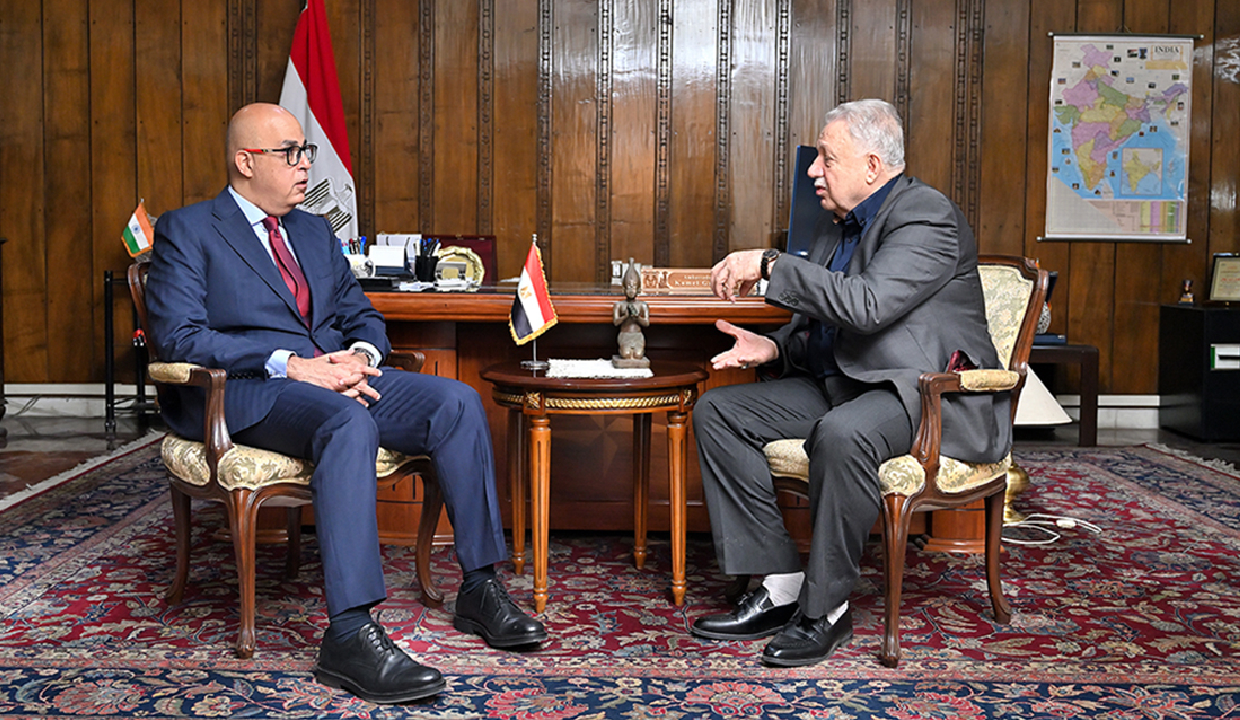
Where do you see India-Egypt relations by 2030?
By 2030, I believe India and Egypt can become one of the most consequential strategic partnerships linking Asia, Africa, Europe, and the Middle East. I envision a relationship that goes far beyond traditional diplomacy. We should aim to become partners in production, innovation, connectivity, and sustainable development. Economically, I hope to see a significant expansion in bilateral trade and investment, with Indian companies increasingly using Egypt as a manufacturing, logistical and export hub for Africa, Europe, and the Arab world, while Egyptian companies deepen their presence in the dynamic Indian market. Our ambition should not simply be to trade more, but to produce together and compete together in global markets.
At the geopolitical level, I expect our coordination to become even closer and frequent. India and Egypt are two ancient civilizations, two major developing economies, and two responsible regional powers who share the responsibility of calling for peace, stability, tolerance and co-existence. Together, we can play an important role in advancing peace, supporting sustainable development, strengthening food and energy security, and ensuring that the voice of the Global South is heard in global decision-making. Most importantly, I hope that by 2030, the relationship will be measured not only by government agreements, but by the number of students studying in each other's universities, entrepreneurs launching joint ventures, tourists discovering each other's rich heritage, researchers collaborating on innovation, and young people building lifelong partnerships.
Shortly, I hope that by 2030, people would stop asking what India and Egypt can do for each other, and instead ask what India and Egypt achieved together for the world.
How can bilateral trade be significantly increased?
The potential for expanding India-Egypt trade is enormous because our economies are highly complementary rather than competitive. The question is no longer whether trade can grow-it is how quickly we can unlock its full potential.
First, we need to encourage greater investment-led trade. When Indian companies manufacture in Egypt, they gain efficient access to markets across Africa, Europe, and the Arab region through Egypt's extensive network of free trade agreements. Likewise, Egyptian companies can use India as a gateway to one of the world's largest and fastest-growing consumer markets.
Second, we should move from trading products to building integrated value chains. Instead of simply exporting raw materials or finished goods, our companies should jointly manufacture pharmaceuticals, automobiles, textiles, chemicals, food products, electronics, and renewable energy components. This creates greater value, resilience, and employment in both countries.
Third, connectivity is key. Egypt's strategic location and the Suez Canal make it one of the world's most important logistics hubs. By combining India's manufacturing strength with Egypt's logistics and industrial infrastructure, specially in the Suez Canal Zone (SCZ), we can reduce transit times, improve supply chain resilience, and enhance the competitiveness of Indian exports to Europe and Africa.
Fourth, we should deepen cooperation in the digital economy. Digital trade, fintech, IT services, e-commerce, start-up collaboration, and digital public infrastructure represent some of the fastest-growing areas of our partnership.
Finally, the private sector must be at the heart of this relationship. Governments create the enabling environment, but businesses create trade. We therefore encourage more business-to-business partnerships, regular CEO forums, trade missions, and investment facilitation mechanisms.
Which sectors offer the best opportunities for Indian investors in Egypt?
Egypt offers Indian investors a unique value proposition. We combine a strategic geographic location, a large and youthful talent pool, competitive operating costs, modern infrastructure, and preferential access to more than 70 countries through an extensive network of free trade agreements. For Indian companies, investing in Egypt is not simply an investment in one market-it is an investment in access to Africa, the Middle East, and Europe. I see seven sectors with particularly strong potential.
First, manufacturing and industrial production. Egypt is an ideal base for Indian manufacturers in sectors such as automotive components, engineering products, chemicals, and consumer goods, enabling them to serve regional markets efficiently.
Second, information and communication technology. Egypt has a rapidly growing digital economy, a highly skilled multilingual workforce, and a vibrant start-up ecosystem. There are excellent opportunities for collaboration in artificial intelligence, software development, business process outsourcing, fintech, cybersecurity, and digital public services.
Third, renewable energy and green hydrogen. Egypt has exceptional solar and wind resources, world-class infrastructure, and a strategic location for exporting clean energy. This creates significant opportunities for Indian companies involved in green hydrogen, electrolyzers, renewable technologies, and sustainable industrial projects.
Fourth, pharmaceuticals and healthcare. India's global leadership in pharmaceuticals complements Egypt's position as a manufacturing and distribution hub for Africa and the Arab region. Joint production can enhance healthcare access while opening new export markets.
Fifth, logistics, ports, and supply chains. The Suez Canal and Egypt's integrated ports and industrial zones provide a natural platform for logistics, warehousing, value-added manufacturing, and regional distribution.
Sixth, agriculture and food processing. Food security has become a global priority. There is considerable scope for cooperation in agricultural technology, food processing, cold-chain logistics, and agribusiness.
Seventh, tourism and hospitality. Egypt's unique cultural heritage and growing tourism sector offer opportunities in hospitality, hotel development, entertainment, and tourism services.
How can Egypt serve as India's gateway to Africa and Europe?
Egypt is uniquely positioned to become India's natural gateway to both Africa and Europe because it combines geography, connectivity, trade agreements, and industrial capacity in a way that few countries can match. First, Egypt sits at the crossroads of three continents and controls the Suez Canal, through which around 12% of global trade and roughly 30% of global container traffic passes. This gives Indian companies unparalleled access to one of the world's busiest trade corridors. Second, Egypt offers Indian manufacturers preferential access to over 2.5 billion consumers through an extensive network of free trade agreements, including:
- African Continental Free Trade Area, covering 54 African countries.
- Common Market for Eastern and Southern Africa.
- Greater Arab Free Trade Area.
- The Association Agreement with the European Union.
This means that products manufactured in Egypt can reach African, European, and Arab markets more competitively than exports shipped directly from India. Third, Indian companies can leverage the Suez Canal Economic Zone as a regional manufacturing and logistics hub. By producing in Egypt, they can shorten supply chains, reduce shipping times to Europe by several days, lower logistics costs, and diversify production beyond Asia.
What incentives does Egypt offer to Indian businesses?
Egypt offers Indian businesses a compelling value proposition that goes far beyond tax incentives. It provides a combination of strategic location, market access, competitive costs, and government support that makes it one of the most attractive investment destinations in the region. First, Egypt has a modern investment framework under the General Authority for Investment and Free Zones, which provides streamlined, seamless procedures, investor support, and incentives for priority sectors.
Second, companies investing in Egypt can benefit from:
- Tax incentives for projects in strategic sectors and underdeveloped regions.
- Customs exemptions and simplified import procedures for production inputs in designated zones.
- Competitive land allocation in industrial and logistics parks.
- Access to well-developed free zones and the Suez Canal Economic Zone, which offers integrated industrial, logistics, and port infrastructure.
Third, Egypt offers Indian investors something equally valuable: market access. Manufacturing in Egypt enables companies to export preferentially to:
- African Continental Free Trade Area.
- Common Market for Eastern and Southern Africa.
- Greater Arab Free Trade Area.
- The European Union under Egypt's Association Agreement.
Egypt also offers:
- A young and skilled workforce with competitive labour costs.
- Reliable energy infrastructure and growing renewable energy capacity.
- Excellent maritime connectivity through the Suez Canal and modern Mediterranean and Red Sea ports.
- A rapidly expanding ICT ecosystem that supports digital industries, business services, and innovation.
Importantly, the relationship is already producing results. More than 55 Indian companies have established operations in Egypt across sectors such as chemicals, textiles, packaging, pharmaceuticals, automotive components, and renewable energy, demonstrating strong confidence in the Egyptian market.
How can India and Egypt cooperate in AI and digital transformation?
Artificial Intelligence and digital transformation represent one of the low-hanging fruits in the Egypt- India Strategic Partnership. India is a global leader in digital innovation, while Egypt is rapidly emerging as a regional digital hub connecting Africa, the Middle East, and Europe. Together, we can create solutions that serve not only our two countries, but the entire Global South. India has demonstrated how digital public infrastructure can transform governance, financial inclusion, healthcare, and education at scale. Egypt is undertaking an ambitious digital transformation agenda, investing heavily in smart government services, telecommunications, data centres, and digital skills. These strengths are highly complementary. There are five priority areas for cooperation:
- AI research and innovation: Establish joint AI research centres linking Egyptian and Indian universities and technology companies, focusing on healthcare, agriculture, climate resilience, language technologies, and smart cities.
- Digital Public Infrastructure (DPI): Egypt can benefit from India's internationally recognised digital platforms in digital identity, digital payments, and e-governance, adapting them to local needs while sharing best practices with African partners.
- IT and Business Process Outsourcing (BPO): Egypt offers a multilingual workforce, competitive operating costs, and proximity to European and African markets. Indian IT companies can expand their regional operations from Egypt, making it a delivery hub for Europe, Africa, and the Middle East.
- Semiconductors, cloud computing, and data centres: India's growing electronics ecosystem can complement Egypt's strategic location, expanding investments in cloud infrastructure, cybersecurity, and regional data centres.
- Digital skills and talent development: Joint programmes in AI, cybersecurity, software engineering, and advanced digital technologies can prepare a new generation of innovators and entrepreneurs. Looking ahead, I also see opportunities for cooperation in AI governance.
As responsible voices of the Global South, India and Egypt can work together to ensure that artificial intelligence remains ethical, inclusive, secure, and accessible to developing countries-not concentrated in the hands of a few.
What opportunities exist in renewable energy and green hydrogen?
Renewable energy and green hydrogen have the potential to become one of the defining pillars of the India-Egypt Strategic Partnership. Our two countries possess highly complementary strengths that can help build a secure, sustainable, and globally competitive clean energy ecosystem. Egypt has an exceptional renewable energy resources. With abundant sunshine, strong wind corridors-particularly along the Red Sea-and a strategic location linking Europe, Africa, and Asia, Egypt is well positioned to become a global hub for green hydrogen and green ammonia production.
India, on the other hand, is one of the world's fastest-growing clean energy markets. It has developed world-class capabilities in solar manufacturing, engineering, electrolysers, renewable technologies, and large-scale project execution. By combining India's technological expertise with Egypt's natural advantages, we can create a powerful partnership.
There are five major opportunities for cooperation:
- Green hydrogen production: Indian companies can invest in large-scale green hydrogen and green ammonia projects in Egypt, supplying domestic demand while exporting to Europe and other international markets.
- Manufacturing partnerships: India and Egypt can jointly manufacture solar panels, wind turbine components, batteries, electrolysers, and electric mobility technologies, strengthening regional supply chains.
- Research and innovation: Universities and research institutions can collaborate on hydrogen storage, carbon capture, smart grids, energy efficiency, and next-generation clean technologies.
- Green industrial zones: The Suez Canal Economic Zone offers an ideal platform for renewable-energy-powered industrial clusters serving African and European markets.
- Energy connectivity: Clean energy cooperation can support the broader vision of resilient supply chains linking India, the Middle East, Africa, and Europe.
For India, investing in Egypt's green energy sector is not only an environmental choice-it is a strategic economic decision. Manufacturing clean energy products in Egypt provides access to major export markets while contributing to global decarbonisation goals.
How can both countries strengthen industrial partnerships?
India and Egypt have all the ingredients to build a modern industrial partnership based not only on trade, but on co-production, innovation, and integrated value chains. The next phase of our relationship should be centred on "Make in Egypt & India for the World."
First, we should encourage Indian companies to establish manufacturing facilities in Egypt, particularly in sectors where India has global competitiveness and Egypt offers strategic advantages. These include pharmaceuticals, automobiles and auto components, textiles, chemicals, engineering products, food processing, electronics, and renewable energy equipment.
Second, the Suez Canal Economic Zone provides an ideal platform for industrial cooperation. With world-class ports, logistics infrastructure, and preferential access to African, European, and Arab markets, it allows Indian manufacturers to produce in Egypt and export competitively across three continents.
Third, both governments should support joint ventures between Indian and Egyptian companies. These partnerships would combine India's manufacturing expertise, technology, and innovation with Egypt's skilled workforce, strategic location, and regional market access.
Fourth, industrial cooperation should extend beyond manufacturing to include:
- Joint research and development.
- Technology transfer.
- Skills development and vocational training.
- Digital manufacturing and Industry 4.0.
- Supply-chain resilience in critical sectors.
What role can the Suez Canal play in expanding India-Egypt trade?
The Suez Canal is far more than a shipping lane-it is the strategic backbone of the India-Egypt economic partnership. It has the potential to transform our relationship from one based primarily on trade into one centred on manufacturing, logistics, and global supply chains. For India, the Suez Canal is the principal maritime gateway to Europe, North Africa, and the Atlantic. Every year, a significant share of India's trade with Europe passes through this route, making Egypt an indispensable partner in India's westward economic connectivity. However, the greatest opportunity lies not simply in ships transiting the Canal, but in creating value around it.
There are several concrete areas for cooperation:
- Integrated logistics hubs for Indian exports to Europe and Africa.
- Regional warehousing and distribution centres serving three continents.
- Manufacturing clusters in sectors such as pharmaceuticals, textiles, automotive components, electronics, chemicals, and renewable energy equipment.
- Cold-chain logistics for agricultural and food exports.
- Ship repair, maritime services, and bunkering, capitalising on the Canal's position as one of the world's busiest maritime corridors.
- Digital logistics, including smart ports, AI-driven customs systems, and supply-chain management technologies.
The Suez Canal also fits naturally within broader regional connectivity initiatives, including the India-Middle East-Europe Economic Corridor (IMEC). Rather than viewing different corridors as competing, we should see them as complementary networks that enhance resilience, diversify trade routes, and strengthen global connectivity.
How do you view India's role in the Middle East?
India has emerged as one of the most important and constructive partners in the Middle East. Its approach is characterised by strategic autonomy, balanced diplomacy, economic engagement, and respect for the sovereignty of all states. This has earned India the trust of countries across the region. Today, India's engagement with the Middle East extends far beyond energy security. It encompasses trade, investment, infrastructure, digital transformation, defence cooperation, maritime security, food security, renewable energy, and people-to-people ties. From Egypt's perspective, India is an increasingly important partner because it is:
- One of the world's fastest-growing major economies.
- A trusted technology and innovation leader.
- A major investor and development partner.
- A responsible stakeholder in promoting stability and secure maritime trade.
Egypt welcomes this growing engagement because our strategic priorities are highly complementary. As the Arab world's gateway to Africa and the guardian of the Suez Canal, Egypt can play a pivotal role as anchor in India's westward connectivity and expanding its economic footprint across Africa and Europe.
Looking ahead, I believe the India-Middle East partnership should increasingly focus on shared prosperity, principles of tolerance, peace and stability. These are notions where India and regional partners, including Egypt, can create long-term value for their peoples.
How do regional conflicts affect bilateral economic relations?
Regional conflicts inevitably create economic uncertainty. They disrupt supply chains, increase shipping and insurance costs, affect investor confidence, and place pressure on global energy and food markets. However, they also underscore the importance of building resilient and diversified economic partnerships-and this is where India and Egypt have a unique opportunity. Recent developments in the Strait of Hormuz have highlighted how closely regional security and global trade are interconnected. Any disruption to these vital maritime routes has direct consequences for trade between Asia, Europe, and Africa, including India and Egypt. In fact, periods of uncertainty often reinforce the need for deeper cooperation. For India, Egypt offers a stable production and logistics platform at the crossroads of three continents. For Egypt, India is a reliable economic partner with a large market, advanced manufacturing capabilities, and strong technological expertise.
Rather than allowing regional tensions to weaken economic cooperation, both countries should use this moment to strengthen institutional ties, expand investment, and accelerate connectivity projects. Resilient partnerships are built precisely to withstand periods of uncertainty. At the same time, both India and Egypt have consistently supported dialogue, diplomacy, and peaceful resolution of disputes. Sustainable economic growth is ultimately inseparable from regional peace and stability.
How can India and Egypt strengthen cooperation within BRICS and the Global South?
India and Egypt have entered a new chapter in their relationship through their partnership in BRICS. As two of the largest and most influential voices of the Global South, our cooperation can help shape a more inclusive, balanced, and representative international order. Both countries share a common vision: strengthening multilateralism, reforming global governance, and ensuring that developing countries have a greater voice in international decision-making. This makes BRICS not merely an economic platform but a Launchpad for advancing the priorities of emerging economies. There are five key areas where India and Egypt can deepen cooperation:
- Trade and investment: We should work to expand bilateral trade, encourage investment, and strengthen supply chains among BRICS members. Egypt can serve as India's manufacturing and logistics gateway to Africa and Europe, while India can be Egypt's gateway to South Asia.
- Development finance: Through institutions such as the New Development Bank, India and Egypt can support infrastructure, renewable energy, digital connectivity, and sustainable development projects across the Global South.
- Food and energy security: Both countries can work together to improve agricultural resilience, promote renewable energy, and strengthen energy transition efforts, particularly in green hydrogen and clean technologies.
- Digital transformation and innovation: India has demonstrated global leadership in digital public infrastructure, while Egypt is emerging as a regional ICT hub. Together, we can develop digital solutions, AI applications, fintech, and e-governance models that can be replicated across Africa and other developing regions.
- Africa and South-South cooperation: Egypt's leadership in Africa and India's long-standing development partnerships create opportunities for trilateral cooperation in capacity building, healthcare, education, infrastructure, and technology transfer.
Beyond economics, India and Egypt also have an important diplomatic role. Together, we can advocate for reforms of international financial institutions, strengthen cooperation on climate finance, promote equitable access to emerging technologies, and ensure that the voices of developing nations are better reflected in global governance. The significance of our partnership lies not only in what we can achieve bilaterally, but also in what we can contribute collectively to the international community.
What role can both countries play in shaping a multipolar world?
India and Egypt are natural partners in shaping a more balanced and multipolar international order. Both countries have long traditions of strategic balance, support for multilateralism, and a commitment to peaceful coexistence. As founding pillars of the Non-Aligned Movement, we have historically championed the interests of developing nations, and today they can help define a new era of global cooperation. A multipolar world is not simply about the emergence of more centres of power-it is about creating a system in which all countries, regardless of size or level of development, have a meaningful voice in shaping international rules and institutions.
Importantly, neither India nor Egypt seeks a world divided into competing blocs. Both countries believe that international relations should be based on cooperation rather than confrontation, inclusivity rather than exclusivity, and shared prosperity rather than zero-sum competition. This balanced and pragmatic approach gives both nations credibility across regions and enables them to act as bridges between developed and developing economies.
How can academic and cultural exchanges be expanded?
Academic and cultural exchanges are among the most enduring foundations of the India-Egypt relationship. Governments can sign agreements, but it is students, scholars, artists, entrepreneurs, and young people who give this Strategic Partnership its lasting strength. India and Egypt share civilizational links that go back thousands of years. Both are among the world's oldest continuous civilizations, with rich traditions in philosophy, science, literature, arts, and spirituality. This shared heritage provides an exceptional basis for expanding people-to-people ties.
There are several practical steps we can take:
- Expand university partnerships through joint degree programmes, faculty exchanges, collaborative research, and student mobility in fields such as artificial intelligence, engineering, medicine, renewable energy, archaeology, and public policy.
- Increase scholarships for Egyptian students to study in India and for Indian students to study in Egypt, particularly in emerging technologies, healthcare, and language studies.
- Promote language education, encouraging more Egyptians to learn Hindi and more Indians to study Arabic, thereby deepening mutual understanding and facilitating business and diplomacy.
- Strengthen cultural diplomacy through film festivals, art exhibitions, music performances, literary events, and tourism promotion. India's vibrant film industry and Egypt's distinguished cinematic and cultural heritage offer tremendous opportunities for collaboration.
- Develop youth and innovation exchanges, connecting startups, technology incubators, entrepreneurs, and young professionals to encourage joint innovation and long-term partnerships.
- Expand cooperation in heritage conservation, archaeology, museums, and digital preservation, allowing both countries to share expertise in protecting and promoting their extraordinary historical legacies.
India and Egypt are not merely two ancient civilizations with a proud past; they are two rising powers with a shared future. Together, we can build a partnership that connects Asia, Africa, and Europe, advances the aspirations of the Global South, and contributes to a more peaceful, prosperous, and multipolar world."
What message do you have for Indian businesses considering investment in Egypt?
My message to Indian businesses is simple, strait forward and linear. This is the right time to invest in Egypt. We are not just a market of over 110 million consumers-it is a strategic platform connecting India with the Western Hemisphere. Few countries offer such a unique combination of geographic advantage, modern infrastructure, competitive costs, and preferential access to multiple regional markets. Let me sum up what I previously said regarding the unique strategic advantages that Egypt offers:
First, Egypt's strategic location around the Suez Canal provides direct access to one of the world's busiest maritime trade routes, significantly reducing logistics costs and improving access to European and African markets.
Second, Indian investors can leverage the Suez Canal Economic Zone, which provides world-class industrial infrastructure, integrated logistics services, and an attractive environment for export-oriented manufacturing.
Third, manufacturing in Egypt provides preferential access to more than 2.5 billion consumers through agreements such as the African Continental Free Trade Area, Common Market for Eastern and Southern Africa, Greater Arab Free Trade Area, and Egypt's Association Agreement with the European Union.
In contemporary era, we cannot overlook the geopolitical component, specially that we are going through highly turbulent times. Therefore, Indian businesses, should not look at Egypt as simply a new market, but rather as your next manufacturing base, your logistics hub, and your launchpad to expanding your regional and global footprint in Africa, the Middle East, and Europe.
What is your vision for India-Egypt relations over the next decade?
Egypt's vision for the relationship with India focuses seeing a transformational partnership that moves far beyond traditional diplomacy into a deeply integrated relationship built on trade, technology, manufacturing, connectivity, and shared global leadership. At its core, I see both countries evolving into two strategic anchors linking Asia, Africa, and Europe.
How can the proposed India-Arab Business Summit contribute to stronger India Egypt economic ties?
At the outset, I think this is a brilliant idea, that should be carried forward swiftly. The proposed India-Arab Business Summit can become a powerful new tool to accelerate Egypt- India economic ties by moving the partnership from bilateral dialogue to regional economic integration and deal-making at scale. The summit can serve as a high-level investment matchmaking platform, bringing together sovereign wealth funds, major corporations, and SMEs from India and the Arab region to explore joint ventures in Egypt across manufacturing, infrastructure, energy, and digital sectors.
In addition, it can institutionalise policy coordination and business facilitation, encouraging faster regulatory approvals, investment protection frameworks, logistics agreements, and easier market entry for Indian firms in Egypt and Egyptian firms in India.
Dr Waiel Awwad is Secretary-General IACCIA & FICCI Arab Head; Views presented are personal.