Simian scare has apex court looking for succour
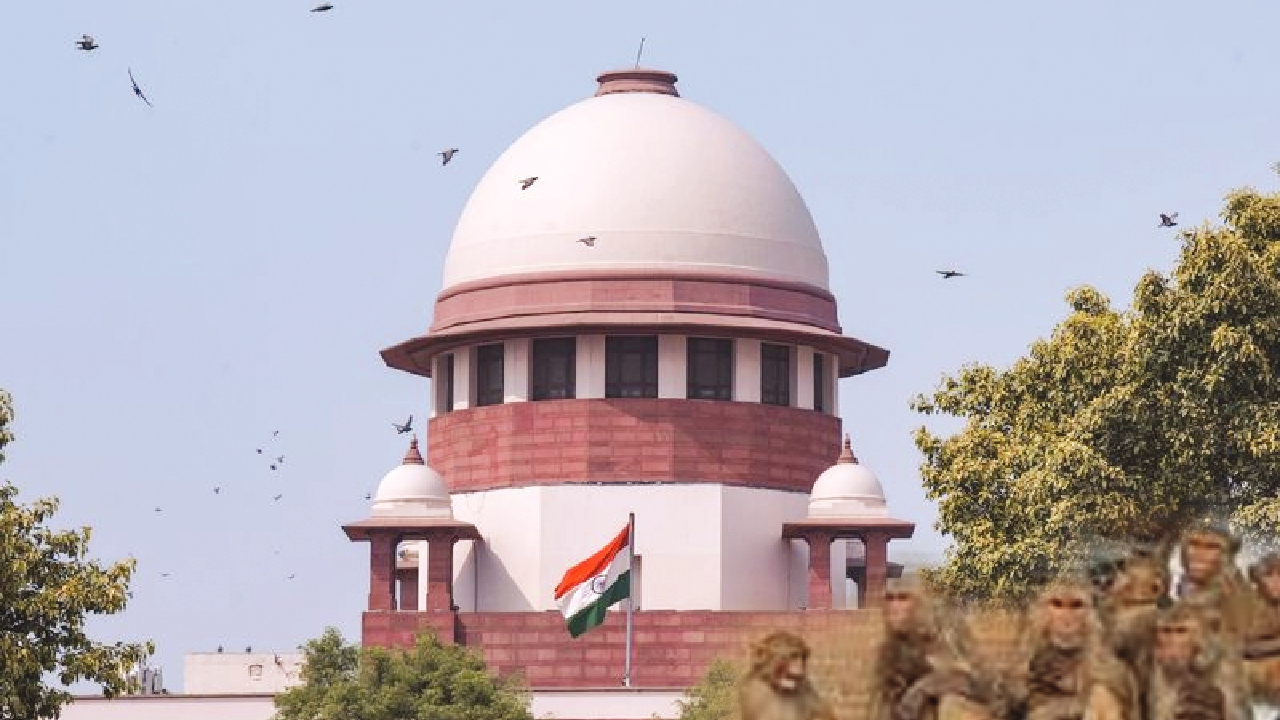
The powerful institution revered by common citizens for providing succour to them is helpless. Even the high and mighty have to tread cautiously on its premises, but the monkeys care a damn. They do not even spare the judges in their official bungalows, posing a grave danger to their well-being.
Faced with this serious menace, the Supreme Court is looking for talent to “scare off” monkeys and floated a tender for the same. It aims to recruit at least 100 trained experts to drive away the monkeys from the premises of the apex court, apart from the official residences and its guest house. Delhi has a perennial problem with the vaulting ambitions of the simian race.
In a notice issued through the Government e-Marketplace (GeM) portal, the Supreme Court stated that it intends to invite online bids from vendors and agencies from the open market for providing personnel designated as “Monkey Chasers/Handlers/Repellers (Monkey Scarers)” to drive away monkeys from the residential bungalows of judges, the Supreme Court Guest House, and other court premises. The engagement is proposed for a period of two years.
According to the tender document, the personnel will be deployed across approximately 35 to 40 residential bungalows of judges located within an approximate radius of 10 kilometres from the Supreme Court of India.
The court clarified that the requirement of manpower may increase or decrease during the contractual period, depending on operational needs.
The scope of work includes providing trained personnel to safely deter monkeys and prevent nuisance or safety risks within the designated residential and institutional premises.
“The bidder/ tenderer must have at least one (1) running work contract in any Central/ State Government Organisations or Public Sector Undertakings (PSUs) for engaging a minimum of 50 personnel/ manpower for Monkey Chasing/ Handling/ Repelling Manpower,” the tender document said.
And it’s not just the Supreme Court or Delhi High Court. In the past, monkeys have terrorised the prime minister’s office, torn apart the Home ministry’s files, and created a menace at former Vice President Venkaiah Naidu’s official residence.
Monkeys are usually seen, amidst screams of surprises from unsuspecting passers-by, roaming around in the corridors of of power in the Capital, though several calculated attempts have been made to rehabilitate them outside Delhi. Landmark judgments have been passed, expert committees have been formed, and government tenders have invited agencies to sterilise the simians, but nothing seems to have worked. The monkeys have even been relocated to wildlife sanctuaries, but they always find their way back. They hop tall buildings, destroy vegetation and gardens, and enter homes fearlessly for food.
Experts have long advocated for non-violent deterrence methods, habitat restoration, and better waste management to reduce such conflicts. By mandating trained handlers and adherence to animal welfare laws, the initiative signals a step toward more responsible and compassionate urban wildlife management. A lack of consensus between wildlife experts and animal activists on how to solve the monkey menace creates a deadlock. Delhi woke up to its monkey problem in 2007. In October, Surinder Singh Bajwa, then-deputy mayor of Delhi, fell to his death from his balcony after a monkey attacked him.
The New Delhi Municipal Council (NDMC) had installed life-size cut-outs of grey langurs on roads along the Central Ridge in an attempt to keep rhesus macaques, colloquially known as rhesus monkeys, away from transit routes and venues during the G20 Summit in 2023. The civic body also deployed 40 trained workers who will mimic the sound made by grey langurs in an attempt to keep monkeys away from hotels and G20 Summit-related venues.