Shah launches India’s first counter-terrorism policy
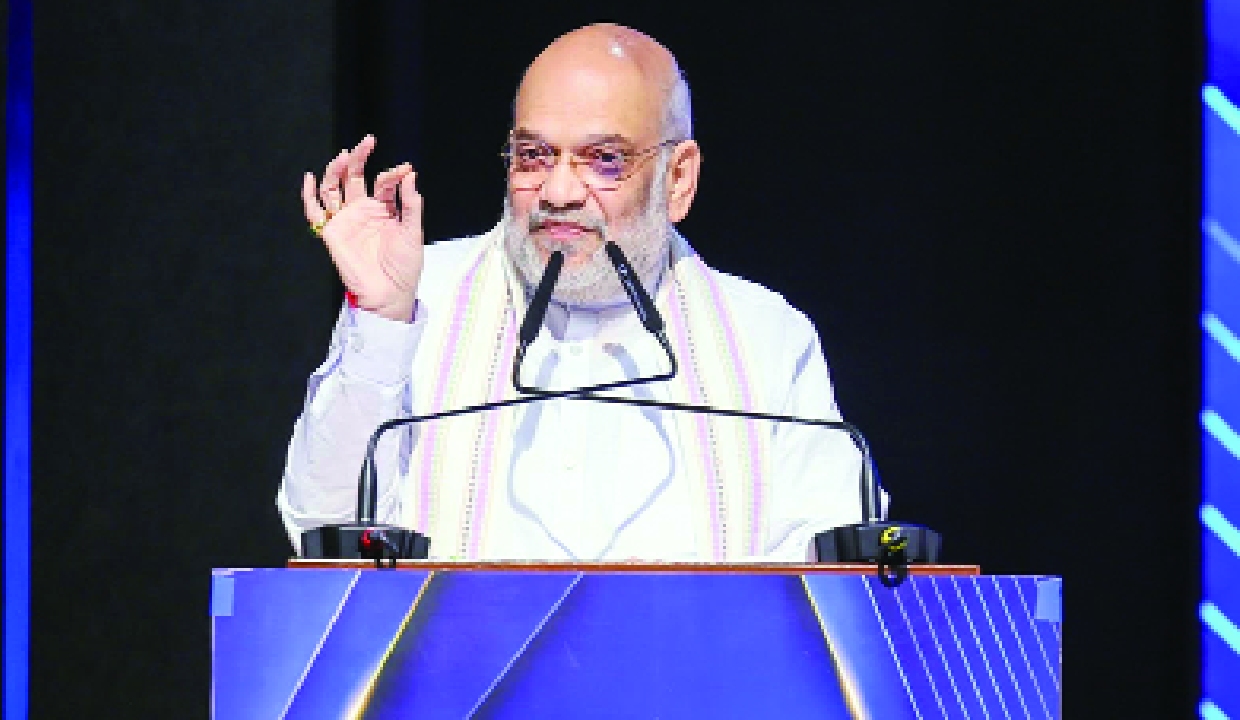
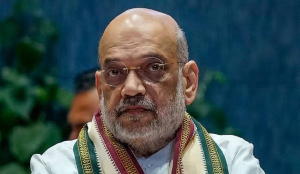
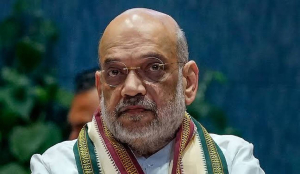
Union Home Minister and Minister of Cooperation Amit Shah on Monday inaugurated the Conference on ‘PRAHAAR-CT Policy and Strategy’ in New Delhi. The meeting brought together senior security and police officials to review and implement India’s first national counter-terrorism doctrine.
Shah said the Government of India, under Prime Minister Narendra Modi, has adopted a zero-tolerance policy against terrorism. He called for ongoing review of the PRAHAAR framework based on analysis of terror incidents, and for building a mechanism that can serve the country over the next decade. He said the principles of PRAHAAR must be implemented at the police station level, and that all levels of the security system should act proactively.
Shah called for an automated counter-terrorism response at every level to avoid delays and ensure effective action. He said central agencies, state police, and other stakeholders must coordinate closely so that there is no delay when a threat arises.
The Home Minister said the Government has already used this coordinated approach in recent operations. Between 2019 and 2026, authorities brought back 288 fugitive criminals from 36 countries. Improved coordination led to the dismantling of over 40 modules of the Shahzad Bhatti network, which was involved in cross-border smuggling of weapons, explosives, and narcotics. Authorities registered more than 100 FIRs and arrested 350 people across 15 States.
The network has been declared a terrorist organisation under the Unlawful Activities (Prevention) Act. Shah also launched a new Extradition Portal to speed up efforts to bring back fugitives. He directed state police to form teams to work with central agencies so they can prepare and follow up on extradition requests quickly.
For decades, India’s counter-terrorism efforts relied on separate laws, agencies, and practices that developed over time. In 2026, PRAHAAR brought these elements together as the country’s first unified National Counter-Terrorism Policy and Strategy. Shah has stressed that the policy needs regular updates, should become part of daily operations, and must be implemented at every police station.
The doctrine is built on seven main pillars. Prevention relies on intelligence to stop plots, propaganda, sleeper cells, funding, and arms networks before attacks happen. Response means local police act quickly and appropriately, with fast backup from central forces to avoid delays in the crucial first hours.
Aggregating Internal Capacities means updating state police, standardising training, and working closely with agencies like the Multi-Agency Centre, the National Investigation Agency, the National Security Guard, and the Central Armed Police Forces. It also stresses the importance of human rights and the rule of law to keep counter-terrorism efforts legal and trustworthy. Attenuating Conditions for Terrorism focuses on de-radicalisation, involving communities, and supporting youth and women in at-risk areas to lower recruitment. Aligning International Efforts covers sharing intelligence, legal help, extradition, and diplomacy to stop terrorists from finding safe havens, weapons, or funding abroad.
Recovery and Resilience takes a society-wide approach to help communities, rebuild infrastructure, and restore public trust after an attack. Shah pointed out that these pillars are important because earlier methods were often reactive and scattered across different ministries and agencies.
PRAHAAR does not set up new organisations. Instead, it gives a single framework for the ones already in place. This framework should be used at every level and tested in real situations to make sure it stays effective. Shah has also linked the doctrine to current tools, such as faster return of fugitives, trials in absentia, stronger investigations under the Unlawful Activities (Prevention) Act, and joint action against networks that mix crime, drugs, weapons, and ideology.
The doctrine moves away from one-off responses and instead uses a single national approach. It covers every part of terrorism, such as propaganda, funding, logistics, overseas handlers, and recovery after attacks. Local police handle the first response, with quick help from central forces. The doctrine also combines security work with social and economic steps to reduce radicalisation and shows India’s strong commitment to working with other countries and maintaining zero tolerance.