SC to hear UPI fee challenge, seeks Government, RBI, NPCI replies
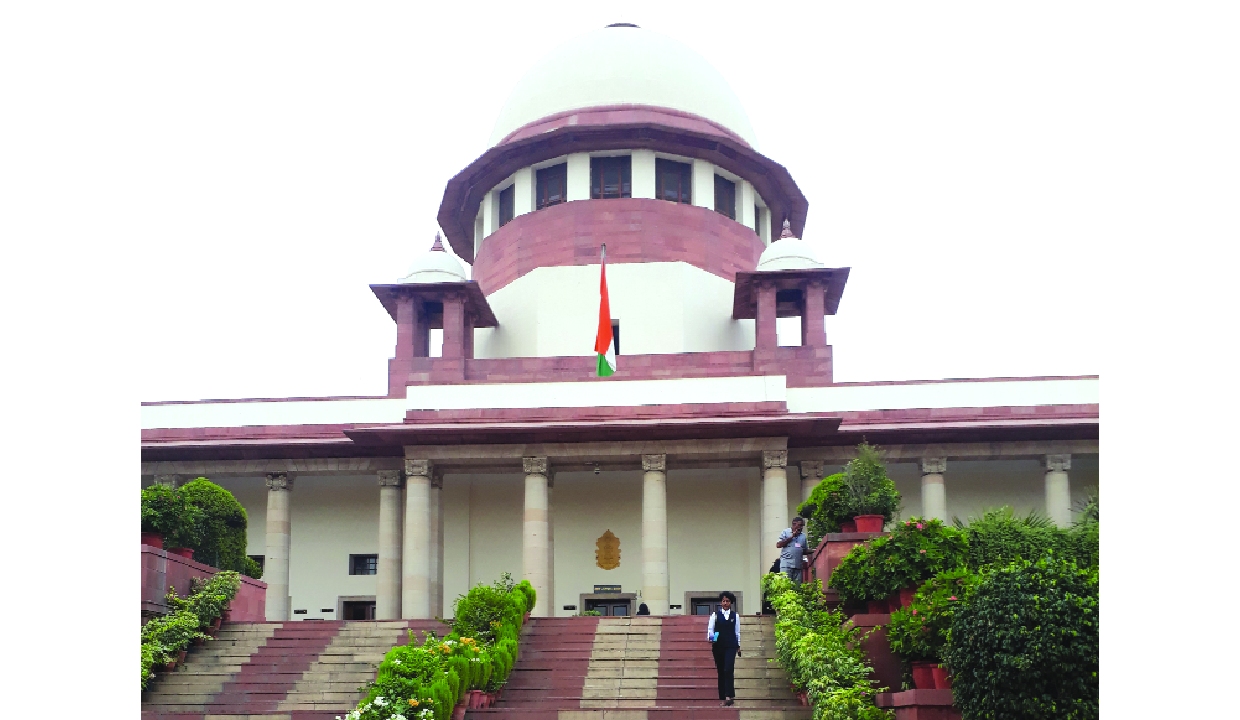
On Monday, the Supreme Court refused to grant an interim stay to pause the Government’s plan to add Merchant Discount Rate (MDR) on UPI payments over Rs 2,000 made to merchants, starting October 15. The court agreed to review the challenge against the MDR and asked the Government, the RBI, and the National Payments Corporation of India (NPCI) to respond within four weeks.
A Bench of Chief Justice of India (CJI) Surya Kant and Justices Joymalya Bagchi and V Mohana was responding to advocate Anjan Datta’s public interest petition challenging the Government’s notifications dated September 14 and 15 that introduced MDR on UPI payments over Rs 2,000 to merchants.
The Government will charge a 0.4 per cent fee on UPI payments over Rs 2,000 made to merchants from October 15, ending almost six years of free UPI payments.
It is capped at Rs 300 for payments of Rs 75,000 or more. Person-to-person payments and smaller amounts will still be free, the NPCI has clarified.
Additional Solicitor General N Venkataraman, representing the Government, told the court that 96 per cent of people using the payment gateway would not be affected by the new fee. “The Government of India is not taking even a single rupee out of it,” the law officer said.
The court asked the Government to submit a written explanation about why it decided to charge a fee on UPI merchant transactions over Rs 2,000.
Venkataraman said charges for essential services are capped at `5. He said, “It is neither a tax nor a fee.” The court said, “We need all these facts in a short affidavit. It will help us understand better. It is less a legal issue and more a technical issue… Is it a tax or a fee? If not a fee, then what is the executive basis for making this expropriation?”
ASG explained that the fee is a settlement charge between payment aggregators and banks. He added, “The Government is several steps away from this money.”
After the Bench issued notice on the plea, the petitioner’s lawyer requested, “Please stay it till then.”
Payments made to mutual funds, securities, and through stockbrokers and dealers will have a 0.02 per cent MDR, with a maximum charge of Rs 300.
The petition claims the new fee was introduced without enough legal safeguards, transparency, or public input. It challenges the constitutional validity of the amended Section 10A of the Payment and Settlement Systems Act, 2007, alleging that it gives the executive unguided power to decide which electronic payment modes would receive the no-charge protection.
“Declare that no MDR or analogous compulsory charge may be imposed or recovered merely on the strength of a press release or FAQs absent a duly authorised, authenticated and published statutory instrument,” it said.
The petitioner also questioned why UPI transactions are treated differently from RuPay debit card payments, noting that RuPay cards still have no-charge protection with no upper limit.
The petition argues that the new rules are unfair and could hurt merchants with small profit margins. It also warns about possible hidden costs for consumers and the risk that some people could be left out of digital payments.
It has sought to quash or suspend the framework insofar as it imposes an MDR on UPI transactions above Rs 2,000.
Alternatively, the petition wants the rules reviewed after open consultation, data sharing, and an impact study, with protections for micro and small businesses.
“Direct that any future MDR classification be based on relevant considerations including merchant turnover, statutory MSME status, actual margins, geography and ability to bear the cost, and avoid cliff-edge treatment unsupported by evidence,” the plea said.