SC refuses to issue directions in domestic workers’ case
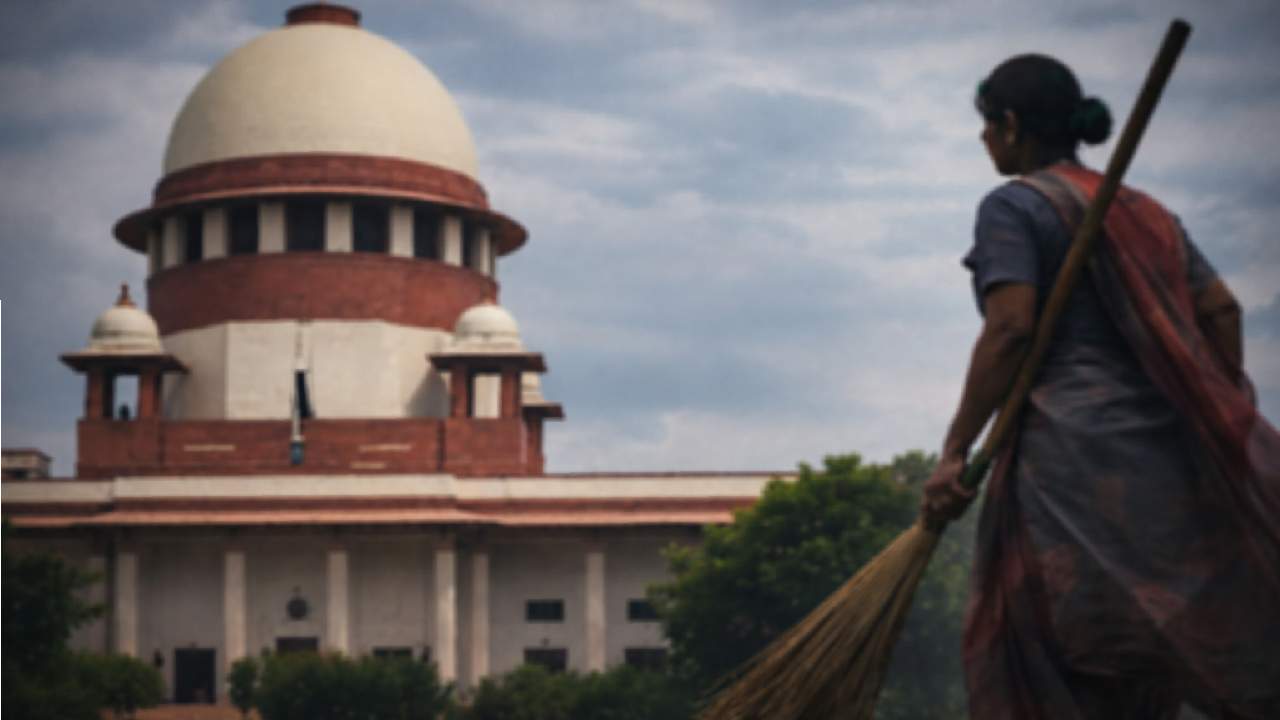
The Supreme Court on Thursday refused to entertain a PIL seeking a comprehensive legal framework and enforcement of minimum wages for domestic workers, saying it cannot issue a writ asking the Centre and states to consider amending existing laws. The Supreme Court also observed that trade unionism has been largely responsible for stopping the industrial growth in the country.
“How many industrial units in the country have been closed thanks to trade unions? Let us know the realities. All traditional industries in the country, all because of these ‘jhanda’ unions have been closed, all throughout the country. They don’t want to work. These trade union leaders are largely responsible for stopping industrial growth in the country,” Chief Justice Surya Kant said.
“Of course exploitation is there, but there are means to address exploitation. People should have been made more aware of their individual rights, people should have been made more skilled, there were several other reforms which should have been done” the CJI said. While acknowledging the “plight” of millions of domestic helps across the country, a bench comprising CJI Kant and Justice Joymalya Bagchi maintained that the judiciary cannot encroach upon the legislative domain to mandate the enactment of laws.
The bench, in its order, said, “No enforceable decree or order can be passed unless the legislature is asked to enact a suitable law. Such a direction we are afraid ought not to be issued by this court.” It, however, asked petitioners, including Penn Thozhilalargal Sangam, a domestic workers’ union, to highlight the plight of domestic helps to States and the Union to take a suitable decision in the matter.
“We observe that petitioners may continue to highlight the plight of domestic helps and impress upon the stakeholders to take a final call in relation thereto.. And the correspondence shows it is under active consideration by states and we are hopeful that a suitable mechanism shall be deployed for their help and to prevent exploitation,” the bench said while disposing of the PIL.
The petition sought, among other reliefs, recognition of non-payment of minimum wages to domestic workers as a violation of fundamental rights and enforcement of minimum wage regimes across States.