SC flags third language timing
Hearing TN plea on Navodaya schools, SC advises introducing language options in middle school years
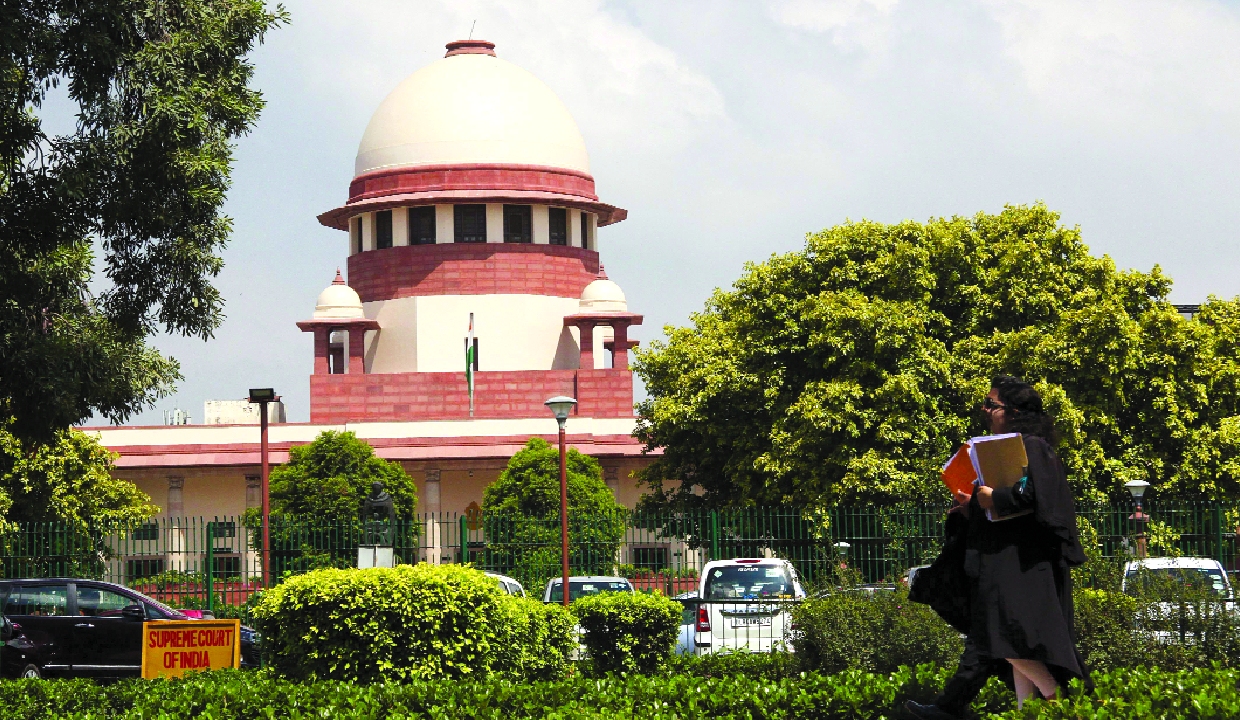
The Supreme Court on Thursday voiced concern over the introduction of a third language in Class 9 under the CBSE curriculum, observing it would increase the stress level of students and suggesting it be introduced in Class 5 or Class 6 so that students can cope with it.
A bench of Justices BV Nagarathna and R Mahadevan orally asked the Union Government to not introduce a third language in Class 9.
“Union of India, please don’t have a third language from Class 9 level. It would unnecessarily increase the stress level of students. If you want to introduce a new language, then please do it at Class 5 or Class 6 level but not at Class 9 level. Class nine is full of stress, it starts from Class 8 onwards,” Justice Nagarathna told the counsel, appearing for the Government.
The remarks were made during the hearing of the Tamil Nadu Government’s plea against a Madras High Court directive to facilitate the establishment of Jawahar Navodaya Vidyalayas (JNVs) in every district of the State.
The Tamil Nadu Government has consistently opposed the setting up of JNVs, over concerns with regard to the three-language policy curriculum followed by the schools. The bench was not directly dealing with the issue of new policy of CBSE but the court made observations on the timing of introduction of third language in schools.
Another SC bench headed by Chief Justice Surya Kant is already examining issues with regard to challenge to the new policy of the CBSE and recently refused to stay the notification. During the hearing, the Tamil Nadu Government counsel submitted that the State’s objection relates to the three-language policy. Justice Nagarathna observed that the policy did not mandate Hindi as the third language.
“The State language has to be taught, English has to be taught and any third language. It doesn’t say Hindi,” she remarked. Advocate G Priyadarshini, appearing for respondent NGO Kumari Maha Sabha, which was the petitioner before the Madras High Court, submitted that the National Education Policy specifically provides that no language should be imposed on any State.
Justice Nagarathna then asked the State, “You don’t want Hindi, but if it’s Sanskrit, what is the issue?”
Counsel for the State replied that the third-language under curriculum becomes compulsory only from Class 9. Reacting to this, Justice Nagarathna said, “No, that’s very bad. Class 9 is very stressful. Why do you introduce a new language in Class 9? Why don’t you introduce it in Class 6th.” Justice Nagarathna also recalled her school days, and said that there was a choice in Class 9 to choose which language to study. She said that students in her school began learning the third language during middle school.
“It was Kannada for those who had a second language as Hindi and vice versa. Sanskrit was also there, so you could have a third language. The earlier, the better,” she observed.
Justice Nagarathna also asked the Tamil Nadu Government against rejecting Government schemes merely because they originate from the Union Government.
“You may have your education system, but don’t prevent the Central Government schools…You should not have this attitude that it is the Union Government scheme, so why should we accept it,” she said.
The bench, however, noted that discussions between the Centre and the State were underway regarding the establishment of Navodaya schools.
“Talks have not concluded. If that fails, then only a question of us addressing any merits arises,” the bench observed.
Counsel for the state sought some time to seek further instruction in the matter.
The Tamil Nadu Government has challenged the 2017 order of the high court, which directed the establishment of a JNV in every district of the State. The HC had held that the State’s refusal to permit JNVs curtailed students’ right to choose educational institutions and was inconsistent with the Right of Children to Free and Compulsory Education Act of 2009.
The SC had stayed the HC’s directions on December 11, 2017, after the State Government challenged the decision.
On December 15, 2025, the SC modified the order of stay and directed the state to identify the requisite extent(s) of land that is necessary for establishing Navodaya Vidyalaya in each of the districts of the State.
The said exercise shall be carried out within a period of six weeks and place the report before this court, it had said, while clarifying that the directions were issued only in the interest of those students who are entitled to be admitted to such schools in Tamil Nadu.
The SC also asked the representatives of the State and the Union Government to hold discussions with regard to the establishment of these schools in the State.