SC: Cheque bounce complaint invalid if company not made accused
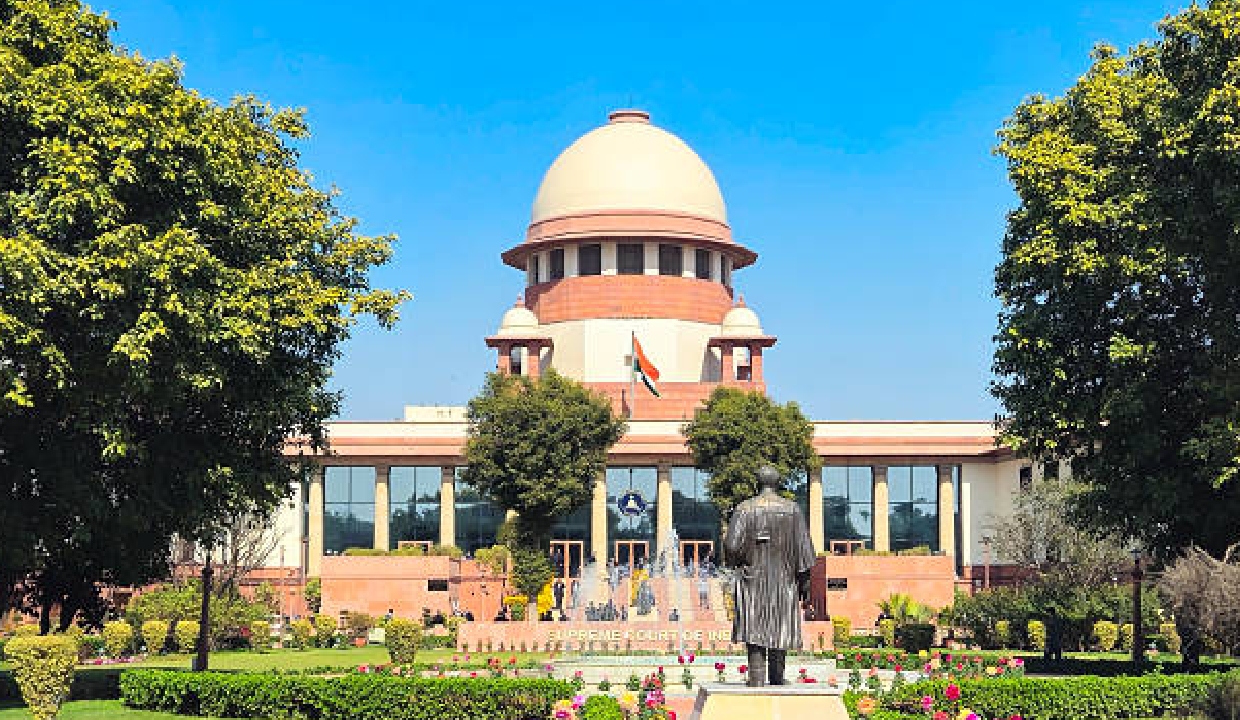
The Supreme Court has quashed criminal proceedings against a woman in a cheque bounce case, ruling that a complaint under the Negotiable Instruments (NI) Act is not maintainable against a company director or authorised signatory if the company itself is not made a party to the case.
A bench of Justices Manoj Misra and Vijay Bishnoi set aside an order of the Himachal Pradesh High Court that had directed the trial court to implead the company in the case.
"We are of the view that the high court clearly exceeded its jurisdiction by directing the magistrate/trial court to suo motu arraign the company as an accused.
In consequence, and having regard to the finding that the complaint suffered from a fatal defect, we have no hesitation in holding that the complaint and all consequential proceedings arising therefrom are liable to be quashed and are hereby quashed," the bench said.
The court held that a company is a "juristic person" and can maintain a bank account. "Thus, if the cheque concerned is drawn on the account maintained by the company, subject to fulfilment of other ingredients of Section 138 of the NI Act, it would be the company which would commit the offence," it said.
The bench said the complaint suffered from a fatal defect since it failed to implement the company as an accused on whose account the cheque was drawn.
"In such circumstances, no cognisance of that complaint could have been taken in view of the decision in Aneeta Hada (supra). Hence, all further proceedings on the complaint were bad in law," it said.
The order came on a plea by advocate Ashwani Kumar Dubey, appearing for the accused, who argued that when a company commits an offence punishable under Section 138 of the NI Act, a complaint against its director is not maintainable without impleading the company as an accused.
Dubey contended that the high court had committed a manifest error in declining to quash the complaint and all consequential proceedings.
According to case details, a complaint was filed under Section 138 of the NI Act against the accused, alleging that the company owed the complainant Rs 5 lakh for services rendered.
The accused, a director and authorised signatory of the company, had issued a Rs 5 lakh cheque to the complainant, which was returned unpaid with the remark "payment stopped by drawer." The complainant subsequently served a notice of demand, but the accused failed to make the payment.
The Judicial Magistrate took cognizance of the complaint and summoned the accused under Section 138 of the NI Act. While proceedings were at the stage of recording the accused's statement, she moved the high court seeking to quash them on the ground that the cheque was drawn on the company's account and, without impleading the company as an accused, the complaint could not stand.
The high court had held that since evidence during the trial suggested the company had committed the offence, the trial court could invoke its powers under Section 319 of the CrPC to arraign the company as accused No. 2, and directed the trial court accordingly.
(With inputs from PTI)