Revolt rocks TMC as Speaker backs dissidents
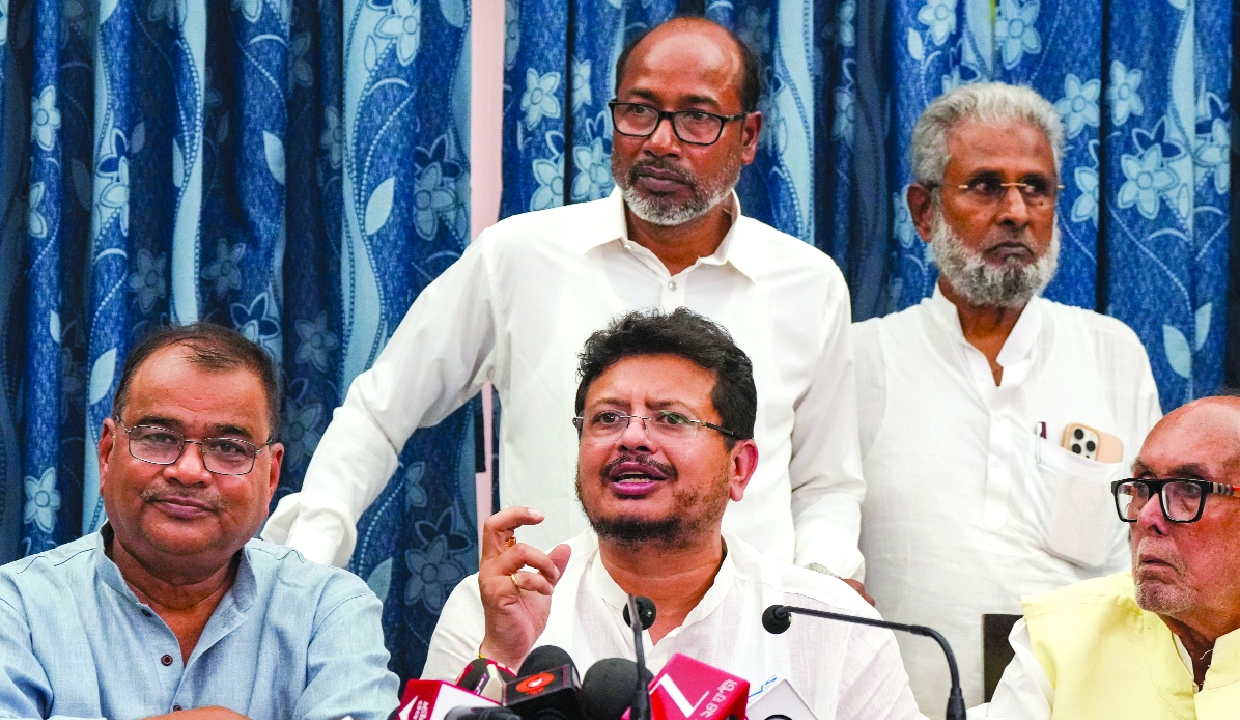
In a stunning political upheaval that has shaken the corridors of the West Bengal Legislative Assembly, expelled Trinamool Congress (TMC) MLA Ritabrata Banerjee was formally recognised by Speaker Rathindranath Bose on Wednesday as the Leader of the Opposition (LoP).
The move follows a brazen rebellion by nearly 60 TMC legislators who defied the party high command and submitted letters of support endorsing Banerjee, even as the party grapples with a fresh controversy over allegedly forged signatures. Banerjee, who was unceremoniously expelled from the TMC for “anti-party activities,” wasted no time in asserting his new role.
Speaking to reporters immediately after being handed the keys to the Leader of the Opposition’s chamber, he struck a conciliatory yet defiant note. “Mamata Banerjee is our leader. We have no intention of splitting the party,” he declared. “We are the principal opposition. We have fought as a team.” The dramatic development unfolded earlier in the day when 58 TMC MLAs, openly defying the party leadership, submitted a formal letter to the Speaker proposing Banerjee’s name as the LoP. In their communication, the rebel legislators claimed that their faction represented the “real” legislative wing of the TMC, effectively challenging the authority of the Mamata Banerjee-led establishment.
The rebellion comes against the backdrop of an ongoing row over forged signatures, which had already created deep fissures within the ruling party.
Sources indicate that the expelled MLA’s elevation to the opposition bench is being viewed by the dissidents as a symbolic assertion of their strength and a direct rebuke to the current TMC dispensation.
A former Left Front leader who crossed over to the TMC in 2018, Ritabrata Banerjee’s journey from ideological opponent to party insider, and now apparent rebel, has been anything but conventional. His sudden expulsion had initially appeared to isolate him politically. Still, the swift mobilisation of nearly 60 MLAs in his favour suggests that discontent within the TMC ranks runs far deeper than the party leadership may have anticipated.
By recognising Banerjee as LoP, the Speaker has effectively acknowledged the numerical strength of the rebel group, granting them official status and the associated privileges in the Assembly. This includes dedicated seating, speaking rights, and the institutional heft that comes with the position, tools that the dissidents are likely to use to amplify their voice against the ruling establishment.
Political observers note that the move raises critical questions about the TMC’s unity, which has long projected an image of monolithic loyalty under Mamata Banerjee. The fact that a recently expelled leader could muster support from over a quarter of the party’s MLAs points to simmering grievances, possibly over ticket distribution, organisational decisions, or internal power dynamics.
Yet Banerjee himself has been careful not to burn bridges completely. His insistence that “Mamata Banerjee is our leader” appears to be a calibrated attempt to frame the rebellion not as a full-scale split but as an internal correction - a claim that the “real” TMC spirit now resides with the dissident group.
Whether this development marks the beginning of a larger fracture within the TMC or remains a contained episode of legislative manoeuvring will depend on how the party high command responds in the coming days. For now, however, Ritabrata Banerjee occupies the opposition’s chair, holding the keys - both literally and figuratively - to what could become one of the most intriguing chapters in West Bengal’s recent political history.