Rethinking healthcare through lens of sustainability
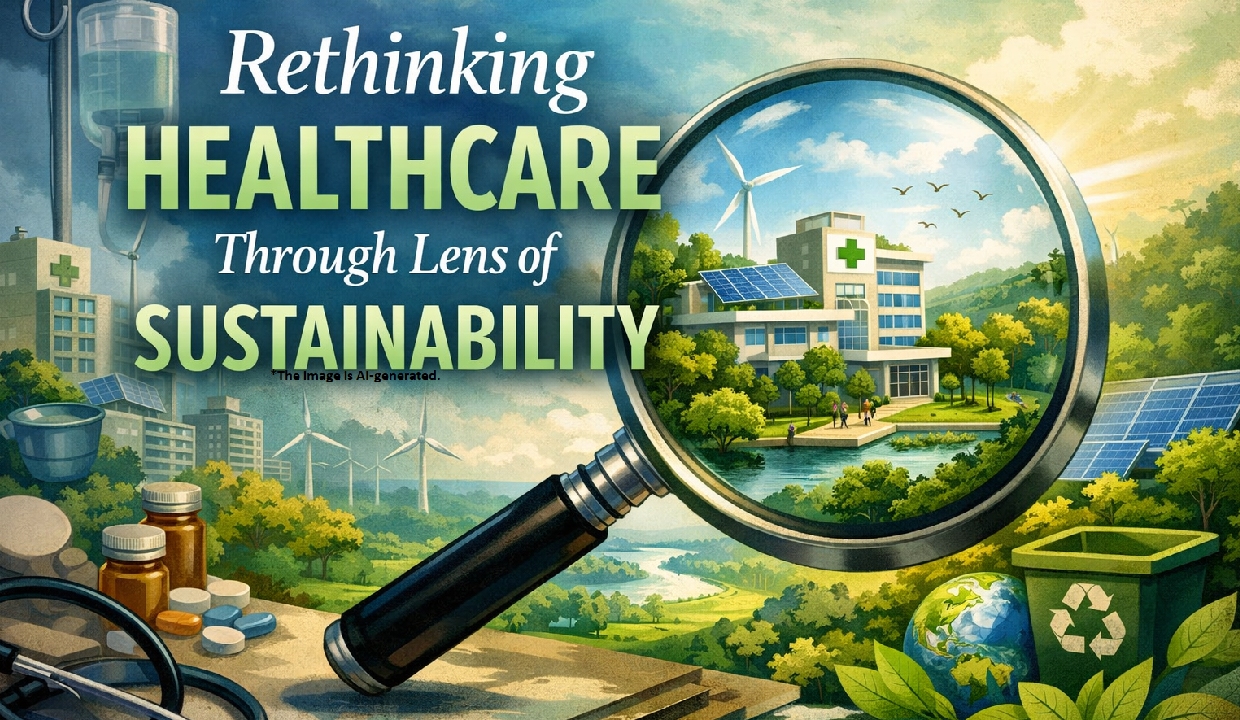
As the world marks World Homoeopathy Day 2026, commemorating the birth anniversary of Samuel Hahnemann, the moment invites a deeper reflection-not just on the legacy of a system of medicine, but on the future of healthcare itself. Across the globe, health systems are confronting a complex set of challenges: a rising burden of chronic diseases, growing antimicrobial resistance, escalating treatment costs, and increasing demand for patient-centred care. Together, these pressures are driving a critical shift-from episodic treatment models to approaches that are continuous, preventive, and sustainable.
In this evolving landscape, Homoeopathy offers a perspective that is both relevant and timely. Founded on the principle of "like cures like," it has evolved from an 18th-century therapeutic idea into a widely practiced and increasingly evidence-driven system. Its emphasis on individualised treatment, minimal adverse effects, and long-term engagement aligns closely with the direction in which global healthcare is moving-towards models that prioritise the patient, not just the disease.
At the forefront of advancing this scientific foundation in India is the Central Council for Research in Homoeopathy (CCRH). Since its establishment in 1978, the Council has played a pivotal role in strengthening research, standardisation, and evidence generation in Homoeopathy. Its work reflects a clear objective: to ensure that the system is not only rooted in tradition but also validated through contemporary scientific methods.
This year's theme-Homoeopathy for Sustainable Health-captures a growing global imperative. Sustainable health goes beyond clinical outcomes; it encompasses economic viability, environmental responsibility, and social inclusiveness. In this context, Homoeopathy presents distinct advantages. Its therapeutic approach seeks to stimulate the body's innate healing capacity, its medicines require minimal raw materials and generate negligible waste, and its cost-effectiveness makes it particularly suited for large-scale public health interventions. As health systems worldwide search for solutions that balance efficacy with sustainability, such attributes assume increasing importance.
The role of scientific evidence in this transition cannot be overstated. Over the years, CCRH has undertaken extensive clinical research across a range of disease conditions, including studies designed with rigorous methodologies such as randomized controlled trials. Importantly, this evidence is being translated into practice through standard treatment guidelines, disease monographs, and peer-reviewed publications, enabling practitioners to adopt more structured and evidence-based approaches.
Beyond clinical research, efforts to strengthen the core scientific framework of Homoeopathy have also gathered momentum. Programmes in drug proving and clinical verification have systematically expanded and validated the therapeutic profiles of medicines, while initiatives in drug standardisation have contributed significantly to ensuring quality, safety, and consistency. These foundational efforts are essential in reinforcing both practitioner confidence and public trust.
Collaboration has further accelerated this progress. Partnerships with institutions such as the All India Institute of Medical Sciences and the Indian Council of Medical Research, along with universities and research centres, have broadened the scope of inquiry and strengthened methodological rigour. Such interdisciplinary engagement is critical in positioning Homoeopathy within the larger scientific ecosystem.
At the same time, the relevance of Homoeopathy is becoming evident in addressing some of today's most pressing public health concerns. Antimicrobial resistance, for instance, has emerged as a global crisis requiring innovative and multi-pronged responses. Research initiatives exploring the role of Homoeopathy in reducing antibiotic dependency-across human and veterinary domains-reflect a forward-looking approach aligned with national and global priorities.
The experience of recent public health emergencies has also underscored the need for adaptable and community-oriented healthcare systems. During the COVID-19 pandemic, Homoeopathy was deployed in preventive and supportive roles across various settings, supported by research studies and large-scale outreach initiatives. These efforts highlighted its potential as a complementary system within broader public health strategies.
Equally important is the system's ability to operate at scale while retaining its individualised approach to treatment. Through community-based programmes and outreach initiatives, Homoeopathy has reached large populations, delivering accessible and affordable care without compromising on its patient-centric philosophy. This balance between scale and personalisation is particularly relevant in diverse and resource-constrained settings.
Looking ahead, the future of healthcare will be shaped by how effectively systems can integrate evidence, sustainability, and patient-centredness. In this context, Homoeopathy-supported by institutions like CCRH, has the potential to contribute meaningfully to more inclusive and resilient healthcare models. However, this will require continued investment in research, stronger interdisciplinary collaborations, and sustained efforts to communicate evidence with clarity and credibility.
World Homoeopathy Day, therefore, is not merely a commemoration. It is an opportunity to reaffirm a broader vision of healthcare-one that is not only scientifically grounded, but also sustainable, equitable, and responsive to the needs of the future. The journey from Hahnemann's foundational insights to today's research-driven advancements reflects both continuity and evolution. The task now is to carry this momentum forward-towards a healthcare paradigm that serves both people and the planet.
The writer is Director General, Central Council for Research in Homoeopathy (CCRH); Views presented are personal.