Rain dance, or ‘dance of death’
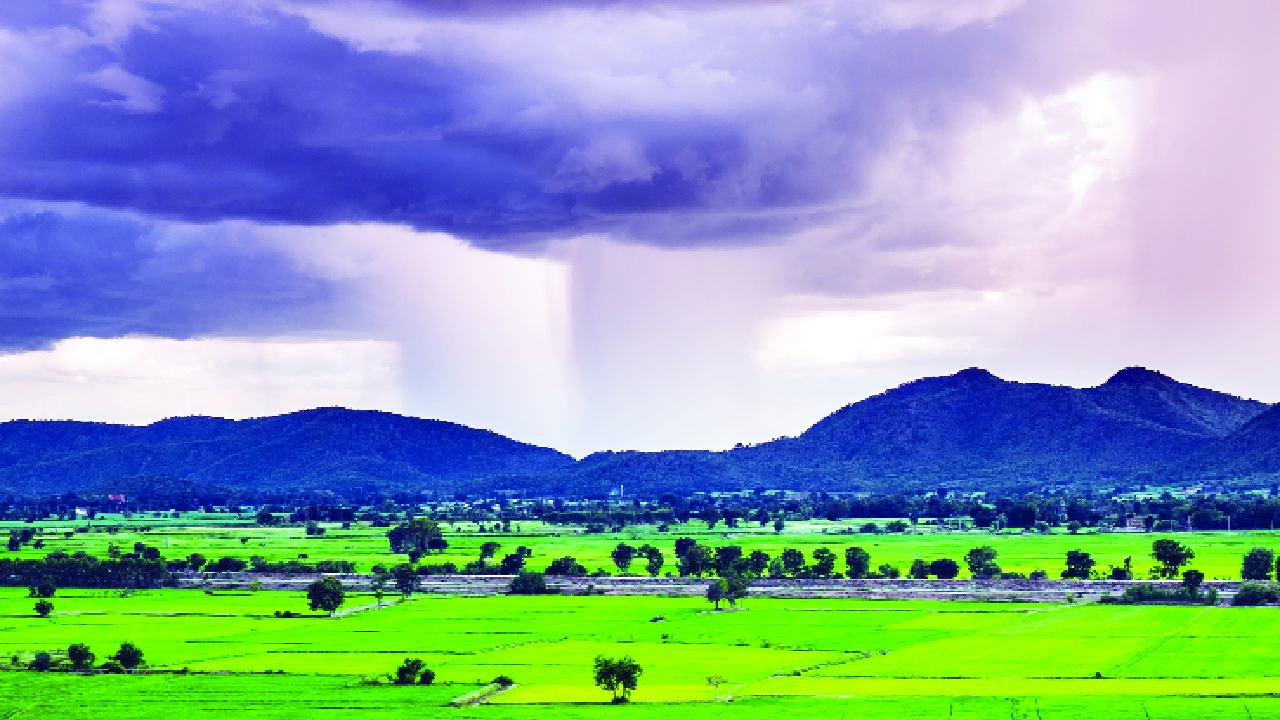
Yet again, this March, unexpected rainfall affected crops across large swathes of the country. Met experts link the unseasonal downpour, including hailstorms and snow in some areas, to increased western disturbances. Ripe rabi crops such as wheat and mustard become highly vulnerable due to such events. Current on-field damage assessments indicate a loss of harvest of 15-25 per cent in areas that faced wind and hail affects, and 5-10 per cent higher post-harvest fungal losses in cereals that are under the wet conditions.
As usual, the farmers’ plight has political connotations. The Government swung into immediate action, but stressed that its focus extended beyond production to the scientific assessment of damages, proper settlement of insurance claims, and timely assistance to the farmers. Union agriculture minister, Shivraj Singh Chouhan, chaired a high-level, comprehensive meeting to review the conditions of the agriculture sector. He stressed the immediate needs of farmers, which included the processing of the insurance claims, and functioning of relief mechanisms. “If farmers have suffered losses, their insurance claims should be prepared properly and scientifically so that we can support our farmer brothers and sisters,” said Chouhan.
For the farmers’ unions, such language smacks of a propensity to delay immediate actions to save the growers, and provide inadequate compensations. “We cannot allow the suffering of March 2026 to become a footnote in a government report. If the Centre can arrange funds for corporate bailouts, it must find funds to save farmers. We will not forgive this dance of death between the Centre and states,” warned Rajan Kshirsagar, president, All India Kisan Sabha (AIKS), a Left-leaning farmers’ group. A Communist Party of India (CPI)-affiliated organisation attacked the policy-makers at the Centre and states with charges of “gross negligence, deliberate underreporting of losses, and a callous delay in releasing pending relief measures.”
Media reports warned that repeated unseasonal weather conditions tighten supplies, push the prices of staple food upwards, and stress farm incomes. This is especially true because farming contributes a large share to employment, as well as GDP. Agriculture contributes around 18 per cent to the GDP, and employs nearly 45 per cent of the workforce, according to the World Bank. The month of March is usually the harvest time for major rabi crops such as wheat, mustard, gram, and potatoes. Sudden changes in weather affect produce, and send shockwaves among the farming community.
As per the current estimates, wheat and mustard crops are under extreme stress, and may cause distress for the growers the season. Hence, the situation in some sensitive states is rocky. In addition, the post-harvest crops left in the fields tend to absorb extra moisture due to the untimely rains, and develop fungi, which leads to losses. Thus, multiple factors can impact production. Coming as it does during a period of geopolitical disruptions due to the Iran war, may add to the woes of the farmers, who may be hit by inflation and shortages.
The agriculture minister directed fast-tracking of crop insurance, which is crucial to protect returns, and incomes. However, the AIKS claimed that the state-run insurance scheme has “once again been exposed as a vehicle for corporate loot, with the government acting as a facilitator for the insurance companies.” Although there were no specific details, the hints are that the insurers deliberately underpay the claims, or do not entertain them. The farmers are left in the lurch, as they run from pillar to post to claim the due amounts, and suffer due to losses.
Coming back to the weather conditions, in Northwest India and Delhi-NCR, the reports indicated a sharp transition “from soaring temperatures to wettest March in three years, with significant rainfall on March 18-20.” In the northern parts, a form of a mild heatwave in the first of March changed into cold weather, with rains and snow (in some parts). States such as Jammu and Kashmir, Himachal Pradesh, and Uttarakhand faced “erratic weather” with widespread rain and snowfall in the higher reaches. Hailstorm alerts were issued in Punjab, Haryana, and parts of Uttar Pradesh, according to farmers’ unions.
While in the Northeast, Assam and Meghalaya were battered by heavy to very-heavy rainfall (up to 20 cm), West Bengal and Sikkim experienced extremely heavy rainfall exceeding 21 cm. Vidarbha and Chhattisgarh saw isolated thunderstorms and hailstorms, even as some pockets dealt with prior heatwave conditions, the AIKS added. Erratic showers and thunderstorms affected Telangana, interior Karnataka, Kerala, and Tamil Nadu, with heavy rains recorded in isolated places of coastal Andhra Pradesh and Kerala. However, there may be cases, say the farmers, where the damages are being underreported.
Quoting reports from on-ground and local members, Kshirsagar dismissed Maharashtra’s initial assessments as “farce aimed at protecting the government's image rather than providing relief.” While the state agriculture department admitted to minimal crop damage “across a meagre few thousand hectares,” the farmers’ union claimed that its reports “paint a picture of apocalyptic ruin” in several state districts like Vidarbha and Marathwada. Some experts feel that this is a typical political-bureaucratic reaction to dilute the bad news, not create a panic, and avoid high payments to the farmers.
“In Akola and Amravati, we have reports of hail the size of stones ruining ready-to-harvest wheat, pulses, oranges, and bananas, yet the official figures are a fraction of the reality. This is a deliberate attempt to keep compensation figures low. We demand that the correct ground data be collected via mandatory joint field visits by revenue officials in the presence of farmer representatives, scrapping the opaque remote-sensing-only model,” added Ravula Venkaih, general secretary, AIKS.
But the Government states that its objective is to ensure that policy measures, relief mechanisms, and the outreach of the various welfare schemes are coordinated effectively so that the farmers receive timely and adequate support. Senior officials, including the agriculture secretary, and agriculture commissioner, were directed to ensure that wherever the farmers required assistance, coordination with the state governments was strengthened. Chouhan stressed that crop cutting experiments need to be conducted promptly, losses assessed scientifically, and immediate reliefs provided without delays. He urged for “time-bound action at the field level” in areas affected by the heavy rainfalls, hailstorms, or other adverse weather conditions. Farmers’ unions remain unhappy and dissatisfied. They want a comprehensive relief package not as loans, but as ex-gratia compensations, apart from clearances of pending claims, repeal of the Disaster Management Act, 2025, and an overhaul of the crop insurance scheme.