Protests continue in Noida despite wage revision
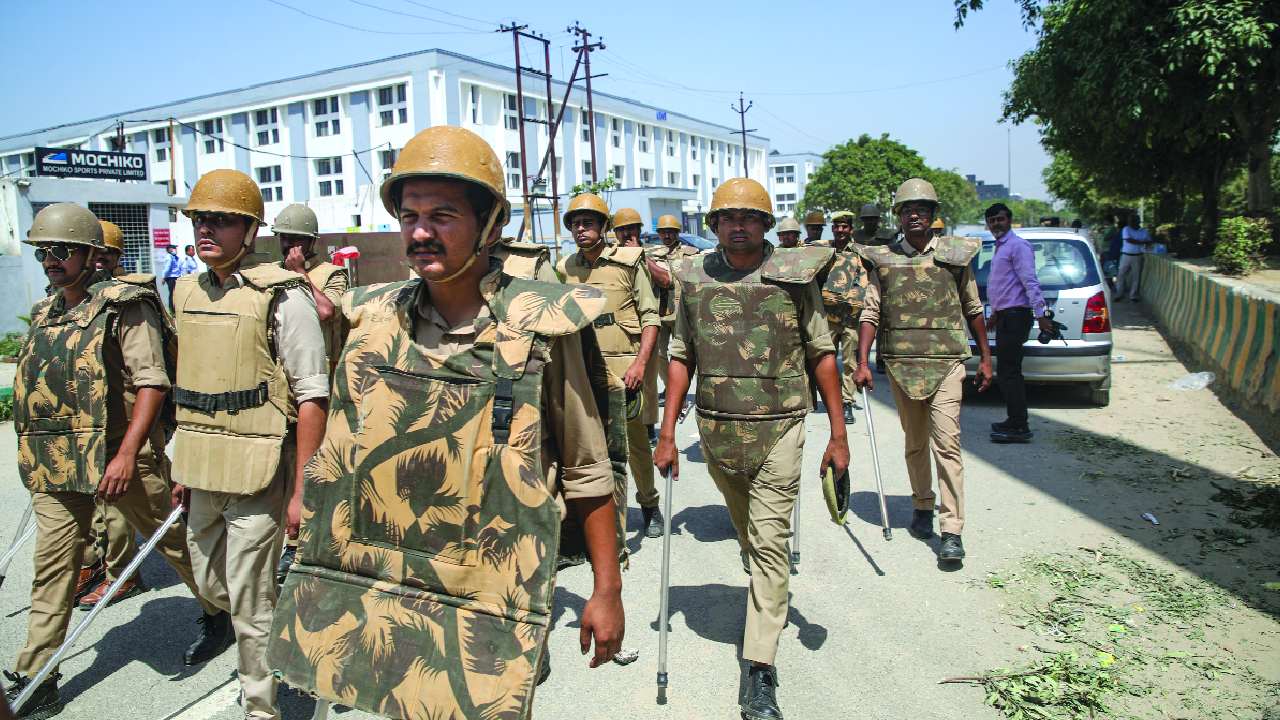
A fresh wave of unrest swept through Noida on Tuesday as factory and domestic workers continued agitating for higher wages, leading to clashes with police in multiple sectors.
In Sector 80, the day’s most visible flashpoint, workers gathered outside factories like the Ahuja unit initially in a peaceful sit-in. The situation turned volatile when some protesters began pelting stones. Police responded swiftly to disperse the crowd.
Workers voiced deep frustration on the ground. Tularam, a garment factory employee in Noida Phase 2 with five years of experience, told reporters, “Our only demand is to increase the salary by INR 20,000. I get a salary of INR 13,000. It is very hard to survive for a month. My salary gets exhausted by the 10th of every month”.
Similar scenes unfolded in Sector 70, where fresh re-grouping led to repeated stone-throwing at police. In Sector 121’s Cleo County, a residential hub, unrest spread as domestic workers joined the fray alongside industrial labourers. Stones were hurled at police vehicles and personnel during a sit-in protest.
“People who do house work were staging a sit-in protest over their demands. Some miscreants started throwing stones at the police, due to which I also got these injuries, said Sub-Inspector Mata Prasad Gupta.
Police officers conducted flag marches and deployed heavy reinforcements, including 15 companies of Rapid Action Force (RAF), Provincial Armed Constabulary (PAC) and Quick Reaction Teams, alongside drone surveillance. The administration continues engaging workers through committees, dismissing rumours of a flat INR 20,000 minimum wage as inaccurate and attributing some violence to outsiders rather than local labourers.
The protests, which erupted on a large scale on Monday, involved over 40,000 workers across nearly 80 locations in the Gautam Buddh Nagar district. Workers have drawn a leaf out from Haryana’s 35 percent wage hike, demanding that Uttar Pradesh match or exceed it. Many earn as little as INR 13,000 monthly, with complaints of exploitative practices such as short-term terminations to avoid allowance hikes and inadequate overtime pay.
On Tuesday, even after the Uttar Pradesh Government announced an interim wage revision late Monday night effective retrospectively from April 1, 2026, the demonstrations persisted. For Gautam Buddh Nagar and Ghaziabad, unskilled workers’ wages rose from INR 11,313 to INR 13,690, semi-skilled from INR 12,445 to INR 15,059, and skilled from INR 13,940 to INR 16,868. Similar hikes were notified for other categories.
UP Government officials described the move as a goodwill gesture, with additional worker welfare measures like pre-November bonuses, double pay for overtime and weekly off-days, women-chaired sexual harassment committees, and complaint boxes at workplaces. Yet, many workers dismissed the revisions as insufficient and unverified at the factory level.
By late Tuesday, authorities reported relative calm in key areas like Cleo County, Gari Chaukhandi, Sector 70, and Phase 2, with law and order re-established through sustained policing. Traffic advisories remained in place on routes like the Noida Expressway and NH-9, but major disruptions eased.
The Noida protests highlight deeper issues in India’s industrial belts: wage stagnation amid inflation, contract labour vulnerabilities, and the ripple effects of regional policy differences.