Prices of petrol, diesel raised by Rs 3 a litre
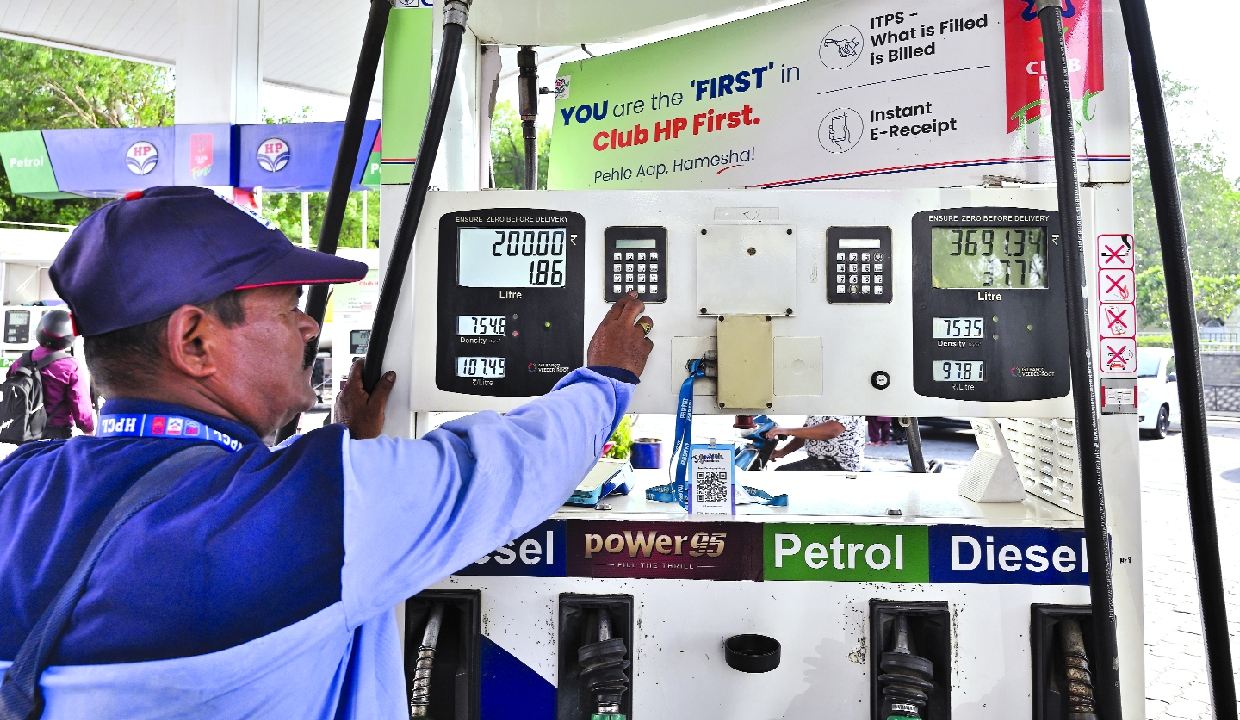
The Union Government on Friday hiked petrol and diesel prices by Rs 3 per litre and CNG by Rs 2 per Kg. In Delhi, petrol prices have increased to Rs 97.77 per litre from Rs 94.77, while diesel rates moved up to Rs 90.67 per litre from Rs 87.67. In Kolkata, the price of petrol climbed to Rs 108.74 while Chennai saw it rise to Rs 103.67 per litre. In Mumbai, petrol prices went up to Rs 106.68 per litre.
Diesel prices also moved higher across major cities. Mumbai recorded diesel prices at Rs 93.14 per litre after a Rs 3.11 increase, Kolkata saw rates rise by the same amount to Rs 95.13, while Chennai diesel prices climbed Rs 2.86 to Rs 95.25 per litre. Additionally, prices of CNG in Delhi-NCR have gone up by Rs 2 to Rs 79.09 per kg. Earlier, Mahanagar Gas Limited had raised CNG prices by Rs 2 in Mumbai region. What remains unclear, however, is whether this is a one-time increase or the beginning of a series of hikes.
The revision is the first in four years. While the immediate impact is visible at fuel stations, but economists say the real effect of rising fuel prices spreads much wider. Over time, it can influence food prices, transport costs, online deliveries and even monthly household spending.
When diesel costs more, moving anything costs more. And when moving things costs more, buying things costs more.
The most immediate pressure is on transportation costs. Petrol price hikes increase commuting expenses for people using cars and bikes, while higher diesel prices affect buses, trucking networks and goods transportation across the country. Over time, this can translate into higher auto fares, cab fares and freight charges, especially if elevated fuel prices persist. The impact does not stop with transportation.
Since a large share of India’s food supply moves through road transport, higher diesel prices often end up affecting kitchen budgets as well. Vegetables, fruits, milk, grains and packaged products become more expensive to transport, and these additional costs are eventually passed on to consumers. If fuel prices remain elevated for long, food inflation could also worsen.
Public sector oil marketing companies had kept fuel price unchanged for 11 weeks despite a surge in input cost, but passed on part of the increase once operations became financially unsustainable. India consumes about 5 million barrels of oil a day, which allows the current stock to cover around 18 days of demand.
Several opposition parties attacked the Government over the hike in prices of petrol and diesel, warning that the move would worsen inflation and hamper economic growth. Congress leader Rahul Gandhi said the public was paying the price for the Modi Government’s “mistake”. BJP, however, defended the hike, claiming that India managed to shield citizens from the global oil shock for more than two months while implementing only a “limited and calibrated” rise even as several countries witnessed steeper increases.
This is the lowest increase in price as compared to the United States, the United Kingdom, European countries and the United Arab Emirates, which witnessed steep hikes. Data shows countries such as Myanmar, Malaysia, Pakistan and the United States have seen petrol prices rise anywhere between 40 per cent and over 89 per cent, while diesel prices in some markets have jumped by more than 100 per cent.